Entry No. 2 — the Pittsburgh file — filed under: oddities
Center for PostNatural History
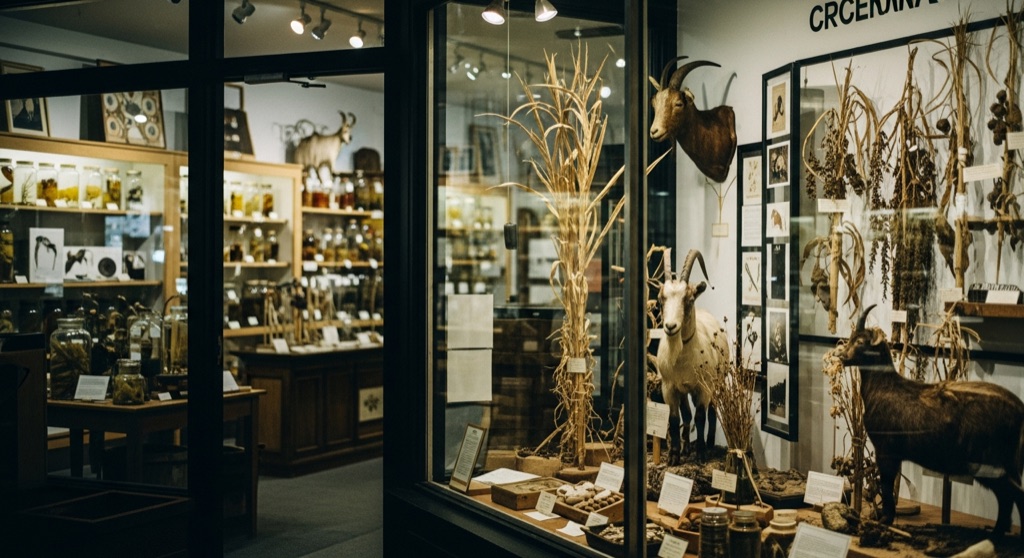
This unique storefront museum is dedicated to 'postnatural' life—organisms that have been intentionally altered by humans through domestication, selective breeding, or genetic engineering. Exhibits include transgenic mosquitoes, a taxidermied 'BioSteel' goat that produced spider silk in its milk, and historic specimens of altered crops and animals.
→ Three more oddity shops & curiosities in Pittsburgh — never the same twice
The story
Standard natural history museums showcase the natural world before human intervention—or pretend to. The Center for PostNatural History documents what happened when humans took the wheel. Tucked into a unassuming Penn Avenue storefront in Garfield, this isn't a grand academic hall; it operates like a tightly curated, conspiratorial archive of every organism we have intentionally redesigned, bred, or gene-spliced. Founded by Rich Pell—a KAVLI Fellow and 2016 Pittsburgh Artist of the Year—the center treats biotechnology not as futuristic sci-fi, but as a long, messy paper trail of human culture.
Inside, the collection doesn't moralize; it simply presents the physical evidence. On display are taxidermied specimens, jarred wet mounts, and historical records spanning ancient domestication to modern labs. You'll stand face-to-face with a taxidermied 'BioSteel' goat—a specimen from a line genetically modified with spider DNA so its milk produced dragline silk proteins for industrial use—and gaze into vials of transgenic mosquitoes engineered for population control. Alongside high-tech lab creations sit the forgotten relics of selective crop breeding, proving that our obsession with reshaping living biology started long before CRISPR.
What it's like
Stepping inside Suite 101 feels less like visiting a tourist attraction and more like gaining access to a researcher's private, dimly lit study. The space is small—you can walk the floor in forty-five minutes—but the specimen notes and archival context demand real attention. The door is only unlocked during very specific windows (typically Friday evenings and weekend afternoons), so showing up on a whim on a Tuesday will get you a locked glass storefront. The vibe is quiet and contemplative; expect to leave with a slight case of existential vertigo that's best dissected over a coffee down Penn Avenue.
The move: Drop in during their limited Friday or Sunday hours to examine the jarred specimens and discuss the ethical boundaries of genetic modification over a coffee from a nearby Garfield cafe.
- 📍 Garfield
- 💸 $$
- ⚡ Up for anything
- 🌗 Indoors
Where: 4913 Penn Ave, Suite 101, Pittsburgh, PA 15224
Hours: Added 2026-07-21 — confirm current hours before you go.
Pair it with
- The Garfield Night Market — Time a Friday evening museum visit to align with this monthly street market on Pacific Avenue for local food trucks and art stalls just around the corner.
- Pittsburgh Glass Center — Walk six blocks down Penn Avenue after contemplating genetic engineering to see artisans working with molten glass.
- Row House Cinema — Head less than a mile into neighboring Lawrenceville to pair an evening of bio-weirdness with a cult B-movie screening.
More weird in Pittsburgh
Good to know
What does 'postnatural' mean here?
It refers to organisms that have been intentionally and recognizably altered by human culture, whether through ancient domestication, selective breeding, or direct modern genetic engineering.
What are the headline specimens to see?
Key exhibits include the taxidermied BioSteel spider-silk goat, transgenic mosquitoes, and various historic wet specimens of altered crops and domestic animals.
Who founded the center?
The center was created and is directed by artist Rich Pell, a National Academy of Sciences KAVLI Fellow and 2016 Pittsburgh Artist of the Year.
When is the center open?
Hours are limited—typically Friday evenings from 5 to 9 PM and Saturdays from 12 to 9 PM. Always confirm current operating hours on their official site before visiting.
Plan a visit & invite your people →
Further reading: Official site · Atlas Obscura
last checked: 2026-07-21