Entry No. 44 — the Phoenix file — filed under: abandoned mine
Sunflower Mine
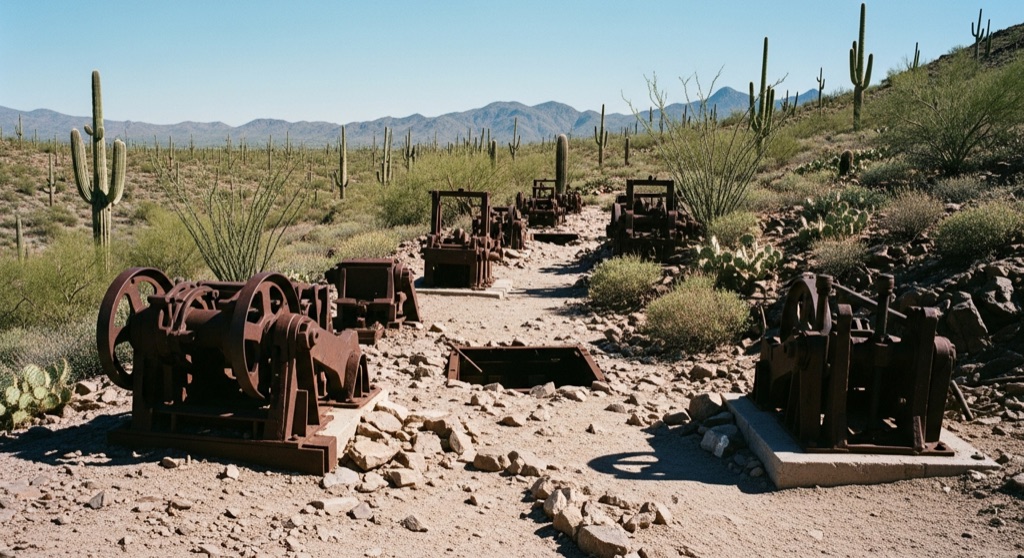
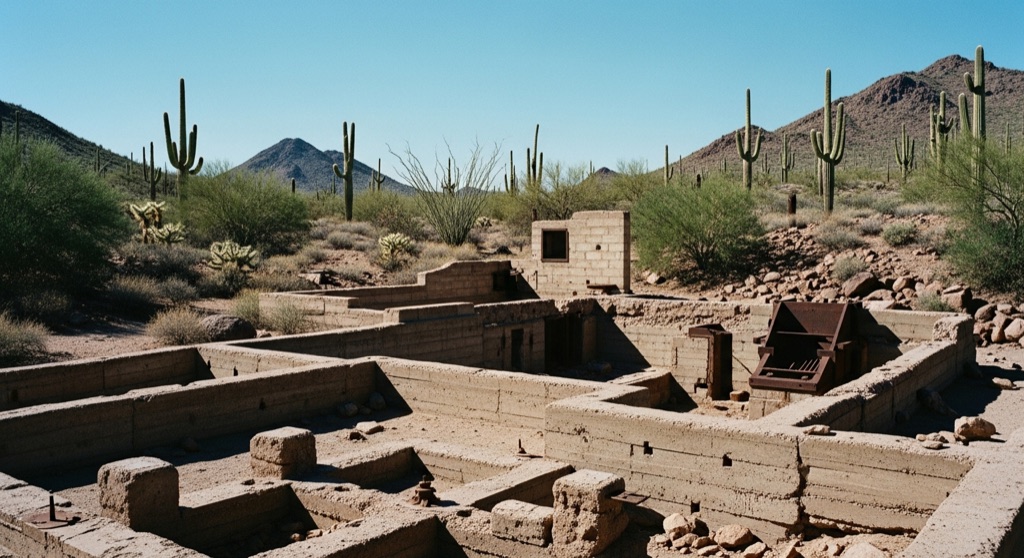
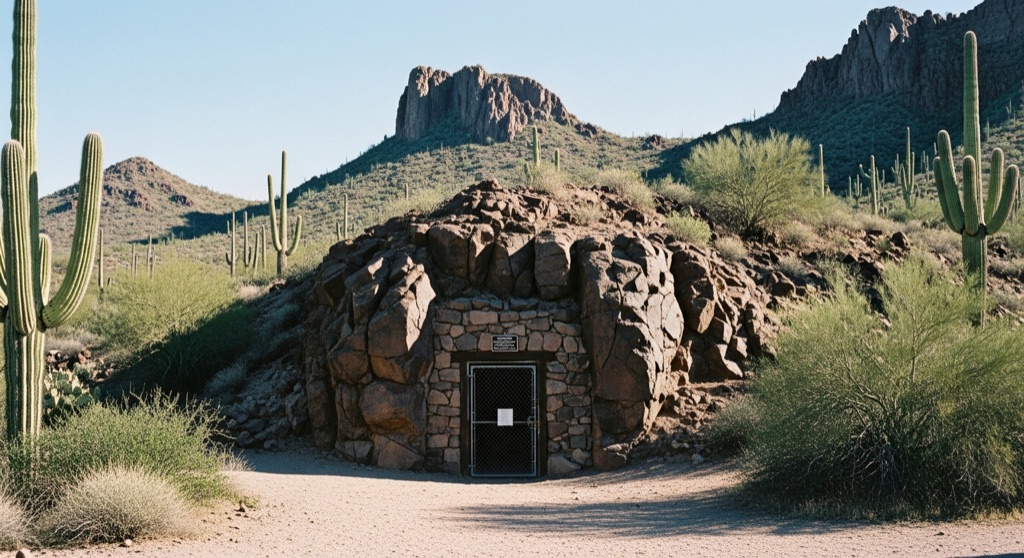
Discovered in 1911 by E.H. Bowman while searching for gold, the Sunflower Mine became a major mercury producer in the Mazatzal Mountains, operating until 1982. The site once featured a large processing facility that roasted cinnabar ore in rotary kilns to extract liquid mercury. Today, while a 2012 wildfire and subsequent Forest Service cleanups destroyed or removed most wooden structures, visitors can still see remnants of heavy metal machinery and sealed mine shafts along the rugged trail.
→ Three more abandoned & forgotten places in Phoenix — never the same twice
The story
E.H. Bowman came out to the Mazatzal Mountains in 1911 looking for gold, but what he actually found was cinnabar—the bright reddish mineral that yields pure liquid mercury. Instead of a short-lived gold rush, his discovery kicked off decades of heavy industrial processing at what became known as the Sunflower Mine (and later the National Mine). The operation eventually built out massive rotary kilns to bake the ore and extract quicksilver, running on and off until the final shutdown in 1982.
For thirty years after the last shift walked away, the canyon stood as a pristine ghost town of rotting wooden mill towers, scattered tools, and collapsed worker cabins. Then came 2012. A massive wildfire swept through the Mazatzals and torched nearly every scrap of historic timber, followed quickly by Forest Service hazmat teams that remediated the site to mitigate toxic mercury hazards.
What remains today is pure iron skeleton. Because heavy steel crushers and thick-gauge metal frames don't burn down—and are entirely too heavy for standard cleanup crews to drag out of a rugged canyon—the floor along Forest Road 25A remains a eerie, silent scrap yard of early-20th-century heavy machinery.
What it's like
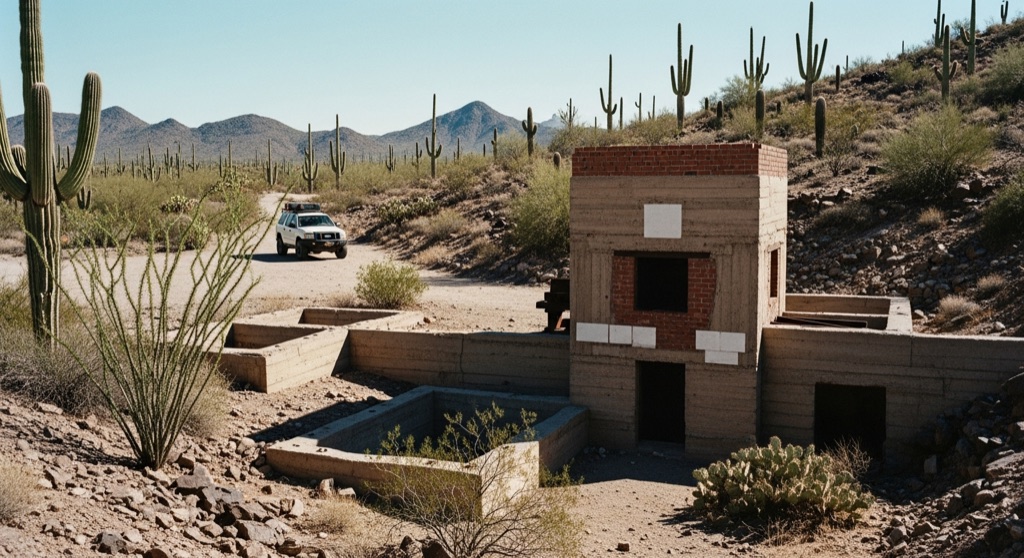
Reaching the mine site means tackling Forest Road 25A—a notoriously rutted, rocky off-road trail through the Mazatzals that demands a true high-clearance 4x4 vehicle or a serious foot hike. Down in the canyon, you'll spot heavy iron machinery rust-welded into the desert dirt, alongside sealed mine shafts punched straight into the rock face. The portals are securely blocked off for good reason: between collapse risks and toxic mercury residue from decades of ore roasting, going off-piste or trying to enter shafts is an awful idea. Stick to photographing the rusted iron gear from the trail, keep an eye out for loose rock, and make sure you bring plenty of water and a full spare tire.
The move: Take a rugged 4x4 off-road drive or hike along Forest Road 25A to reach the canyon, where you can safely photograph the remaining heavy metal mining equipment and enjoy the scenic mountain views.
📍 Before you go The surrounding trail is a public Forest Service road, but the mine shafts themselves have been sealed for safety, and entering any remaining structures is highly dangerous due to decay and potential toxic contamination.
- 📍 Sunflower Mine
- 💸 Free
- ⚡ Low-key
- 🌗 Outdoors
Where: Sunflower Mine, Arizona 85263, USA
Hours: Added 2026-07-20 — confirm current access before you go.
Pair it with
- Maricopa Mine — Pair Sunflower's heavy mercury machinery with a visit to Cave Creek's 1890s hardrock gold mining relics.
- Union Mine — Compare Sunflower's sealed industrial kilns with a 75-foot vertical gold shaft sitting tucked away in North Phoenix.
- Carefree Sundial — Wash off the off-road dust on your drive back to town by stopping under Carefree's massive 1959 copper gnomon.
More weird in Phoenix
Good to know
Why was the mine built?
E.H. Bowman discovered cinnabar ore on the site in 1911 while prospecting for gold, establishing one of central Arizona's primary mercury-producing mines.
Can you go inside any of the mine shafts?
No. The Forest Service has sealed the adits and shafts to prevent dangerous cave-ins and protect visitors from toxic heavy-metal contamination.
What kind of vehicle is required to get there?
You need a high-clearance, four-wheel-drive vehicle capable of navigating difficult off-road terrain, or you must hike in along Forest Road 25A.
What happened to the historic wooden buildings?
A wildfire in 2012 burned away most of the original timber structures, and subsequent Forest Service cleanups removed remaining burned debris.
Plan a visit & invite your people →
Further reading: azoffroad.net · funtreks.com · trailsoffroad.com · azoffroading.com
last checked: 2026-07-20