Entry No. 22 — the Philadelphia file — filed under: alchemy
Science History Institute Museum
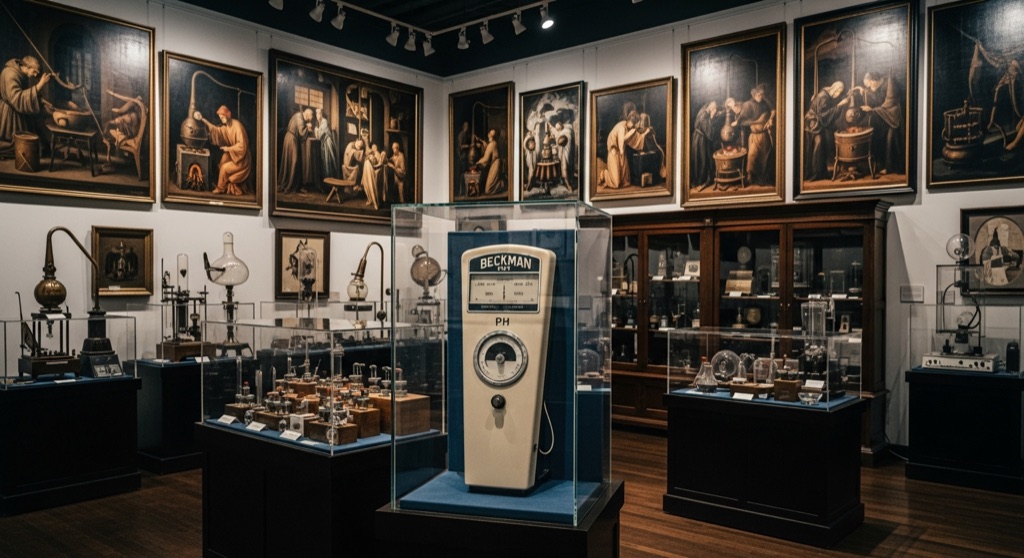
Steps from the Liberty Bell crowds sits a free museum built like a cabinet of curiosities for chemistry: one of the largest collections of alchemical art in the world (paintings of robed figures hunched over furnaces and stills), ~100 vintage chemistry sets, bakelite oddities, and a 1934 Beckman pH meter under glass like a relic.
→ Three more oddity shops & curiosities in Philadelphia — never the same twice
The story
While tourist crowds shuffle three blocks away to stare through glass at a cracked bronze bell, you can step through a modest door on Chestnut Street into a quiet sanctuary for medieval secrets and obsolete technology. The Science History Institute isn't an interactive, foam-block playhouse for kids. It's a free, meticulously curated museum dedicated to the obscure lineage of chemical tinkering, housing one of the world's premier collections of alchemical art.
Hanging in the galleries are 17th- and 18th-century Dutch and Flemish oil paintings depicting robed figures hunched over glowing hearths, retorts, and dusty manuscripts—capturing the exact historical hinge where mystical transmutations evolved into early laboratory chemistry. Just across the floor sit nearly a hundred vintage home chemistry sets from the mid-20th century, back when giving children actual glass vials and hazardous reagents was standard educational fun.
The institute treats industrial materials and lab tools with the solemnity of a cathedral treasury. You'll encounter Bakelite oddities that defined the early plastic age alongside a 1934 Beckman pH meter enshrined under glass like a saint's relic—a boxy wooden appliance that quietly revolutionized liquid analysis forever.
What it's like
Expect a remarkably tranquil, air-conditioned escape from the Old City heat and chaos. The space blends sleek modern galleries with the adjacent 1865 First National Bank building, offering zero crowd bottlenecks or shouting children. You can wander freely among display cases of brass instruments and dark oil paintings at your own pace without paying a dime. Keep in mind that the institute began a major museum renovation project in late December 2024, so verify their reopening and current gallery hours on their site before walking over.
The move: Walk the 'Making Modernity' gallery together hunting for the strangest instrument on display (candidates: the peptide synthesizer, the differential thermal analyzer, the alchemy paintings), then argue about which one you'd want to fake-own.
- 📍 Old City
- 💸 $$
- ⚡ Up for anything
- 🌗 Indoors
Where: 315 Chestnut St., Philadelphia, PA 19106
Hours: Added 2026-07-19 — confirm current hours before you go.
Pair it with
- Nepal-Tibet Handicrafts — Walk one block east to shift from Western alchemical art to Himalayan singing bowls, thangkas, and ritual incense.
- Hop Sing Laundromat — Pair the museum's vintage chemical apparatus with meticulous liquid chemistry behind a gatekeeper-guarded Chinatown door.
- Wagner Free Institute of Science — Continue your free science tour north at an untouched 1891 Victorian natural history hall housing over 100,000 specimens.
- Herbiary — Head west toward Reading Terminal Market to explore bulk herbs and essential oils that bridge old botanical remedies with modern chemistry.
More weird in Philadelphia
Good to know
How much does it cost to get in?
Admission is completely free to the public, with no timed entry tickets or reservations required.
Where is the museum located?
You'll find it at 315 Chestnut Street in Philadelphia's Old City neighborhood, right in the center of the historic district.
What are the most notable items on display?
Key highlights include the world-class alchemical oil painting collection, dozens of retro mid-century chemistry sets, Bakelite consumer items, and the original 1934 Beckman pH meter.
Are there any current closures or renovations to know about?
The museum announced a temporary gallery closure starting after December 21, 2024, to install new exhibit spaces and complete renovations, so confirm open status online prior to visiting.
Plan a visit & invite your people →
Further reading: Official site · Wikipedia
last checked: 2026-07-19