Entry No. 62 — the New York City file — filed under: after-dark
Stargazing on the High Line
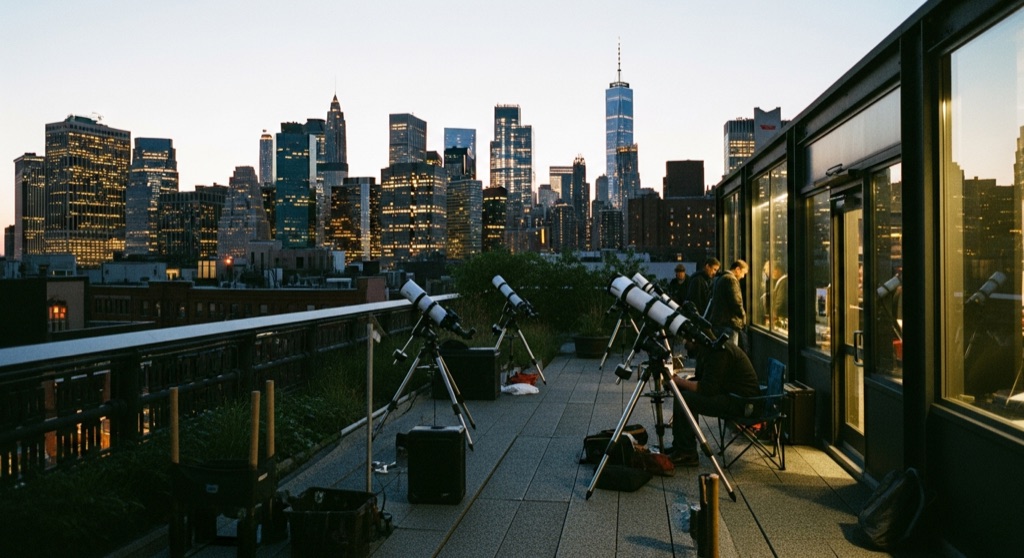
Every Tuesday from spring into late October, members of the Amateur Astronomers Association set up high-powered telescopes on an elevated freight-rail-turned-park, 30 feet above the street. They have been running these weekly sessions on the High Line since 2009, aiming scopes at the moon and planets while the Manhattan skyline glows behind you. No RSVP, no fee, and no experience needed; volunteers swing the telescopes to whatever is visible through the city glare.
→ Three more after-dark & night-sky spots in New York City — never the same twice
The story
You wouldn't expect Manhattan—with its thousands of glass towers pumping ambient light into the night sky—to be a prime venue for astronomy. Yet every Tuesday from spring through late October, members of the Amateur Astronomers Association assemble on an elevated concrete walkway 30 feet above Washington Street, lugging heavy, precision-built telescopes to prove that urban light pollution hasn't completely erased the solar system.
They have been setting up their rigs on this former freight rail line every week since 2009. The volunteers aren't selling anything; they simply swing their optical tubes toward whatever celestial targets can slice through Midtown's neon backscatter. While you won't spot faint spiral galaxies through miles of urban skyglow, the moon's cratered rim, Jupiter's moons, and the sharp rings of Saturn punch right through the haze with unexpected clarity.
The surreal part isn't just the optics; it's the backdrop. You lean into an eyepiece to stare at a planetary body while yellow taxicabs rumble thirty feet directly beneath your feet and the Manhattan skyline glows behind you.
What it's like
Walk up to the park near Little West 12th and Washington Street around dusk on a Tuesday evening. You'll spot a row of tripods pointed skyward, surrounded by volunteer astronomers who adjust focus and explain what you're seeing. There are no tickets, no reservations, and no entry fees—you simply queue up behind whoever is looking through the lens. Keep an eye on the sky beforehand; if it's overcast or raining, the telescopes stay in their cases and the event is canceled for the night.
The move: Stroll the elevated park at dusk, then let a volunteer astronomer line up a telescope on the moon while the skyline lights up around you.
📍 Before you go Free, Tuesdays roughly April through October, dusk until just before park closing; cancelled in overcast or bad weather. Meets near Little West 12th & Washington.
- 📍 Meatpacking District, Manhattan
- 💸 $
- ⚡ Low-key
- 🌗 Outdoors
Where: Little West 12th Street and Washington Street, New York, NY
Hours: Added 2026-06-23 — confirm current hours before you go.
⚠ Seasonal or scheduled — always check before you go.
Pair it with
- Life Underground (Tom Otterness) — Balance looking 30 feet above the pavement with going underground at 14th Street to hunt for over 130 tiny bronze figures hidden throughout the subway station.
- Patent Pending — Trade peering through optical telescopes on an elevated rail line for sipping drinks inside a hidden Tesla-themed speakeasy behind a NoMad coffee shop.
- Mace — Follow up an evening of urban astronomy with a short walk into Greenwich Village for cocktails engineered around single spices.
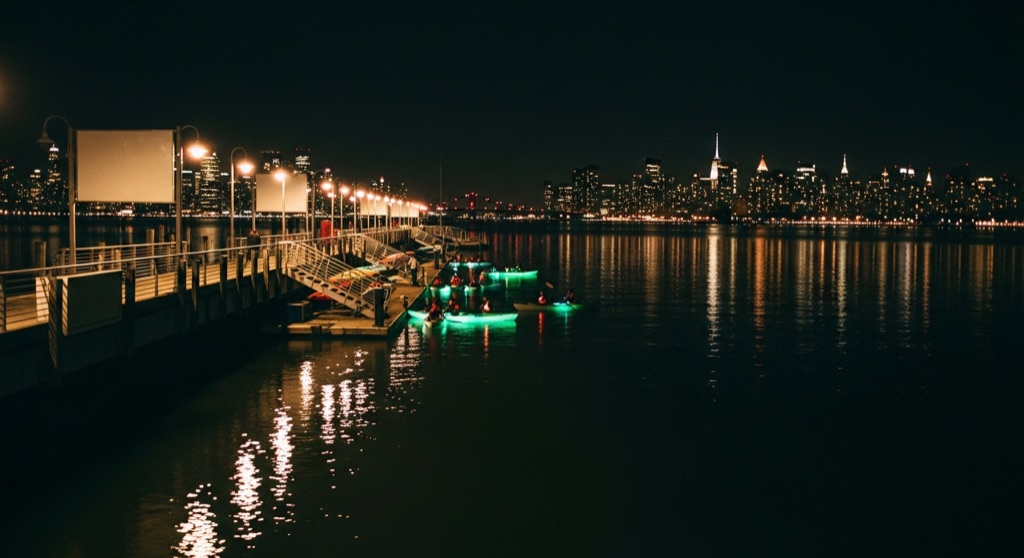
- Manhattan Kayak Neon Night Paddle — Swap elevated rail viewing for an on-the-water view of the skyline during a guided night paddle in illuminated kayaks.
More weird in New York City
Good to know
Do I need to make a reservation or pay a fee?
No. The event is completely free and operates on a walk-up basis with no registration or tickets required.
When does stargazing happen?
Sessions run every Tuesday evening from spring through late October, starting at dusk and running until shortly before the park closes.
Where on the High Line do the telescopes set up?
The volunteers set up their equipment near the park entrance at Little West 12th Street and Washington Street.
What happens if it's cloudy or raining?
The stargazing sessions depend on clear skies and are canceled in bad weather or heavy cloud cover.
Plan a visit & invite your people →
Further reading: Official site · aaa.org · nightsky.jpl.nasa.gov · nycgovparks.org
last checked: 2026-06-23