Entry No. 11 — the Monterey file — filed under: stargazing
Garland Ranch Star Parties (MIRA Astronomy Club)
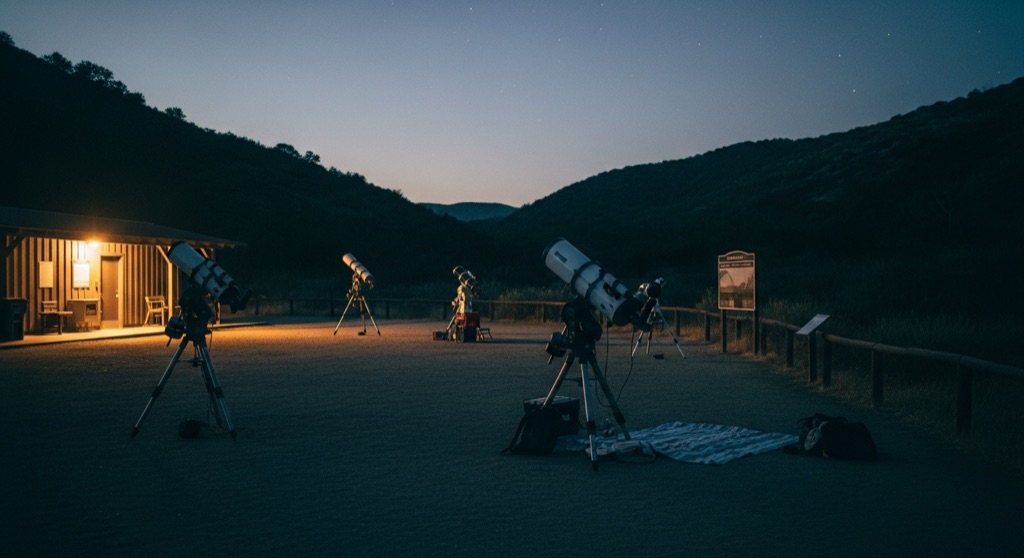
Roughly once a month, MIRA (Monterey Institute for Research in Astronomy) volunteers set up telescopes near the Garland Ranch Regional Park visitor center in Carmel Valley and let anyone from the parking lot look through them for free — at the moon, galaxies, and star clusters — with the whole thing called off by email if rain, fog, or cloud cover moves in over the valley.
→ Three at a time, never the same twice — explore weird Monterey
The story
You turn off Carmel Valley Road into total dark, cross the footbridge over the Carmel River, and follow a flashlight-dappled dirt path toward the Garland Ranch visitor center. Once a month or so, astronomers from MIRA—the Monterey Institute for Research in Astronomy—lug heavy tripod mounts, optical tubes, and custom-built Dobsonian telescopes into the clearing. They aren't getting paid, and they aren't selling anything. They're just optics nerds standing in the cool mountain air, willing to point several thousand dollars' worth of glass at the rings of Saturn or the Orion Nebula so you can press your eye against a lens for free.
MIRA itself is a weird bit of local science history: founded in 1972 by a group of Case Western Reserve astronomy grads who wanted an independent, non-governmental observatory on the Central Coast (eventually building the Oliver Observing Station on Chews Ridge). While their primary research happens up on the ridge at 5,000 feet, these valley floor star parties are where the public gets to tap into that obsession. The valley walls shield out most of the glow from Monterey and seaside light pollution, making the chaparral along the river remarkably dark for a spot ten minutes from a wine tasting room.
Because the whole operation depends on clear skies, the event lives at the mercy of Carmel Valley's fickle microclimates. Low marine fog crawling up the river corridor can wipe out a session in twenty minutes. If the call comes through to lock in a date, you register online, grab a red-lens flashlight so you don't ruin anyone's night vision, and step out into the blackness.
What it's like
Park in the gravel lot off Carmel Valley Road and navigate by the dim red glows toward the visitor center clearing. The vibe is quiet, chilly, and unpretentious—enthusiasts in heavy down coats adjusting finder scopes while kids and couples queue up in short lines behind each setup. Expect the volunteers to give you a quick tutorial on what you're actually looking at, whether it's the mottled surface of the Moon or a smudge that turns out to be a galaxy millions of light-years away. Bring a blanket or low camp chair, dress twice as warm as you think you need to, and use a red light (or tape red cellophane over your phone screen) to keep the astronomers happy.
The move: Register free through the MPRPD website, park in the roadside lot off Carmel Valley Road, and walk to the visitor-center clearing at dusk — bring a blanket and split the wait between telescope views of Saturn's rings or a nebula and just sitting in how dark the chaparral gets along the Carmel River after sunset.
- 📍 Carmel Valley
- 💸 $
- ⚡ Low-key
- 🌗 Outdoors
Where: 700 W. Carmel Valley Rd, Carmel Valley, CA 93924
Hours: Added 2026-07-20 — confirm current hours before you go.
⚠ Seasonal or scheduled — always check before you go.
Pair it with
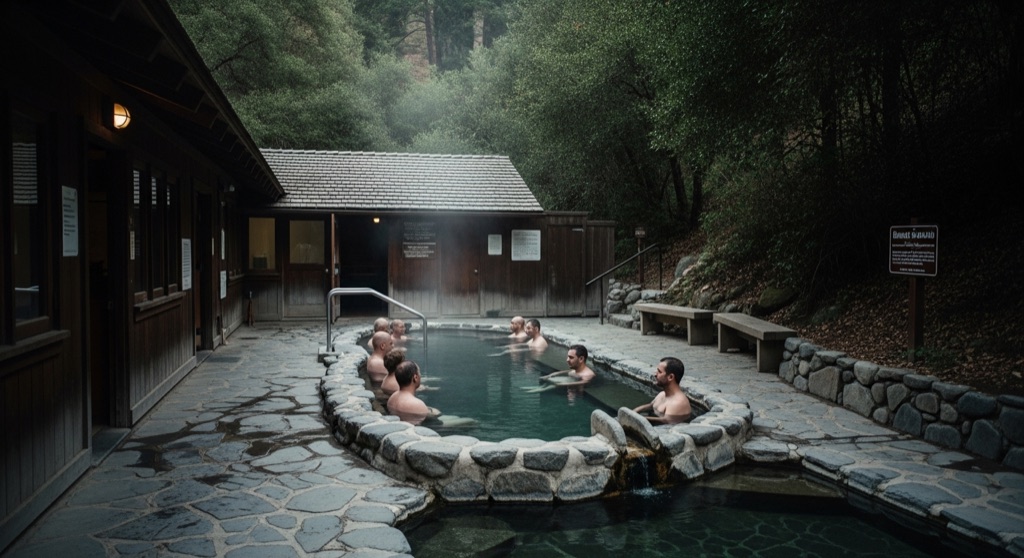
- Refuge — Soak in silence at Refuge's outdoor thermal pools in the San Carlos foothills before heading deeper into the dark valley for star gazing.
- Star Bar at Vesuvio — Trade open-field astronomy in the Carmel Valley dirt for a nightcap on Vesuvio's heated rooftop bar back in Carmel-by-the-Sea.
- Barmel — Pair an evening under the stars at Garland Ranch with a post-stargazing cocktail inside Barmel's hidden courtyard.
More weird in Monterey
Good to know
How much does it cost?
It is completely free, though you need to register in advance through the Monterey Peninsula Regional Park District (MPRPD) website.
What happens if weather or fog rolls in?
Star parties are weather-dependent. If cloud cover, fog, or rain moves over Carmel Valley, MIRA calls off the event via email earlier in the day.
Where exactly do I go once I arrive?
Park in the main Garland Ranch Regional Park lot at 700 W. Carmel Valley Road, cross the bridge, and head toward the visitor center clearing where the telescopes are assembled.
Do I need to bring my own telescope?
No. MIRA volunteers provide all the equipment and handle the focusing, though amateur stargazers are welcome to bring their own gear if they coordinate.
Plan a visit & invite your people →
Further reading: nightsky.jpl.nasa.gov · Official site · mprpd.org
last checked: 2026-07-20