Entry No. 46 — the Grand Junction file — filed under: history
Ute Cemetery
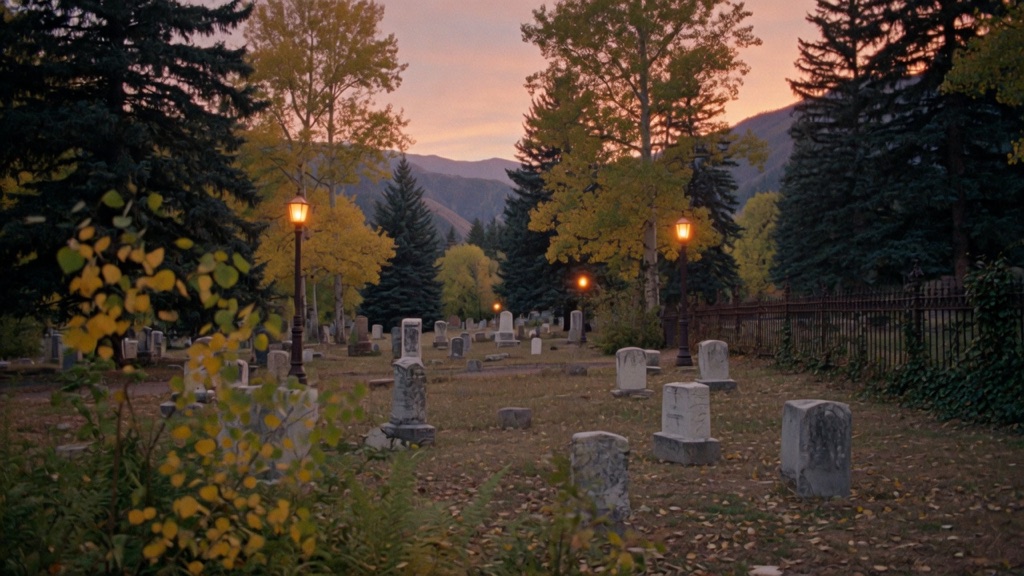
Established in 1880 when a Texas prospector died of mountain fever before Aspen had any formal burial ground, Ute Cemetery holds roughly 175 graves on a 4.7-acre wooded ridge off Ute Avenue — modest headstones, iron-fence plots, and cobblestone coping marking the working-class underbelly of the silver-boom era. About 50 Civil War veterans occupy the eastern section in two organized rows, their government-issue white markers arriving by train in 1890. The western half fans out in a random pattern; only 25 graves carry identifying markers. An 1880s avalanche season claimed multiple miners buried here, and one grave belongs to Francis Deacon Jones, the only documented Black resident, who led prayer meetings among Aspen's small Black community and died in 1919 with his plot left unmarked. Listed on the National Register of Historic Places in 2002 and thoroughly restored, it remains free and open to the public.
→ Three more haunted places & dark-history spots in Grand Junction — never the same twice
The story
Long before Aspen became a playground for high-altitude billionaires, it was a brutal, mud-caked silver camp. Ute Cemetery—originally known in the 19th century as Evergreen Cemetery—was established in 1880 when a Texas prospector succumbed to mountain fever before the town had set aside any formal land to bury its dead. Tucked onto a 4.7-acre wooded ridge off Ute Avenue, this site quickly became the final resting place for the working-class underbelly of the boom: line prospectors, laborers, and families who couldn't afford polished family vaults downtown.
Walk past the sandstone entrance tablet into the trees and the cemetery splits into two distinct psyches. To the east, roughly 50 Civil War veterans lie in two disciplined, battle-formation rows, marked by uniform government-issue white headstones that arrived by train in 1890. To the west, the burial ground dissolves into chaos—headstones fan out randomly through the brush, bordered by crumbling iron fences and mossy cobblestone coping. Of the roughly 175 souls interred here, only 25 western plots retain readable names. The rest belong to victims of 1880s avalanche seasons and forgotten pioneers, including Francis Deacon Jones—Aspen’s only documented Black resident of the era, who led prayer meetings for the small local Black community until his death in 1919, when he was buried in a plot left completely unmarked.
What it's like
Step off Ute Avenue into the shade of the pines and Aspen's polished noise evaporates immediately. The cemetery is unstaffed and quiet, traversed by narrow dirt paths restored after it was listed on the National Register of Historic Places in 2002. At 8,000 feet, you'll feel the elevation; come at dusk when the shadows stretch over the unmarked mounds for the full atmospheric effect. Street parking is available along Ute Avenue, but note that snow and ice choke the paths from November through April, so proper winter footwear is mandatory. Bikes and motorized vehicles are banned inside, though leashed dogs are welcome, and gravestone rubbing is explicitly allowed if you grab a historical guidance brochure from the City of Aspen beforehand.
The move: Walk the narrow restored paths at dusk when Aspen's ski-town noise drops away. Read the sandstone entrance tablet listing Union veterans, hunt for the 1890 government-issue markers in their battle-formation rows, and let the unmarked graves — half the cemetery — carry the actual weight of the place.
📍 Before you go No fee, no reservation. Open sunrise to sunset year-round; the cemetery sits at 8,000 feet and Ute Avenue can be icy or snow-packed November through April — wear appropriate footwear. Dogs must be leashed. Bikes and vehicles are prohibited inside the grounds. Gravestone rubbing is permitted; a brochure with guidance is available from the City of Aspen. Street parking on Ute Avenue. Grand Junction to Aspen is roughly 2.25 hours via CO-82 over Independence Pass (closed in winter — use US-6 through Glenwood Canyon instead, adding 30-40 minutes).
- 📍 Aspen
- 💸 $$
- ⚡ Up for anything
- 🌗 Indoors
Where: Ute Avenue just east of Ute Place, southeastern Aspen, CO 81611
Hours: Added 2026-06-11 — confirm current hours before you go.
⚠ Seasonal or scheduled — always check before you go.
Pair it with
- Smuggler Mine Tour — Pair the quiet grave markers of Ute's working-class prospectors with the actual underground mine shaft that produced Aspen's silver wealth.
- Bad Harriet at Hotel Jerome — Contrast the lonely, unmarked 19th-century graves on Ute Avenue with a subterranean speakeasy hidden beneath Aspen's historic 1889 hotel.
- Ashcroft Ghost Town — Follow the boom-and-bust silver story up Castle Creek to explore the weather-beaten wooden ruins of a camp that rivaled early Aspen.
- Basalt Charcoal Kilns — Trace the industrial legacy of Aspen's 1880s silver rush down-valley to the stone beehive kilns built to smelt the ore.
More weird in Grand Junction

Good to know
What is the best way to travel to Ute Cemetery from Grand Junction?
The drive takes about 2.25 hours via CO-82 over Independence Pass during summer. When the pass closes for winter, take US-6 through Glenwood Canyon instead, which adds 30 to 40 minutes to the trip.
Is there an entry fee or reservation required?
No. The cemetery is free, un-gated, and open to the public daily from sunrise to sunset.
Are gravestone rubbings permitted on the headstones?
Yes, gravestone rubbing is allowed. The City of Aspen produces a brochure outlining proper preservation guidance for making transfers.
How many graves are actually marked at Ute Cemetery?
Out of roughly 175 burials across the 4.7 acres, about half remain completely unmarked. Only 25 plots in the western section carry identifying names, alongside the ~50 uniform Civil War veteran headstones in the eastern rows.
Plan a visit & invite your people →
Further reading: Wikipedia · aspentimes.com · aspentrailfinder.com · findagrave.com
last checked: 2026-06-11