Entry No. 10 — the Grand Junction file — filed under: art-immersive
Marble Mill Site Park
“The marble that became the Lincoln Memorial got sawed and polished here.”
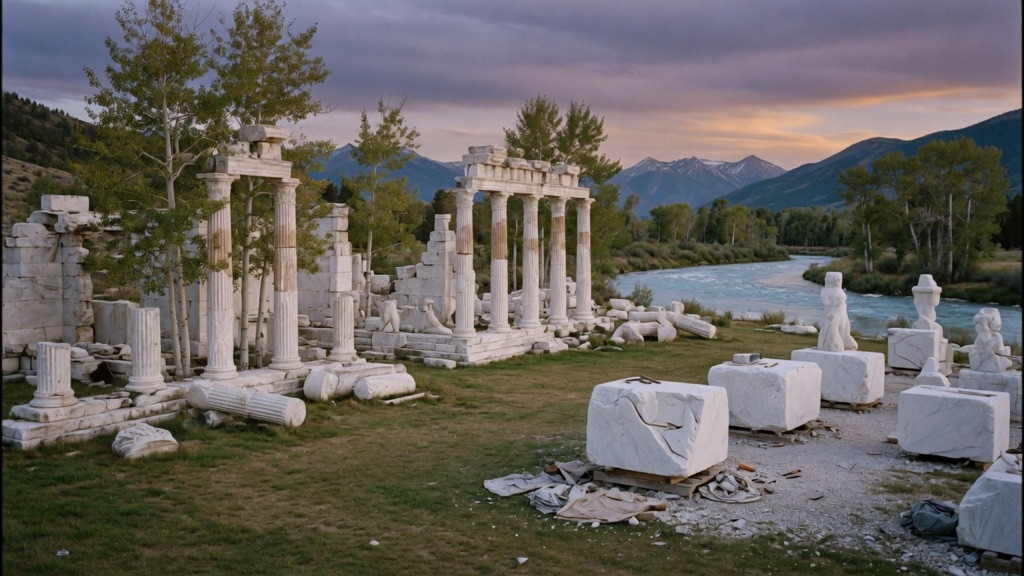
The marble that became the Lincoln Memorial got sawed and polished here, in a mill that ran from 1907 to 1941 and then dissolved into rows of white columns the aspens grew through — Rome, basically, at 7,950 feet. The town mowed a lawn around the ruins and called it a park. Next door, every July since 1989, the MARBLE/marble symposium hands sculptors from around the world blocks of 99.5-percent-pure Yule marble, and the valley rings with chisels.
→ Three more abandoned & forgotten places in Grand Junction — never the same twice
The story
Between 1907 and 1941, this mountain valley operated the largest marble-finishing mill in the world. Slabs of 99.5-percent-pure Yule marble were dragged down from high-elevation quarries to be sawed, planed, and polished on West Park Street before heading east. This exact ground is where the white stone for the Lincoln Memorial was processed.
When the mill shut down in 1941, nobody hauled away the heavy footings. Aspen groves grew up through massive white foundations, column drums, and abandoned slabs, leaving what looks like a Greco-Roman forum dropped into the Rockies at 7,950 feet. The town eventually mowed a lawn around the overgrown wreckage, designated it a public park, and left the columns sitting along the Crystal River.
The stone industry left, but the sound of carving returned. Every July and early August since 1989, the MARBLE/marble symposium sets up next door. Across three summer sessions, sculptors from around the world take raw blocks of Yule stone and carve them on-site, making the valley ring with chisels right beside the silent ruins.
What it's like
Turn right at the fire station on West Park Street and park in the lot below the firehouse, where you'll also find the public restrooms. Entrance is free, with mowed grass and dirt paths threading past colossal stone drums down to the riverbank. Footing is easy but uneven, and snow buries the unmaintained park in winter. Leave the marble where it lies—taking stone, artifacts, or plants from the grounds is illegal. If you come in July or early August, walk next door to watch the symposium sculptors at work.
The move: Wander the white colonnade down to the Crystal River together, then drift to the symposium grounds next door in July and watch carvers turn raw blocks of the same stone into something new.
📍 Before you go Turn right at the fire station on West Park Street; the lot below the firehouse has parking and public restrooms, and the park entrance is steps away. Paths are mown grass and dirt threading between the columns and foundations — easy walking, but uneven, and snowbound in winter. Taking marble, artifacts, or plants from the park is illegal. The symposium runs three sessions across July and early August; pair the visit with Beaver Lake a half-mile up the road or the 4WD-or-hike trip out to the Crystal Mill.
- 📍 Marble
- 💸 $$
- ⚡ Up for anything
- 🌗 Indoors
Where: 213 W Park St, Marble, CO 81623
Hours: Added 2026-06-11 — confirm current hours before you go.
Pair it with
- Redstone Coke Ovens — Pair industrial marble ruins with industrial coal ruins five miles down the valley, where 90 surviving stone beehive ovens once baked coal into steel-mill fuel.
- Redstone Castle (Cleveholm Manor) — Trace how local mineral wealth was spent by visiting coal baron John Osgood's 42-room Gilded Age estate seven miles down the road.
- Avalanche Ranch Hot Springs — Contrast cold white marble with warm mineral water by heading 12 miles down the Crystal River Valley to soak in tiered hot spring pools.
More weird in Grand Junction
Good to know
Where do I park for Marble Mill Site Park?
Turn right at the fire station on West Park Street. The lot below the firehouse offers parking and public restrooms, with the park entrance just steps away.
Can I take a small piece of marble home as a souvenir?
No. Removing marble, historical artifacts, or plants from Marble Mill Site Park is illegal.
When is the best time of year to visit?
Late spring through fall is best. The park's unpaved paths become snowbound in winter, and visiting in July or early August lets you see active sculptors working next door during the MARBLE/marble symposium.
Is the site wheelchair accessible?
The terrain consists of mowed grass and dirt paths threading through stone ruins down to the river, making it uneven for standard wheelchairs.
Plan a visit & invite your people →
Further reading: coloradoencyclopedia.org · Official site · cpr.org · mcrchamber.org · coloradosun.com · expedia.com
last checked: 2026-06-11