Entry No. 35 — the Grand Junction file — filed under: outdoor museum
Gunnison Pioneer Museum
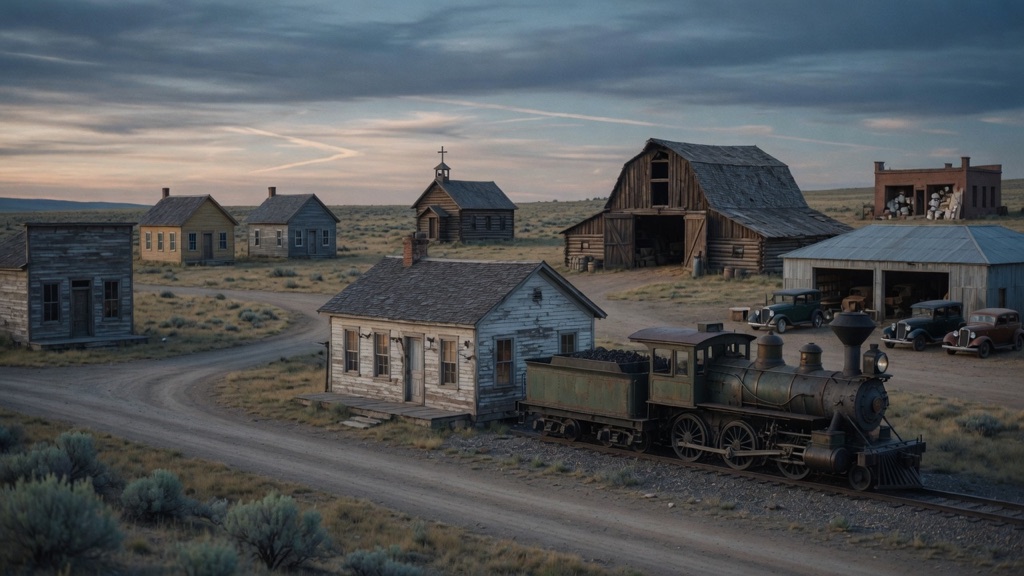
Seven developed acres on the east edge of Gunnison hold 42 historic structures that form one of Colorado's most sprawling outdoor museums — and almost nobody outside the valley knows it exists. Walk from an 1870s post office (the county's first) past two restored one-room schoolhouses, a hand-pegged 1880 dairy barn, a log-cabin miners' chapel built in 1879, and a climate-controlled hangar sheltering roughly 90 antique vehicles. The star of the railroad yard is Engine No. 268, "Cinder Ella," an 1882 Baldwin C-16 locomotive — one of only three surviving examples from a class of 150 — parked beside a relocated depot still furnished with telegraph equipment and the stationmaster's quarters. A separate building houses more than 1,000 antique dolls. The scale is genuinely disorienting in the best way.
→ Three more haunted places & dark-history spots in Grand Junction — never the same twice
The story
You don't expect seven acres of sprawling, unvarnished high-altitude survival history sitting right off Highway 50 on the eastern edge of Gunnison. Most drivers blow past on their way to Crested Butte, completely unaware that 42 historic structures have been dragged, rebuilt, or preserved here to store the physical memory of the valley. It’s not a polished, corporate open-air museum; it’s an obsessive, volunteer-run archive of frontier artifacts, ranging from Gunnison County's first post office (built in 1876) to a hand-pegged 1880 dairy barn and an 1879 log-cabin miners' chapel.
The yard feels less like a sanitized tourist stop and more like the collective attic for the entire High Rockies region. Out on the narrow-gauge tracks stands Engine No. 268—nicknamed "Cinder Ella"—an 1882 Baldwin C-16 locomotive that holds the distinction of being one of only three surviving examples of its class out of 150 built. It was the very last active narrow-gauge steam engine operating in Gunnison when it pulled off the line in 1954. Right beside it sits a relocated Denver & Rio Grande depot equipped with period telegraph keys, while a climate-controlled hangar down the gravel track shelters roughly 90 antique motorcars.
Then there are the oddities that prove the local historians never felt the need to filter out the weird stuff. One dedicated building holds more than 1,000 antique dolls staring out from glass display cases. Step inside the homesteader cabins and you're surrounded by the dense, unedited clutter of donated pioneer life—kerosene lamps, butter churns, tools, and hand-stitched quilts left right where settlers used them. The sheer volume of material packed onto seven acres is disorienting in the best possible way.
What it's like
Pull into the free lot off Tomichi Avenue, walk into the Main Building, and buy your ticket from the volunteer crew at the desk. There are no touchscreens or slick audio guides here—just a paper map and open gravel paths linking four dozen buildings. Because the seven acres are wide open and unshaded under the high-altitude sun, bring water and sun protection, and budget at least two to three hours to do it justice. Restrooms are located inside the Main Building and Old Main.
The move: Pack a picnic and budget a full afternoon. Wander the railroad yard together, argue about which antique car you'd actually drive, then slow down in the 1879 chapel and the homesteader cabins — the lived-in clutter of donated objects sparks surprisingly good conversation about who actually built the West.
📍 Before you go Open May 15 – September 30 only, daily 9 am–5 pm. Admission is $15/adults, $5/children 6–12, under 5 free; group rate of $10/person for 12 or more. No advance reservations — walk up and buy tickets from volunteer staff in the Main Building. Plan at least two to three hours; most visitors underestimate the size. Bring water; the 7-acre grounds are largely exposed. Restrooms in the Main Building and Old Main. Ample free parking on site.
- 📍 Gunnison
- 💸 $
- ⚡ Up for anything
- 🌗 Indoors
Where: 803 E Tomichi Ave, Gunnison, CO 81230
Hours: Added 2026-06-11 — confirm current hours before you go.
⚠ Seasonal or scheduled — always check before you go.
Pair it with
- Waunita Hot Springs Ranch — Pair walking seven acres of exposed pioneer grounds with a quiet soak in hot springs further east near the Continental Divide.
- Crested Butte Cemetery — Drive 23 miles north up Highway 135 to see the Victorian headstones of the miners and homesteaders who inhabited these exact historic structures.
- Two-Story Outhouse — Contrast the museum's full-scale historic buildings with Crested Butte's strangest surviving piece of mining-era architecture.
- Tincup Cemetery — Follow the valley's isolated pioneer history up into Taylor Park, where four distinct knolls divide an 1870s boomtown cemetery by creed.
More weird in Grand Junction
Good to know
When is the Gunnison Pioneer Museum open?
The museum is open seasonally from May 15 through September 30, daily from 9:00 am to 5:00 pm.
How much does admission cost and do I need reservations?
Admission is $15 for adults, $5 for children ages 6–12, and free for kids under 5 (group rate of $10 per person for groups of 12+). No advance reservations are required; buy tickets at the Main Building counter upon arrival.
What makes Engine No. 268 special?
Engine No. 268, known as "Cinder Ella," is an 1882 Baldwin C-16 narrow-gauge locomotive. It is one of only three surviving C-16s left in the world and was the last active narrow-gauge locomotive running in Gunnison before retiring in 1954.
Where are the restrooms and parking located?
Ample free parking is available directly on site. Restrooms are located inside the Main Building and Old Main.
Plan a visit & invite your people →
Further reading: Official site · uncovercolorado.com · colorado.com · Facebook
last checked: 2026-06-11