Entry No. 34 — the Grand Junction file — filed under: history
Gothic Townsite & Rocky Mountain Biological Laboratory
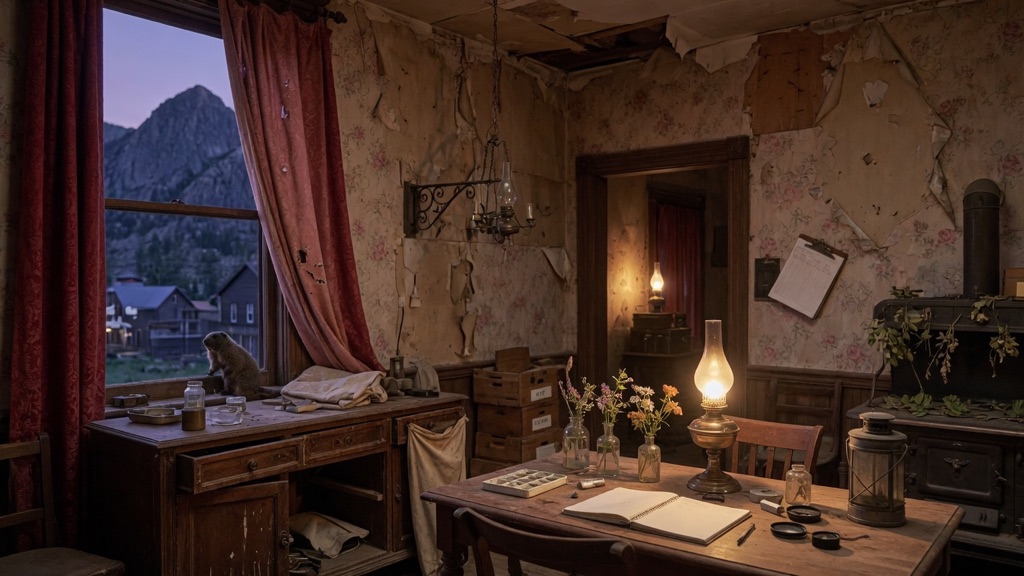
Gothic boomed in 1879 after the Jennings brothers struck wire silver at the Sylvanite lode, swelling to nearly 5,000 residents and 400 buildings — eight saloons, a newspaper, a dance hall — before the 1893 silver crash erased it almost overnight. The ghost town sat quiet until 1928, when a botanist named John C. Johnson repurposed the ruins as a field station. Today RMBL hosts around 200 researchers every summer, living in the patched-up Victorian cabins and running experiments out of what was once the Gothic Hotel. At 9,514 feet, marmots commute across the dirt lanes between the scientists' gear, and the mountain that gave the town its name — a sheer granite wall rising 2,000 feet from the valley floor — presides over everything.
→ Three more hidden bars & speakeasies in Grand Junction — never the same twice
The story
In 1879, the Jennings brothers struck wire silver at the Sylvanite lode, and within months five thousand boom-town hopefuls put up four hundred timber structures—including eight saloons, a dance hall, and a newspaper—right against a 2,000-foot granite wall. The silver crash of 1893 erased the population almost overnight, leaving a complete 1880s townsite sitting empty at 9,514 feet. But instead of rotting away like every other Colorado boomtown, Gothic got hijacked by science.
In 1928, a botanist named John C. Johnson from Western State College realized that an intact high-altitude ghost town made an ideal research base. He bought up the ruins and founded the Rocky Mountain Biological Laboratory. Scientists simply set up microscopes and test tubes inside the old Gothic Hotel and moved their sleeping cots into abandoned Victorian miner shacks.
Today, around two hundred researchers move into those patched-up 19th-century cabins every summer. Instead of velvet ropes and docents, you get field ecologists hauling climate gear down dirt lanes while marmots commute between the crumbling wooden storefronts and the valley's wildflower plots.
What it's like
Drive seven miles north of Crested Butte along Gothic Road—a dirt county road that turns rutted and slick after rain, so high clearance helps if it's been wet. You are entering an active field station, not a curated museum, so treat it accordingly: keep your distance from research equipment in the meadow and don't badger scientists at work. Drop by the Visitor Center or catch one of the daily guided townsite tours at 11 am or 2 pm (suggested donation is $20 for adults, no reservation needed for small groups). Afterward, you can park along Gothic Road and hit the nearby trailheads heading up toward Judd Falls.
The move: Drive up Gothic Road to a place that exists between centuries: a silver ghost town now colonized by ecologists. Take the free daily townsite tour, spot researchers hauling equipment past crumbling 1880s storefronts, then hike the valley while wildflowers peak around you.
📍 Before you go RMBL is summer-only; the site is accessible roughly late May through early October, and the road closes in winter. Daily guided Gothic townsite tours run 11 am–12 pm and 2–3 pm; suggested donation is $20 adults, $10 kids 12 and under — no reservation needed for groups of 8 or fewer. Gothic Road is unpaved and can be rutted; high-clearance vehicles are recommended after rain. The site is a working research station, not a museum — be respectful of active field equipment and researchers.
- 📍 Gothic, CO
- 💸 Free
- ⚡ Up for anything
- 🌗 Outdoors
Where: Gothic Road (County Road 317), Gothic, CO 81224 — approximately 7 miles north of Crested Butte via a maintained dirt road
Hours: Added 2026-06-11 — confirm current hours before you go.
⚠ Seasonal or scheduled — always check before you go.
Pair it with
- Crested Butte Cemetery — You'll pass this Victorian graveyard right on Gothic Road on your way back into Crested Butte, making it a natural pit stop for a quieter look at the valley's boomtown past.
- Two-Story Outhouse — Pair Gothic's repurposed mining shacks with another bizarre architectural survival tucked into Crested Butte's alleys.
- Dogwood Cocktail Cabin — After spending the day around dirt lanes and field gear, grab a drink inside an 1891 miner bunkhouse that survived the same silver crash.
More weird in Grand Junction
Good to know
When can you visit Gothic?
The site is summer-only, accessible from late May through early October until snow shuts down Gothic Road for the season.
Do you need tour reservations?
No reservations are needed for groups of eight or fewer. Guided tours run daily from 11 am–12 pm and 2–3 pm with a suggested donation of $20 for adults and $10 for kids 12 and under.
Can you drive to Gothic from Marble?
No. You cannot drive through Marble to get to Gothic; access is strictly from Crested Butte heading north up Gothic Road (County Road 317).
Is Gothic Road paved?
No, Gothic Road is an unpaved dirt road. It is generally well-maintained in summer, but high-clearance vehicles are recommended after heavy rain creates ruts.
Plan a visit & invite your people →
Further reading: rmbl.org · westernmininghistory.com · Wikipedia
last checked: 2026-06-11