Entry No. 84 — the Grand Junction file — filed under: after-dark
Dinosaur National Monument - Split Mountain Stargazing & Skies Over Dinosaur Festival
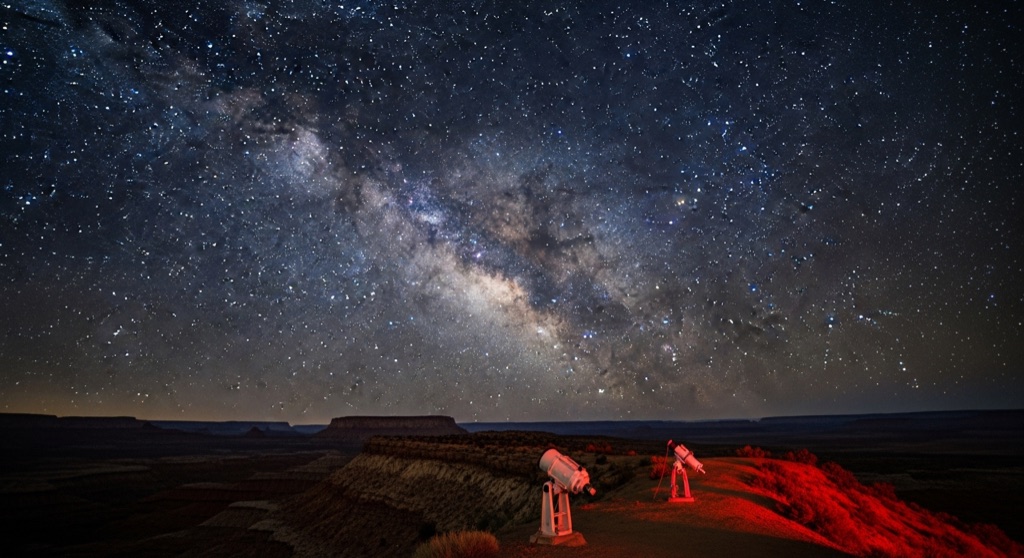
Straddling the Colorado-Utah line in the state's remote northwest corner, this certified International Dark Sky Park sits under Bortle Class 1 skies - about as dark as it gets in the Lower 48. Through the summer, rangers run stargazing programs at the back of Split Mountain Campground: telescope viewing, naked-eye sky tours, and red-lamp-lit talks, plus the annual Dark Skies Over Dinosaur astronomy festival in late summer. Far from any city, it's a place where the Milky Way is genuinely blinding and a passing satellite still draws gasps.
→ Three more after-dark & night-sky spots in Grand Junction — never the same twice
The story
Drive roughly three hours northwest from Grand Junction, cross into Utah near Jensen, and you enter a basin where human illumination simply stops existing. Dinosaur National Monument earned its official International Dark Sky Park certification because its remote interior reaches Bortle Class 1—the absolute darkest sky classification achievable in North America. While day-trippers crowd the Quarry Exhibit Hall for fossilized bones, almost everyone vanishes by dusk, leaving hundreds of square miles of ancient canyon land entirely to the night.
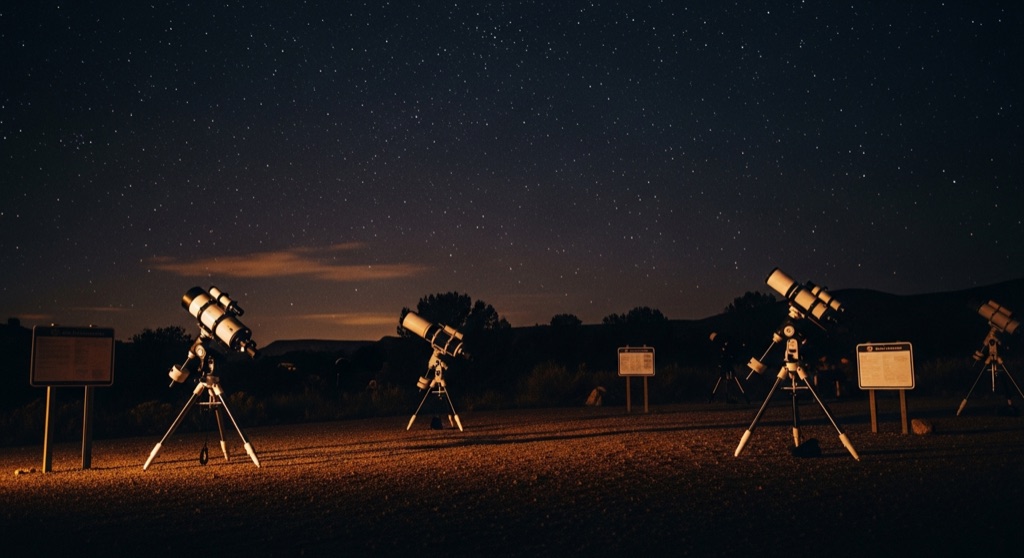
That is when the park's night-sky rangers take over at the back of Split Mountain Campground. From late June through mid-September, they set up high-powered telescopes, lead naked-eye tours through constellations usually buried under city light, and host red-lamp-lit astronomy talks. Late summer brings the annual Dark Skies Over Dinosaur astronomy festival. Under skies this uncorrupted, the Milky Way isn't a faint wispy streak—it stretches edge-to-edge with enough intensity to cast subtle shadows on the desert sand.
What it's like
Arrive at Split Mountain Campground near Jensen, UT, well before dusk so you aren't navigating canyon roads in total blackness. Switch off all white lights the moment twilight fades—bring a flashlight with a red filter or red cellophane taped over your phone screen, because a single white beam will ruin night-adapted vision for everyone around you. Desert canyon temperatures plummet after dark even in July, so pack heavy layers, a blanket, and a low camp chair.
The move: Time a visit to a ranger night-hike-under-moonlight or a Split Mountain telescope session and lie back on a desert ridge watching the Milky Way blaze overhead with zero light pollution.
📍 Before you go Roughly 2.5-3 hours from Grand Junction; the ranger-program site (Split Mountain Campground) is on the Utah side, while the Colorado entrance is near the town of Dinosaur. Programs run late June through mid-September; check the park calendar for dates.
- 📍 Dinosaur (Colorado) / Jensen (Utah)
- 💸 $
- ⚡ Low-key
- 🌗 Outdoors
Where: Split Mountain Campground, Dinosaur National Monument (Utah side), near Jensen, UT
Hours: Added 2026-06-23 — confirm current hours before you go.
⚠ Seasonal or scheduled — always check before you go.
Pair it with
- Western Colorado Astronomy Club Public Star Parties — Brush up on your deep-space targets with Grand Valley amateur astronomers before making the three-hour trek north to Bortle Class 1 territory.
- Colorado National Monument - Saddlehorn Night Sky Program — If you want dark-sky stargazing over red sandstone cliffs without driving all the way to Utah, stay close to Grand Junction at Rim Rock Drive.
- Grand Mesa Observatory — Trade Dinosaur's desert canyon floor for high-altitude telescope viewing at 6,150 feet on the slope of Grand Mesa.
More weird in Grand Junction
Good to know
Where are the stargazing programs held?
Ranger programs meet at the back of Split Mountain Campground on the Utah side of the monument, near Jensen. Note that the main Colorado entrance near the town of Dinosaur is separate and further east.
When does the stargazing season run?
Scheduled ranger programs, telescope sessions, and night hikes run from late June through mid-September. The park hosts its annual Dark Skies Over Dinosaur festival in late summer.
What should I bring with me?
Bring a red-lens flashlight (or red cellophane to cover a white flashlight), warm clothing, extra water, and a blanket or reclining camp chair. Rangers supply the telescopes for public viewing.
Plan a visit & invite your people →
Further reading: nps.gov · darksky.org · go-astronomy.com · craigdailypress.com
last checked: 2026-06-23