Entry No. 83 — the Grand Junction file — filed under: after-dark
Black Canyon of the Gunnison National Park - Night Sky Programs & AstroFest
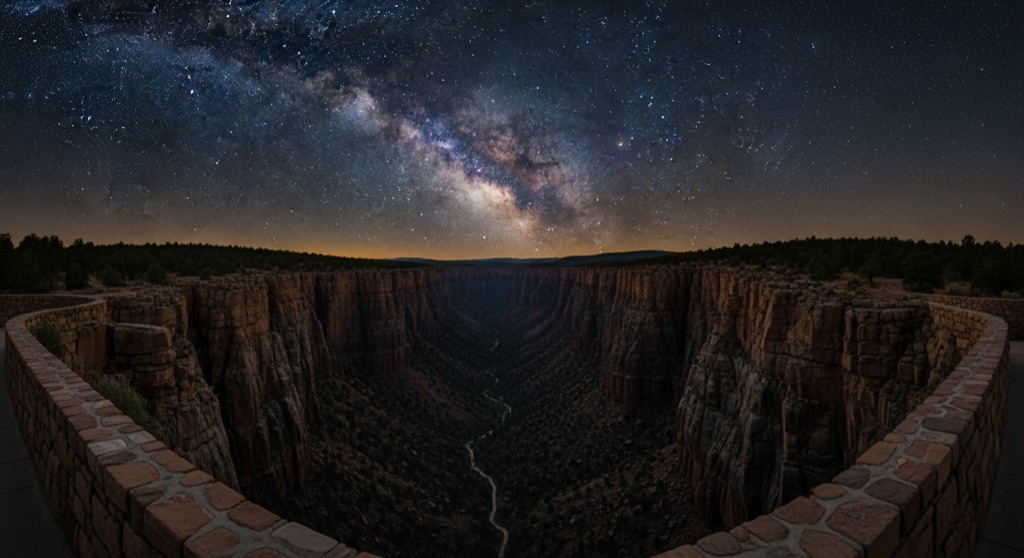
A certified International Dark Sky Park where the deep, narrow, sheer-walled chasm of the Black Canyon plunges away beneath some of the darkest skies in Colorado. All summer, rangers, volunteers, and the Black Canyon Astronomical Society run free programs included with park admission: daytime solar telescope viewing, astronomy talks, evening constellation tours, and nighttime telescope sessions. Every September, Black Canyon and neighboring Curecanti National Recreation Area team up for AstroFest, a multi-day dark-sky celebration of solar viewing, ranger talks, Junior Ranger night-sky activities, and telescope stargazing. Bring a red flashlight to protect your night vision.
→ Three more after-dark & night-sky spots in Grand Junction — never the same twice
The story
Stand on the edge of the South Rim after dusk, and the earth drops away two thousand feet into pitch black while the night sky opens up like a tear in the atmosphere. Most people come to Black Canyon of the Gunnison for the dizzying, sheer rock walls, but the real show starts after sunset. As an official International Dark Sky Park, this is one of the darkest pockets of air left in Colorado, where light pollution from Montrose and Grand Junction barely scratches the horizon. The sheer depth of the narrow chasm acts like a vault, locking out urban glare and leaving you under a Milky Way so thick it throws actual shadows.
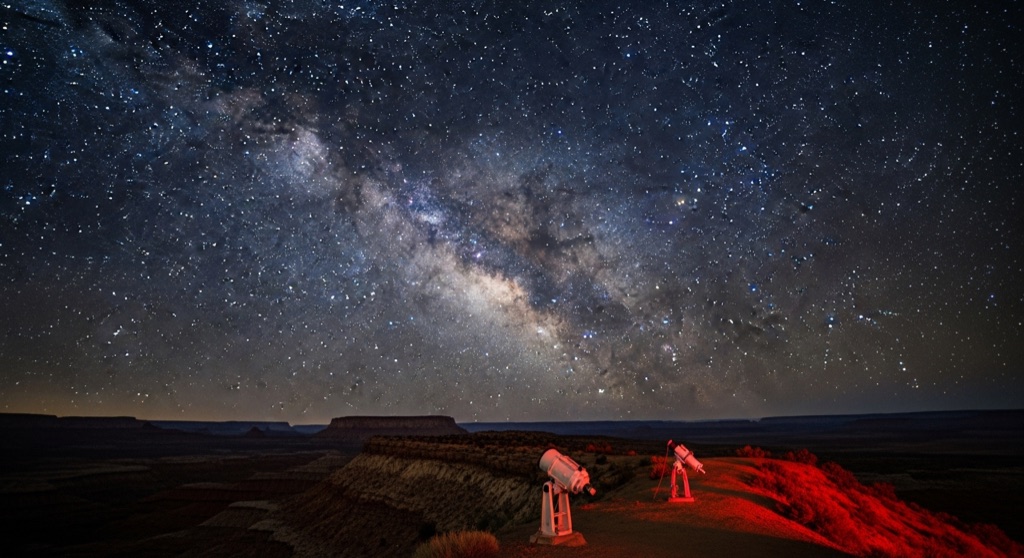
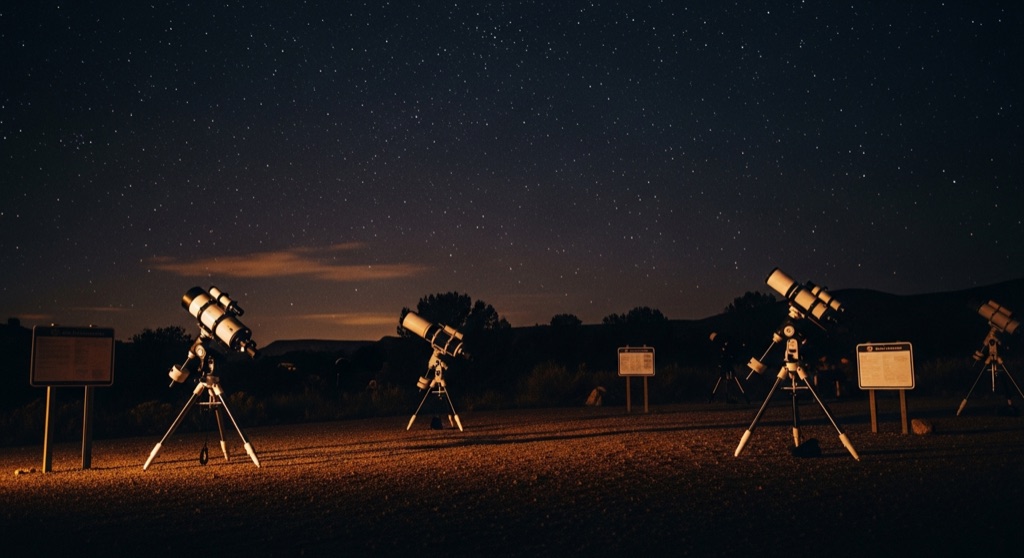
Throughout the summer, park rangers, volunteers, and the Black Canyon Astronomical Society turn the high mesa into an open-air observatory. By day, they set up solar telescopes outside the South Rim Visitor Center so you can stare directly into sunspots and solar flares without burning your retinas out. Come nightfall, they roll out heavy telescope artillery for constellation tours and deep-space viewing. Every September, the park partners with neighboring Curecanti National Recreation Area for AstroFest—a multi-day dark-sky festival featuring Junior Ranger night-sky activities, ranger talks, and late-night stargazing runs.
What it's like
Drive up Highway 347 to the South Rim Visitor Center, roughly 90 minutes from Grand Junction. Programs are covered by your standard park entry fee, but you'll want to get up the mesa early to grab a parking spot before dusk. The high-desert air turns cold fast once the sun slips below the rim, so bring heavy layers, a thermos, and a red-lens flashlight to protect your night vision (and keep from blinding the amateur astronomers tuning their optics). Once the formal ranger talk wraps, take a short walk to an overlook like Chasm View or Gunnison Point to watch the stars arc directly over the blacked-out abyss.
The move: Catch a summer ranger telescope program at the South Rim, then walk to an overlook and watch the Milky Way arc directly over the 2,000-foot-deep canyon together.
📍 Before you go About 90 minutes from Grand Junction. Night programs run mainly summer; AstroFest is in September. Programs included with the park entrance fee but schedules vary, so check nps.gov/blca before driving out.
- 📍 Montrose
- 💸 $
- ⚡ Low-key
- 🌗 Outdoors
Where: South Rim Visitor Center, 9800 Hwy 347, Montrose, CO 81401
Hours: Added 2026-06-23 — confirm current hours before you go.
⚠ Seasonal or scheduled — always check before you go.
Pair it with
- Star Drive-In Theatre — Catch a movie on Pam DeVries's vintage 1950 outdoor screen in Montrose before heading up the mesa to watch the real dark sky take over.
- Phelanies — Head into Montrose after the ranger telescopes pack up to grab a late cocktail in this tucked-away speakeasy.
- Museum of the Mountain West — Spend the afternoon exploring thirty-plus storage lockers worth of reassembled frontier history in Montrose before heading up to the South Rim for dusk.
- Shavano Valley Rock Art Site — Examine centuries-old Ute and Archaic rock art on the Uncompahgre Plateau during the day, then spend the evening reading the stars above the canyon.
More weird in Grand Junction
Good to know
Do I need separate tickets for the astronomy programs or AstroFest?
No separate tickets are required. All daytime solar viewings, ranger talks, telescope sessions, and AstroFest activities are included with your park entrance fee.
Where are the night sky programs held?
Most summer stargazing and telescope sessions gather right at the South Rim Visitor Center, located at 9800 Highway 347 near Montrose.
Why do I need a red flashlight?
White light destroys your eyes' night-adapted vision, which takes up to thirty minutes to recover. Red flashlights let you navigate the paths without ruining the stargazing for yourself or anyone else.
Plan a visit & invite your people →
Further reading: nps.gov
last checked: 2026-06-23