Entry No. 39 — the Durango file — filed under: ancestral-puebloan
Lowry Pueblo & the Great Kiva
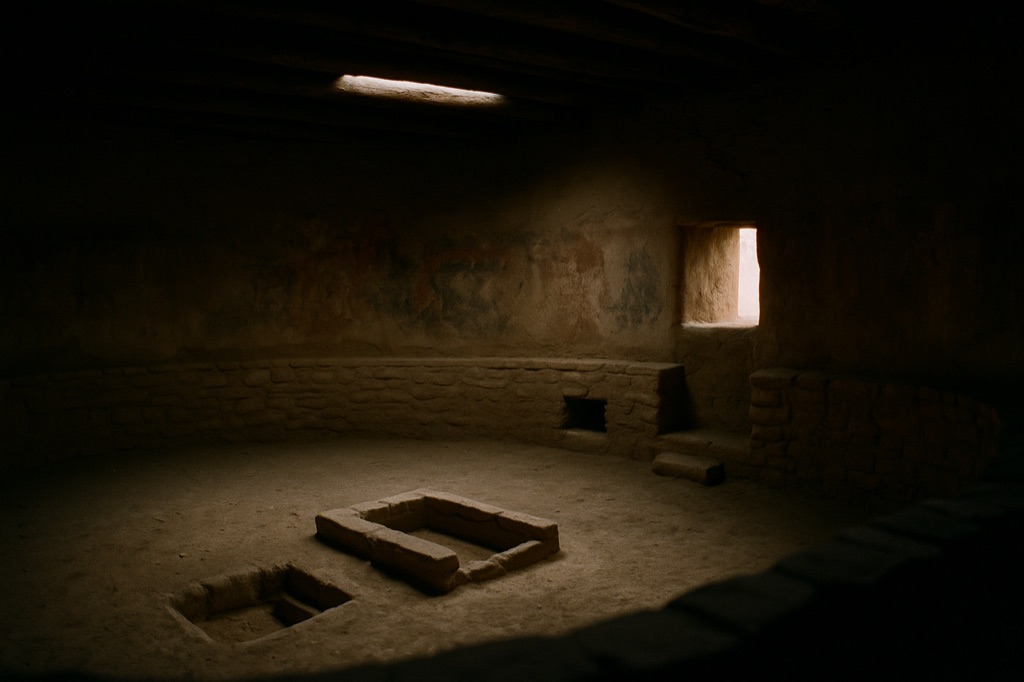
The painted murals inside this Great Kiva survived sealed underground for roughly nine centuries, then deteriorated thoroughly within years of the 1970s re-excavation — air finished what time could not. The kiva itself is more than 50 feet across, built to hold around a hundred people despite the pueblo housing only forty, which means it was drawing in communities from across the mesa for ceremonies. Almost no one comes out here: the small gravel lot fits maybe a dozen cars, the access road is unmarked to the casual eye, and the silence on a weekday is complete.
→ Three more abandoned & forgotten places in Durango — never the same twice
The story
When Dr. Paul S. Martin and his crew from the Chicago Field Museum of Natural History dug into this mesa north of Cortez in the 1930s, they found a 40-room Ancestral Puebloan village featuring eight small kivas and one oversized Great Kiva spanning more than 50 feet across. Sealed beneath the dry dirt for roughly nine centuries were intricate painted murals lining the Great Kiva walls—vivid proof of a complex ritual center.
Then came the re-excavation in the 1970s, which unsealed the underground chambers for modern study. The exposure to ambient air accomplished what nine hundred years of dark burial could not: the murals rapidly peeled, faded, and vanished within years. What remains today is the physical shell of a ceremonial venue engineered for a hundred people, built by a community that contained only forty residents. You're standing in a regional destination that drew crowds from across the mesa long before anyone drew a map of this continent.
What it's like
Drive 18 miles north of Cortez on US-491, turn west at the Pleasant View sign onto Road CC, and watch for small BLM markers that lead you down to a gravel lot built for roughly twelve cars. The quarter-mile walk in is flat and easy, taking you straight up to the masonry walls and the covered pit of the Great Kiva. On a weekday, the silence is complete—there are no rangers, no gift shops, and no crowds, just a vault toilet, a few interpretive plaques, and the wind off the sagebrush.
The move: Drive the 45 miles northwest from Cortez on Hwy 491 to the Pleasant View turnoff, walk the quarter-mile trail in, and stand inside a ceremonial space that seated crowds before anyone had charted this continent.
📍 Before you go From Cortez, drive ~18 miles north on US-491 to the Pleasant View/Lowry sign, then turn west on Road CC and follow BLM markers. Gravel parking lot fits roughly a dozen cars. Quarter-mile natural-surface trail to the site; mostly gentle grades, compacted gravel near the kiva. Vault toilet on site. Day use only.
- 📍 Cortez (Canyons of the Ancients NM)
- 💸 Free
- ⚡ Up for anything
- 🌗 Outdoors
Hours: Added 2026-06-21 — confirm current hours before you go.
Pair it with
- McElmo Canyon Roadside Boulder Petroglyphs — Pair this remote ceremonial pueblo with an unmanaged roadside petroglyph site sitting right on the shoulder of County Road G.
- Yucca House National Monument — Double down on uncrowded, raw archaeology by visiting an unexcavated 600-room pueblo that sits quietly inside a farmer's field.
- Crow Canyon Archaeological Center — Balance the self-guided solitude of Lowry Pueblo with a structured site where researchers actually hand you 800-year-old potsherds to hold.
- Notah-Dineh Trading Company & Museum — Head into Cortez afterward to explore a four-generation trading post with a free basement museum packed with regional artifacts.
More weird in Durango

Good to know
How do I get to Lowry Pueblo from Cortez?
Drive about 18 miles north on US-491 to Pleasant View, turn west on Road CC, and follow the Bureau of Land Management markers to the gravel parking area.
Why is the Great Kiva so large compared to the pueblo?
The pueblo housed around 40 people, but the Great Kiva is over 50 feet across and held approximately 100 people, indicating it was built as a regional gathering spot for surrounding mesa communities.
Can you still see the ancient murals inside the Great Kiva?
No. While the painted murals survived underground for nearly nine hundred years, exposure to air during the 1970s re-excavations caused them to deteriorate completely.
What visitor amenities are on site?
Amenities are basic: a gravel parking lot for roughly 12 vehicles, a single vault toilet, informational signs, and a quarter-mile natural-surface trail.
Plan a visit & invite your people →
Further reading: Wikipedia · cyark.org · blm.gov
last checked: 2026-06-21