Entry No. 75 — the Des Moines file — filed under: after-dark
Ashton Observatory (Des Moines Astronomical Society)
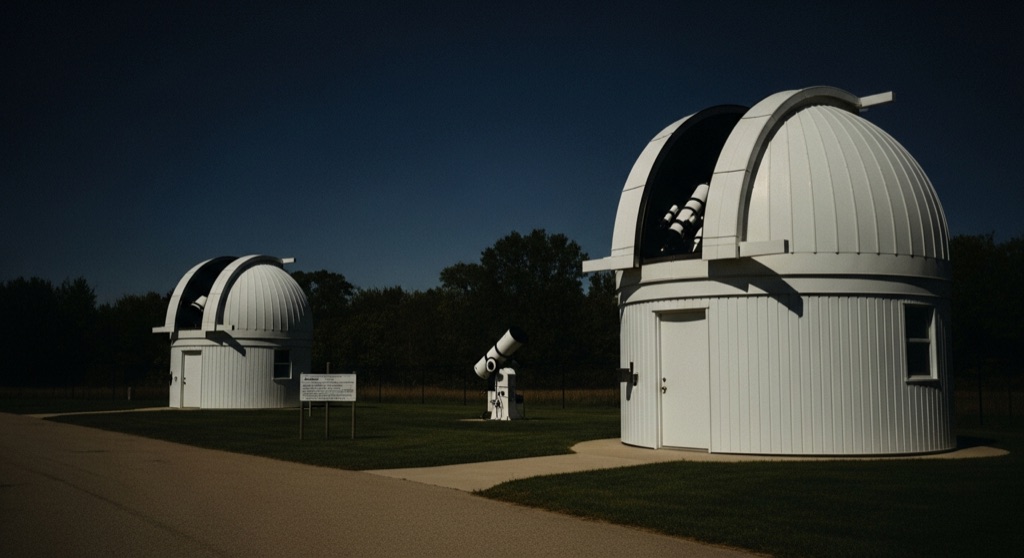
A volunteer-run county-park observatory with two domes, a 16-inch Newtonian reflector and a 14-inch Schmidt-Cassegrain, sitting under genuinely dark Jasper County skies about 20 minutes northeast of the city. Public nights run free every Saturday April through October (skipping the first Saturday of the month), starting around sunset or 8:00 p.m. On the 2nd and 4th Saturdays an 8:00 p.m. classroom program runs first; other nights go straight to the telescopes. Weather permitting, you peer at the Moon, planets, and bright nebulae through the big glass, and you can bring your own scope to set up on the dark field.
→ Three more after-dark & night-sky spots in Des Moines — never the same twice
The story
Drive twenty minutes northeast of the Des Moines metro grid into Ashton Wildwood County Park, and you'll find two white observatory domes sitting in the Jasper County woods. Operated by the volunteer Des Moines Astronomical Society in partnership with the county, this isn't a university research complex or a polished science museum with ticket booths and gift shops. It is a grassroots, dark-sky outpost where local amateur astronomers open dome shutters on summer weekends for anyone willing to make the trek out to Mingo.
Inside the twin domes sit two heavy-duty instruments: a 16-inch Newtonian reflector and a 14-inch Schmidt-Cassegrain telescope. Because Jasper County retains genuinely dark rural skies away from metro light pollution, these optics gather enough light to resolve Saturn's rings, lunar craters, and deep-space nebulae into razor-sharp views. The society opens the facility to the public every Saturday evening from April through October, skipping only the first Saturday of each month.
What it's like
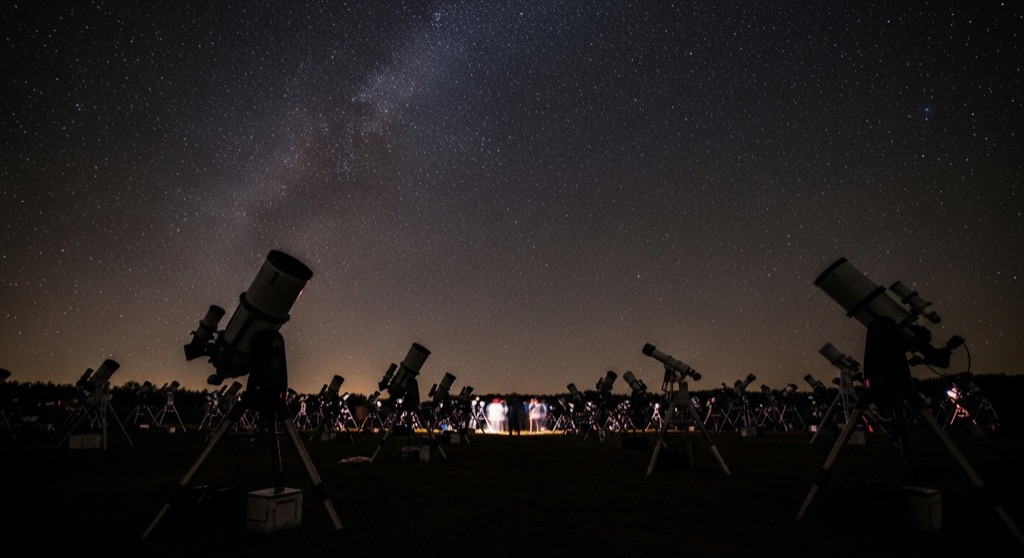
Head out to the park before sunset to park near the observatory building and dark field. On the second and fourth Saturdays of the month, the evening begins at 8:00 p.m. with an astronomy lecture in the classroom before viewing begins; on other open Saturdays, operations go straight to the telescopes once darkness falls. Expect to queue up inside the domes to take turns at the eyepieces, or wander the lawn where society members often set up personal rigs. Bring bug spray, dress warmer than you expect for a rural night, and bring a red-lens flashlight—flicking on a bright white flashlight on a dark field breaks strict amateur astronomy etiquette and ruins everyone's night vision.
The move: Drive out on a clear Saturday night, sit through the 8 p.m. sky talk, then take turns at the eyepiece of the 16-inch reflector hunting for Saturn's rings and a nebula or two.
📍 Before you go Free; public nights are Saturdays April-Oct (not the first Saturday of the month), lecture at 8 p.m., viewing after dark if skies are clear. Bring bug spray and a red flashlight.
- 📍 Mingo (Ashton Wildwood County Park), Jasper County
- 💸 $
- ⚡ Low-key
- 🌗 Outdoors
Where: 8755 W 122nd St N, Ashton Wildwood County Park, Mingo, IA 50168
Hours: Added 2026-06-23 — confirm current hours before you go.
⚠ Seasonal or scheduled — always check before you go.
Pair it with
- Valle Drive-In — Combine an evening outdoor double feature at Iowa's oldest drive-in with a late night of deep-sky stargazing down the road in Jasper County.
- Big Aluminum Bugs — Inspect a local farmer's giant scrap-metal insect sculptures in Newton before driving north to Mingo for sunset at the observatory field.
- Jasper County Historical Museum — Explore Newton's oddball archive of over 70 vintage Maytag washing machines in the afternoon before heading up to Ashton Observatory after dark.
More weird in Des Moines
Good to know
Is there an admission fee for public nights?
No. Public Saturday nights at Ashton Observatory are completely free and run as a community service by Des Moines Astronomical Society volunteers.
What is the schedule for public viewing?
The observatory opens every Saturday evening from April through October, with the exception of the first Saturday of each month. Classroom talks run at 8:00 p.m. on the 2nd and 4th Saturdays, with telescope viewing following as sky conditions allow.
Can I bring my own telescope?
Yes. You are welcome to set up your own scope on the dark viewing lawn alongside society members and other visitors.
Why is a red flashlight required on the field?
White light instantly collapses human night vision, which takes up to half an hour to rebuild in total darkness. Red light lets you navigate safely without affecting your pupils or disturbing other observers.
Plan a visit & invite your people →
Further reading: dmastronomy.com · nightsky.jpl.nasa.gov · Wikipedia
last checked: 2026-06-23