Entry No. 82 — the Denver file — filed under: haunted
Henry Treat Rogers Mansion Site — Where 'The Changeling' Was Born (Now Summer House Condos)
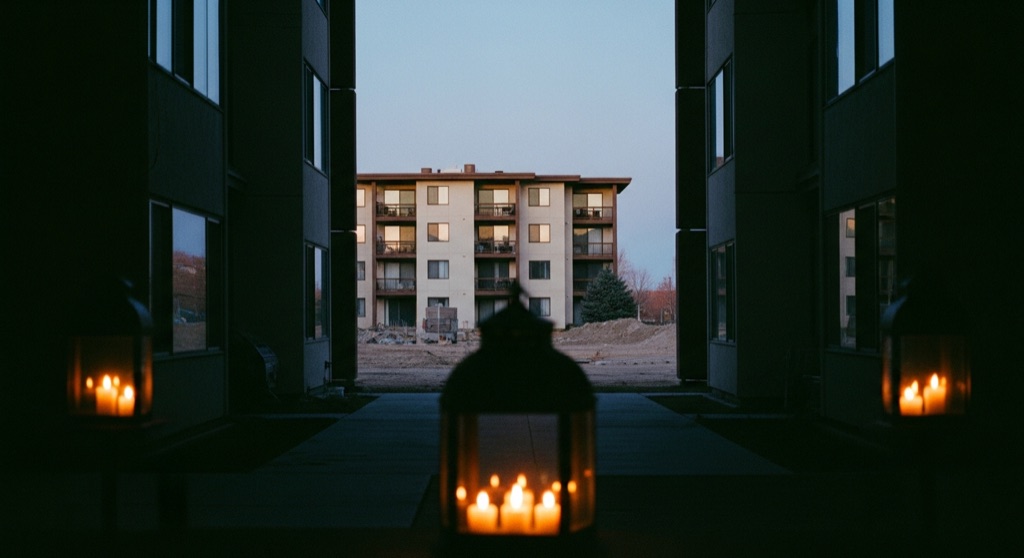
Stand at 13th & Williams and you're on the footprint of a vanished mansion that birthed a horror classic. In the late 1960s playwright Russell Hunter rented the old Henry Treat Rogers house here, supposedly because it was cheap and nobody else would, and later claimed he'd found an attic trunk with a murdered disabled boy's journal — the seed of the 1980 film 'The Changeling.' The Denver Public Library can't actually confirm Hunter ever lived there and a historian has poked holes in the $70-million-fortune backstory, which only makes the legend better. The mansion is gone, replaced by the bland Summer House Condos, so there's nothing to see but the spot — which is the whole point.
→ Three more haunted places & dark-history spots in Denver — never the same twice
The story
Stand at the corner of 13th Avenue and Williams Street in Cheesman Park and you are looking at ground zero for one of the horror genre's most famous urban legends. In 1968, playwright and TV arranger Russell Hunter moved to Denver and rented the 1892 Henry Treat Rogers mansion at 1739 East 13th Avenue—a grand, brick Federalist home he claimed to get for $200 a month because nobody else wanted it. According to Hunter, the house woke him daily at 6:00 a.m. with metallic slamming, turned its own faucets, and shook paintings off the walls. In a sealed attic space accessible only through a closet door, he reported finding a child's trunk containing a 19th-century journal from a disabled nine-year-old boy and a red rubber ball. A subsequent séance allegedly revealed a story of a sickly child heir who died, was secretly buried in a field in southeast Denver, and was replaced by an adopted orphan to secure a massive family inheritance. That experience became the story engine for the 1980 supernatural thriller 'The Changeling.'
The catch is that the history doesn't entirely hold up under scrutiny, which only makes standing on the sidewalk more intriguing. Denver Public Library archivists searched city directories and phone books from the late 1960s and found no record proving Hunter ever lived at 1739 East 13th Avenue. Local historian Phil Goodstein noted that no family in Colorado held a $70 million fortune in that era, and Henry Treat Rogers and his wife Kate were childless. The original 1892 mansion was demolished in the early 1970s to build the Summer House Condominiums. Whether Hunter lived through a genuine haunting or expertly spun a tall tale out of thin air, this exact corner remains the birthplace of a ghost story that influenced horror cinema for decades.
What it's like
There is no Gothic mansion or historical marker to see here—just the multi-story, brown-brick Summer House Condominiums residential building. You are visiting a ghost location, so view the site strictly from the public sidewalk and keep your voice down out of respect for the condo residents. The atmosphere works best at dusk, when the light fades over Cheesman Park across 13th Avenue. Pair your visit with a walk through the park itself, which was built over the 1850s Mount Prospect Cemetery; when the city converted the land in the 1890s, a botched removal effort left an estimated 2,000 corpses buried beneath the turf. Street parking along Williams Street and 13th Avenue is free, though spots fill up quickly on warm weekend evenings.
The move: Watch 'The Changeling' the night before, then walk Cheesman Park at dusk and stand on the condo site debating which parts of Hunter's story were real — a low-key ghost-story stroll with a built-in argument.
📍 Before you go The site sits at the northeast edge of Cheesman Park; park along the leafy residential streets nearby and walk to the corner of 13th & Williams. Street parking is free but tight on warm weekends. There is nothing built to see — Summer House is private housing, so view it from the public sidewalk and keep voices down out of respect for residents. Dusk sets the mood. The bigger payoff is the park itself: it was laid over the old Mount Prospect Cemetery, and an estimated 2,000 bodies were never relocated, so your ghost-story stroll has unmarked graves underfoot. The Denver Botanic Gardens hugs the park's eastern edge if you want to pair the walk.
- 📍 Cheesman Park
- 💸 Free
- ⚡ Low-key
- 🌗 Outdoors
Where: 13th Ave & Williams St, Denver (former 1739 E. 13th Ave; site now occupied by Summer House Condominiums)
Hours: Public street corner / adjacent to Cheesman Park; accessible anytime, best at dusk. Summer House Condos is private residential — view from the sidewalk only.
Pair it with
- Cheesman Park Pavilion & Its Buried Dead — Pair the condo corner with a stroll to the park pavilion, where you will be walking directly over the remaining unexcavated graves of Mount Prospect Cemetery.
- The Learned Lemur — Walk four blocks north to browse real animal skeletons and oddities inside an 1890s East Colfax Victorian rowhouse that matches the era of the vanished mansion.
- Bar Max — Head half a mile north after dusk to debrief the ghost stories over custom craft cocktails mixed based on your preferences from a 100-ingredient wheel.
- Potager — Stroll five blocks west into Capitol Hill for a quiet farm-to-table dinner in a historic brick rowhouse operating since 1997.
More weird in Denver
Good to know
Can I tour the mansion or go inside the building?
No. The original Henry Treat Rogers mansion was demolished in the early 1970s. The site is now occupied by Summer House Condominiums, a private residential building, so it can only be viewed from the public sidewalk.
Did the events in 'The Changeling' actually happen at this location?
Playwright Russell Hunter claimed he experienced supernatural phenomena while living at 1739 E. 13th Ave in 1969. However, Denver Public Library archives have no record of Hunter living at the address, and historians have debunked details of the $70 million inheritance story.
Why is Cheesman Park connected to this story?
The mansion site sits directly across the street from the northeast edge of Cheesman Park. The park was originally Mount Prospect Cemetery, and an estimated 2,000 bodies remain buried underneath the grass after an 1890s conversion effort was abandoned.
Where should I park when visiting?
Look for free residential street parking along 13th Avenue or Williams Street. Spaces can be competitive during weekend afternoons, but clear out toward dusk.
Plan a visit & invite your people →
Further reading: Westword · history.denverlibrary.org · boulderweekly.com
📷 We made a card for this one on Instagram →
last checked: 2026-06-07