Entry No. 93 — the Colorado Springs file — filed under: ruins
Stratton's Independence Mine and Mill
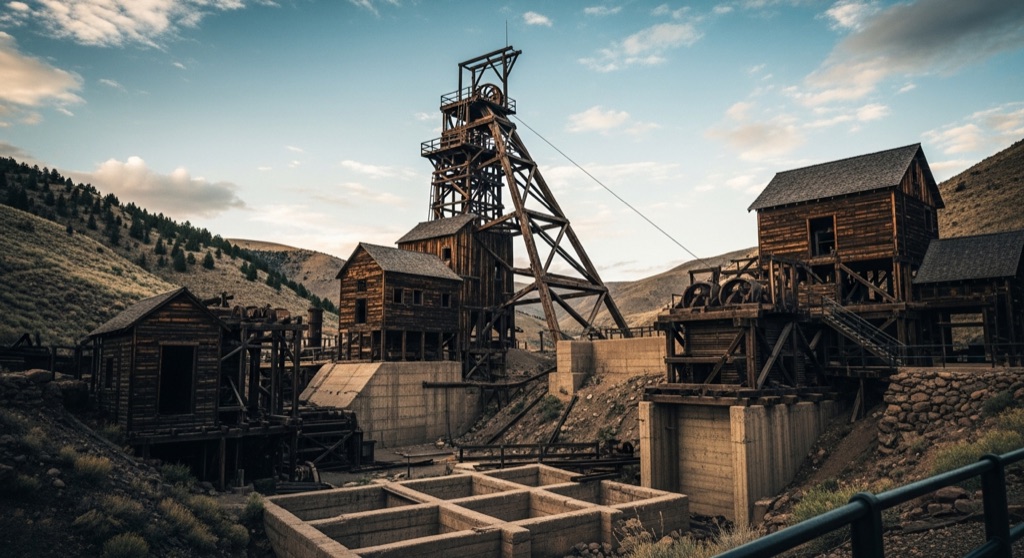
Staked on July 4, 1891, by Winfield Scott Stratton, this historic gold mine became one of the most lucrative strikes in the Cripple Creek District, making Stratton its first gold millionaire. Today, the site features the towering, restored wooden headframe, the remains of the orehouse and powerhouse, and the concrete foundations of the processing mill. Visitors can view these impressive industrial ruins from an interpretive overlook and the surrounding trail system.
→ Three more abandoned & forgotten places in Colorado Springs — never the same twice
The story
Winfield Scott Stratton spent seventeen winters pushing a carpenter's plane in Colorado Springs just to earn enough cash to spend his summers prospecting the high country. On July 4, 1891, high on the south slope of Battle Mountain at 9,780 feet, he staked two claims and named them Independence and Washington in honor of the holiday. He hit gold almost immediately, turning the humble carpenter into the Cripple Creek District's very first gold millionaire by 1894.
The mine nearly slipped out of his hands for a fraction of its worth. In 1893, worn out after two lean years, Stratton optioned the claim to a buyer named L.M. Pearlman. Doing a final walkthrough before handing over control, Stratton stumbled across an unworked, exceptionally high-grade gold vein in an abandoned crosscut—and quietly buried it under dirt and rubble. He sweated out Pearlman's 30-day option period while Pearlman found nothing and let the lease expire. Stratton unburied his strike, limited daily extraction to treat the vein like a high-yield bank account, and eventually sold the operation in 1899 to a London syndicate for $11 million cash.
What sits off Rangeview Road today isn't a theme park or a sanitized underground elevator ride. It's the stark industrial skeleton of that strike: a massive, restored wooden headframe, the structural bones of the orehouse and powerhouse, and stepped concrete mill foundations cascading down the hillside above modern open-pit operations.
What it's like
You'll spot the towering dark timber headframe standing against the slope long before you reach the turnoff at Rangeview Road and Highway 67. Don't plan on climbing the timbers or wandering through the mill footprint—heavy chain-link fencing seals off the structures and open shafts for preservation and safety. You view the entire complex legally and clearly from the adjacent interpretive overlook and public trail system, which circles the rim and offers clear sightlines down into the stepped concrete mill foundations. The wind at nearly 10,000 feet is sharp and constant, so bring a jacket even on mild days, and visit early on a weekday if you want to photograph the historic wood without highway traffic in the background.
The move: Hike the scenic trails surrounding the site to photograph the massive restored headframe and explore the interpretive signs detailing the area's rich gold rush history.
📍 Before you go The historic mine structures and headframe are fenced off for safety and preservation, but they can be legally and clearly viewed from the adjacent public trails and interpretive overlook.
- 📍 Cripple Creek
- 💸 Free
- ⚡ Low-key
- 🌗 Outdoors
Where: Rangeview Rd, Cripple Creek, CO 80813, USA
Hours: Added 2026-07-20 — confirm current access before you go.
Pair it with
- American Eagles Mine — Continue two miles up Bull Hill to see the headframe of the Cripple Creek District's highest underground mine sitting at 10,750 feet.
- Cripple Creek Wild Donkey Herd — Head into Cripple Creek after exploring the ruins to spot the free-roaming donkeys descended from the 1890s pack burros used by early miners.
- Horsethief Falls Trail — Combine your mining history fix with a scenic trail past a historic railroad tunnel on Highway 67 just north of town.
More weird in Colorado Springs
Good to know
Can you go inside or explore the mine buildings?
No. The historic wooden headframe, orehouse ruins, and mill foundations are fenced off to protect visitors from unstable structures and deep drops, but they are clearly visible from public trails and the overlook.
Where is Stratton's Independence Mine located?
The site sits at the junction of Rangeview Road and State Highway 67 on the slope of Battle Mountain, near Victor and Cripple Creek, Colorado.
How much gold did the mine actually produce?
Between late 1893 and April 1899 alone, the mine yielded roughly 200,000 ounces of gold, eventually generating upwards of $28 million in total gold production.
Do you need a ticket or tour booking to visit?
No tickets or bookings are required to view the site from the public trail system and overlook, but access policies can change, so confirm local conditions before traveling.
Plan a visit & invite your people →
Further reading: Wikipedia · fotospot.com · cspm.org
last checked: 2026-07-20