Entry No. 41 — the Butte file — filed under: haunted
Elkhorn State Park (Elkhorn Ghost Town)
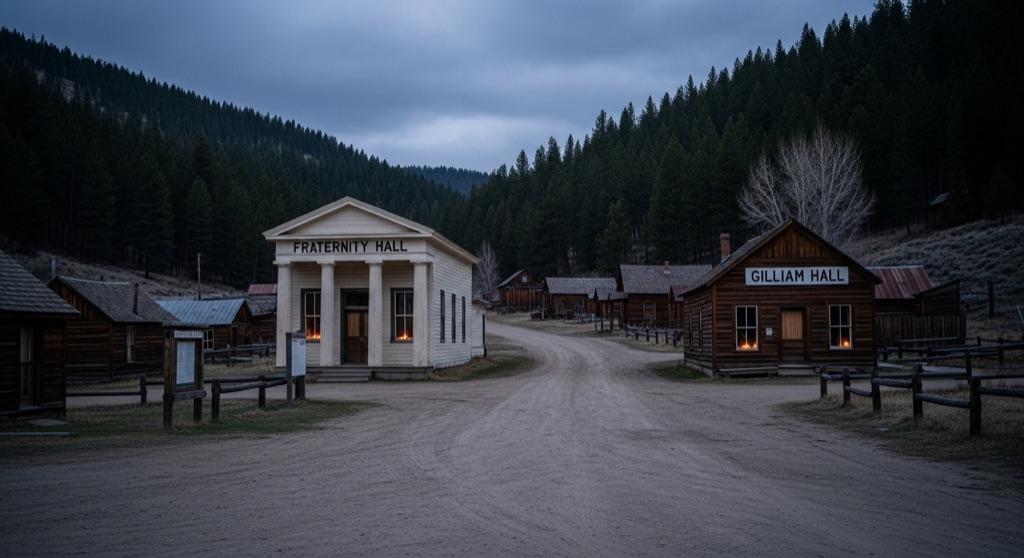
Montana's smallest state park preserves the remnants of a silver boomtown that peaked at roughly 2,500 people before a diphtheria epidemic and falling silver prices emptied it. The two state-owned buildings, Fraternity Hall and Gilliam Hall, still stand on the main drag; Fraternity Hall is an odd fusion of Greek Revival columns and rough gold-camp carpentry, and its second floor is open to visitors. A scattering of private cabins and old structures around them means a handful of the town is still technically inhabited.
→ Three more abandoned & forgotten places in Butte — never the same twice
The story
Most ghost towns in the American West are either commercialized open-air museums or completely abandoned piles of timber, but Elkhorn operates under a stranger dynamic. Montana's smallest state park encompasses less than a single acre, consisting of just two preserved 1890s buildings standing directly inside a mountain settlement where actual residents still live. Silver galena ore was first discovered high in the Elkhorn Mountains in 1868 by Swiss prospector Peter Wys. After Helena businessman Anton Holter acquired and developed the claim in the 1870s, the camp exploded into a boomtown of roughly 2,500 people. Unlike the transient male camps elsewhere in the territory, Elkhorn became a town of families, boasting three schools, candy shops, a barbershop, and even a Cornish Glee Club.
The crown jewel of the surviving town is Fraternity Hall, erected in 1893 by a coalition of fraternal orders including the Masons, Knights of Pythias, and Odd Fellows. Architecturally, it is a weird fusion of formal Greek Revival design—complete with a neo-classical balcony and decorative columns—grafted onto raw frontier timber construction. The ground floor hosted community dances, theater presentations, and the occasional brawl, while the secretive lodge rooms sat on the second floor. Next door stands Gilliam Hall, an 1880s structure that functioned as a general store, saloon, and dance hall.
The boom ended sharply. A devastating diphtheria epidemic swept through in the winter of 1888–1889, claiming the lives of dozens of local children. A few years later, the Silver Crash of 1893 wiped out mining profits, forcing three-quarters of the town to abandon their homes in just two months. The state designated the two central halls as a state park in 1980 to stop them from being torn down or relocated, leaving them preserved as public state property surrounded by private cabins and lingering locals.
What it's like
Reaching Elkhorn means tackling roughly nine miles of unpaved, washboard gravel road off Highway 69 that climbs up to 6,500 feet in the Elkhorn Mountains—manageable in standard passenger cars during dry summer months, but rough enough to rattle your teeth. When you park on the main drag, be mindful of where you step: state park property is strictly limited to Fraternity Hall and Gilliam Hall, while surrounding cabins and structures are private property. You can walk inside both state-owned halls (always latch the heavy wooden doors behind you to keep out wind and animals), climb to Fraternity Hall's second floor, and step onto the balcony. Afterwards, follow the road roughly three-quarters of a mile past town to the hillside cemetery, where weathered headstones mark the graves of children lost to the 1889 diphtheria outbreak alongside Swiss discoverer Peter Wys.
The move: Drive up the dirt road into the pines and wander the two ghost-town halls, then poke around the old mining-era cemetery.
📍 Before you go Access road is dirt/gravel and can be rough; most buildings are private property, view from outside.
- 📍 Elkhorn (near Boulder), MT
- 💸 Free
- ⚡ Up for anything
- 🌗 Outdoors
Where: ~18 mi northeast of Boulder via Elkhorn Rd, Elkhorn, MT
Hours: Added 2026-06-24 — confirm current hours before you go.
Pair it with
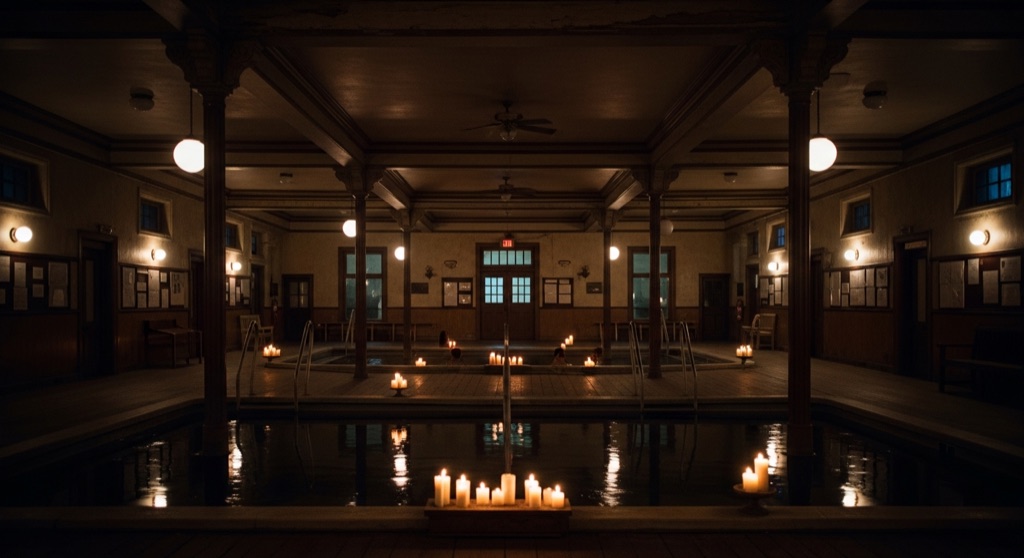
- Boulder Hot Springs — Wash off the dirt-road dust by soaking in the natural geothermal pools of this historic 1910 Mission-style hotel located down at the base of the mountain road.
- Ringing Rocks — Pair your ghost town trek with a trip south to Pipestone to strike a rare field of granite boulders that chime like metal bells.
- Bell-Diamond Mine — Trade Elkhorn's quiet 1890s silver halls for the imposing 1898 steel headframe sitting over Butte's famous copper hill.
More weird in Butte

Good to know
Is there an entrance fee for Elkhorn State Park?
Entrance is free for Montana residents who pay the state park fee with their vehicle registration. Non-residents pay standard Montana state park entrance fees, though there are no staffed fee booths on site.
Can you go inside the buildings at Elkhorn?
You are allowed to enter both state-owned structures—Fraternity Hall and Gilliam Hall—including the second floor of Fraternity Hall. All other buildings in town are privately owned and off-limits.
Is the access road to Elkhorn paved?
No. While the first stretch from Boulder on Highway 69 is paved, the final 9-plus miles along Elkhorn Road is dirt and gravel. It is maintained year-round but can become rough, muddy, or snow-packed.
Are there restrooms or camping facilities on site?
Camping is strictly prohibited in and around Elkhorn. The park provides seasonal picnic tables and a portable latrine, but there is no running water or permanent facility.
Plan a visit & invite your people →
Further reading: fwp.mt.gov · Wikipedia · Official site · southwestmt.com · historynet.com
last checked: 2026-06-24