Entry No. 31 — the Boulder file — filed under: geological oddity
Valmont Butte
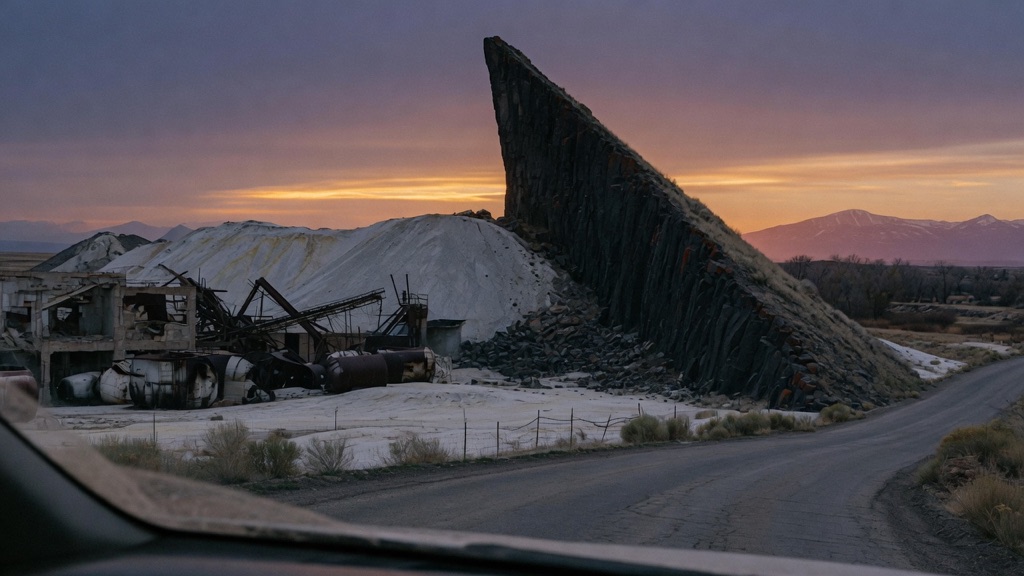
A 200-foot fin of alkali basalt juts from the flat plain east of Boulder at the confluence of Boulder Creek and South Boulder Creek — a volcanic dyke exposed by millennia of erosion that cuts a dramatic silhouette against the Front Range. Native peoples inhabited Boulder Valley for over 10,000 years and considered this butte sacred ground; the Arapaho used it as a winter camp as late as 1858 and held communal hunts nearby through 1860. The convergence of two creeks produced medicinal plants and the basalt's heat retention made it ideal for sweat lodge ceremonies. Allied Chemical Company acquired the site in 1941 and ran a fluorspar processing mill through 1974, leaving behind more than 430,000 tons of radioactive tailings laced with lead and arsenic. The EPA placed Valmont Butte among Colorado's ten most contaminated sites. Boulder County designated it a Natural Landmark in 1995; the city purchased it in 2000 for $2.54 million. The ruined mill structures still stand.
→ Three at a time, never the same twice — explore weird Boulder
The story
A 200-foot fin of dark alkali basalt juts out from the flat plain east of Boulder right at the confluence of Boulder Creek and South Boulder Creek. Exposed over millennia of erosion, this volcanic dike retains heat extraordinarily well, making it a natural magnet for human settlement. Indigenous peoples inhabited the Boulder Valley for over 10,000 years and held the stone spine as sacred ground. The Arapaho set up winter camps at its base as late as 1858 and held communal hunts nearby through 1860, gathering medicinal plants from the marshy confluence and holding sweat lodge ceremonies against the warm basalt.
The twentieth century brought heavy industry and an environmental disaster. Allied Chemical Company acquired the property in 1941 to run a fluorspar processing mill through 1974. When the machinery finally stopped, the company walked away leaving more than 430,000 tons of radioactive tailings laced with lead and arsenic dumped across the land. The contamination was so severe that the EPA placed Valmont Butte among Colorado’s ten most contaminated sites. Boulder County named it a Natural Landmark in 1995, and the city bought the property for $2.54 million in 2000, but the crumbling mill complex and capped waste ponds remain stuck in decades of municipal cleanup debates.
You won't find a visitor center, a trailhead, or a single city plaque out here explaining what happened. The site sits behind security fencing while local agencies, corporate successors, and Tribal representatives negotiate remediation and land memory. From the shoulder of Valmont Road, you are looking at ten thousand years of sacred Indigenous history crashing directly into raw geology and un-remediated industrial contamination.
What it's like
Pull off the shoulder of Valmont Road near 63rd Street or park at the edge of the Valmont Bike Park right as the sun drops behind the Front Range. Do not try to hop the fence or hike the spine—the city owns the property, trespassing carries legal risk, and the soil is genuinely hazardous due to arsenic and lead tailings. What you get from the roadside is a silhouette against the sunset: the jagged basalt fin looming over the decaying gray skeleton of the Allied Chemical mill. It is quiet, unsettling, and best treated as a slow drive-by or a short roadside stop for quiet contemplation.
The move: Drive out past the bike park at dusk and view the basalt spine from the road — the silhouette against a sunset sky is genuinely eerie. Pair it with a long discussion about land, memory, and what gets left behind. Best approached as a contemplative drive-by rather than a hike.
📍 Before you go The butte is city of Boulder property and is formally off-limits to the public — trespassing carries legal risk and the contaminated tailings make physical contact with the soil genuinely hazardous. View from Valmont Road or the adjacent Valmont Bike Park area. No trail, no signage, no facilities on-site. Open year-round for drive-by or roadside viewing. No reservation required. The abandoned mill structures are visible but do not approach them.
- 📍 Boulder
- 💸 Free
- ⚡ Up for anything
- 🌗 Outdoors
Where: Near Valmont Rd & 63rd St, Boulder, CO 80301 (east of Valmont Bike Park; viewable from road)
Hours: Added 2026-06-11 — confirm current hours before you go.
Pair it with
- Shelby American Collection — Located less than a third of a mile away in an adjacent industrial park, this stash of iconic 1960s Cobra race cars offers a mechanical contrast to the silent industrial ruins on the butte.
- Crystal Dragon — After viewing a sacred rock spine turned chemical dump, head four miles west to Boulder's oldest metaphysical shop for crystals and herbal remedies.
- Hotel Boulderado — End your sunset drive back in downtown Boulder with a drink under the stained-glass ceiling of this historic 1909 hotel.
More weird in Boulder
Good to know
Can I walk up to the abandoned mill or hike the butte?
No. The property is city-owned and strictly off-limits. Security fences surround the site, and physical contact with the soil is hazardous due to leftover arsenic, lead, and radioactive tailings.
Where is the best place to view Valmont Butte?
Safely pull off along Valmont Road near 63rd Street or view the ridge from the eastern boundary of the Valmont Bike Park. You can clearly see both the basalt spine and the ruined mill structures from the roadside.
Why is the soil at Valmont Butte toxic?
From 1941 through 1974, Allied Chemical Company ran a fluorspar processing mill on the site, leaving behind over 430,000 tons of waste tailings contaminated with lead, arsenic, and radioactive material.
Why was this site significant to Native American tribes?
Indigenous peoples lived in the Boulder Valley for over 10,000 years and considered the Butte sacred. The Arapaho used it for winter camps through 1858, utilizing the basalt's heat retention for sweat lodge ceremonies and gathering medicinal plants at the confluence of Boulder and South Boulder Creeks.
Plan a visit & invite your people →
Further reading: Atlas Obscura · archives.boulderweekly.com · Reddit
last checked: 2026-06-11