Entry No. 48 — the Boston file — filed under: ruins
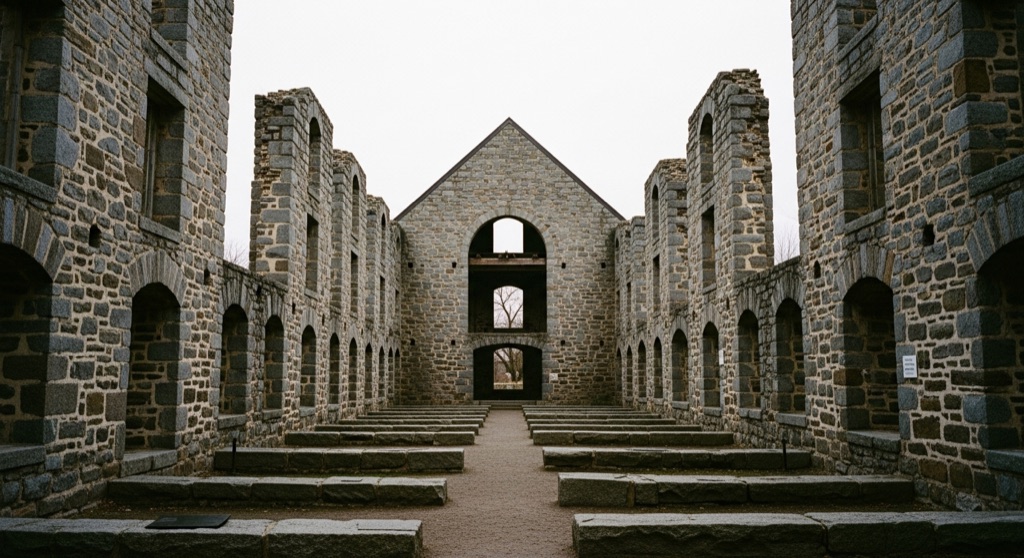
Lyons Turning Mill Ruins
Built in 1894, the Lyons Turning Mill used giant steam-powered lathes to shape Quincy's famous granite into columns, spheres, and architectural pieces. After its closure in 1917, the machinery was stripped, leaving behind only the towering, roofless granite walls and foundations. Today, these stabilized ruins are preserved as an outdoor historical exhibit managed by the Quincy Quarry and Granite Workers Museum.
→ Three more abandoned & forgotten places in Boston — never the same twice
The story
Before steam-powered Scottish lathes were hauled into West Quincy in 1894, shaping local dark granite into 22-foot building columns or smooth six-foot spheres required months of grueling, manual chisel work. Industrialist James Lyons changed that when he spent $40,000 building a 200-foot-long mill anchored by a 150-horsepower steam boiler. A railroad spur ran straight through the building's center, allowing a 20-ton overhead crane to pick up raw quarry blocks and feed them into heavy machinery. At its peak, 80 workers turned out monumental stone here, including 500 pink granite balusters for New York's original Pennsylvania Station.
The industrial boom didn't last. Debt and corporate restructuring shuttered the mill by 1917, and crews stripped out the boilers and Scottish turning lathes to ship them off to Utah. All that stayed behind were the roofless, foot-thick exterior walls of Quincy granite. If local activists hadn't made a fuss in the late 1970s, you'd be looking at a trash pile—the city planned to bury the ruins under Phase 4 of a municipal landfill expansion before preservationists won National Register status in 1980.
You didn't hear it from us, but standing inside the quiet stone rectangle today feels like stepping into an open-air cathedral hidden in plain sight below an upscale golf course. With the machinery long gone, you can still trace the concrete pads where the steam engines hummed and see where heavy derricks once swung stone into waiting train cars.
What it's like
Expect a quiet, open-air set of roofless granite walls sitting off Quarry Hills Drive, right next to the manicured fairways of Granite Links. There are no velvet ropes or ticket booths on a typical weekday, so you can walk right inside the shell to explore foundation studs, inspect interpretive signs, and check out the replica blacksmith shop built by local museum volunteers. The central pathway follows the old railroad line that once sliced through the building. The museum holds occasional open-house events on select weekends, but visiting on a quiet morning gives you the stone skeleton entirely to yourself.
The move: Stroll through the historic grounds together to admire and photograph the monumental granite ruins, then read the interpretive signs to learn about the site's industrial past.
📍 Before you go The ruins are owned by the City of Quincy and managed as an outdoor exhibit by the Quincy Quarry and Granite Workers Museum, which permits public self-guided tours of the grounds.
- 📍 Quincy
- 💸 Free
- ⚡ Low-key
- 🌗 Outdoors
Where: Quincy, MA 02169, USA
Hours: Added 2026-07-20 — confirm current access before you go.
Pair it with
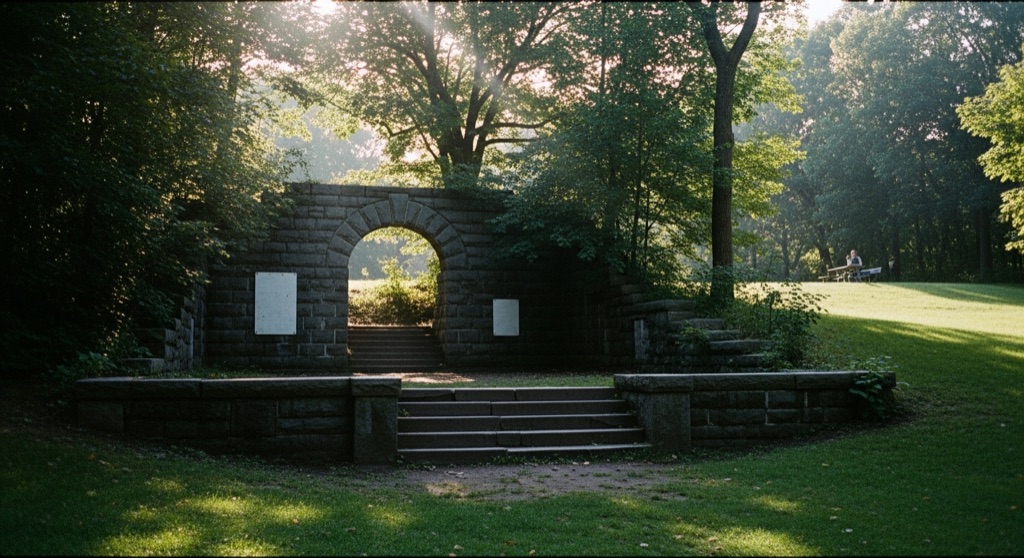
- Franklin Park - Overlook Shelter Ruins — Pair these two sets of 19th-century stone ruins to see how Quincy's heavy industrial granite mill compares to Frederick Law Olmsted's fire-gutted rustic shelter in Franklin Park.
- Forest Hills Cemetery — Follow Quincy's stone-cutting legacy to this 275-acre garden cemetery filled with elaborate Victorian monuments and master-carved granite sculpture.
- Museum of Bad Art (MOBA) — Contrast the exacting engineering of 1890s steam-turned stone columns with a trip to a gallery dedicated entirely to sincerely attempted, gloriously flawed art.
- Eliot Burying Ground — Compare 17th-century hand-carved colonial headstones in Roxbury with the heavy steam-lathe granite craft that dominated Greater Boston two centuries later.
More weird in Boston

Good to know
How much does it cost to visit the Lyons Turning Mill ruins?
Admission to the outdoor ruin grounds is free, with public self-guided access permitted year-round.
What was manufactured inside the turning mill?
The mill used steam-driven lathes to carve heavy granite into architectural columns, six-foot polished spheres, and decorative balusters for buildings across the country.
When is the site open for tours?
The grounds are open daily for self-guided walks. The Quincy Quarry and Granite Workers Museum occasionally hosts open houses with docents on select weekends from spring through fall.
Where are the ruins located?
The site sits at 20 Quarry Hills Drive in Quincy, Massachusetts (02169), near Ricciuti Drive and adjacent to the Granite Links Golf Club.
Plan a visit & invite your people →
Further reading: Wikipedia · quincyquarrymuseum.org
last checked: 2026-07-20