Entry No. 44 — the Albuquerque file — filed under: dark-sky-park
Valles Caldera National Preserve
An International Dark Sky Park inside an 89,000-acre ancient volcanic crater, Valles Caldera offers pristine zero-light-pollution Milky Way viewing, ranger-led full moon hikes, and summer night-sky festivals.
→ Three more after-dark & night-sky spots in Albuquerque — never the same twice
The story
About 1.25 million years ago, the earth beneath the Jemez Mountains didn't just erupt—it emptied out. A supervolcano blasted roughly 95 cubic miles of molten rock into the atmosphere, causing the roof of the subterranean magma chamber to collapse under its own weight into a 13-mile-wide bowl. What remains today is an 89,000-acre volcanic depression anchored by Redondo Peak, an 11,254-foot resurgent lava dome pushed upward from the center of the ancient crater floor.
For over a century, this massive geological crater was hidden from public access. Starting in 1860, the land operated as the private Baca Ranch, kept off-limits to outsiders while cattle grazed over ancestral Puebloan obsidian sites. Congress finally purchased the property in 2000, and in 2021, the International Dark-Sky Association officially designated Valles Caldera an International Dark Sky Park, recognizing the natural light barrier formed by its surrounding mountain rims.
At night, the high-altitude basin falls into deep silence, interrupted only by the distant bugling of wild elk herds. Because the high crater walls block light bleed from Albuquerque and Los Alamos, the galactic core of the Milky Way rises over the valley rim with rare clarity. Standing on the crater floor after dark feels less like looking into the sky and more like looking out from the bottom of a giant planetary amphitheater.
What it's like
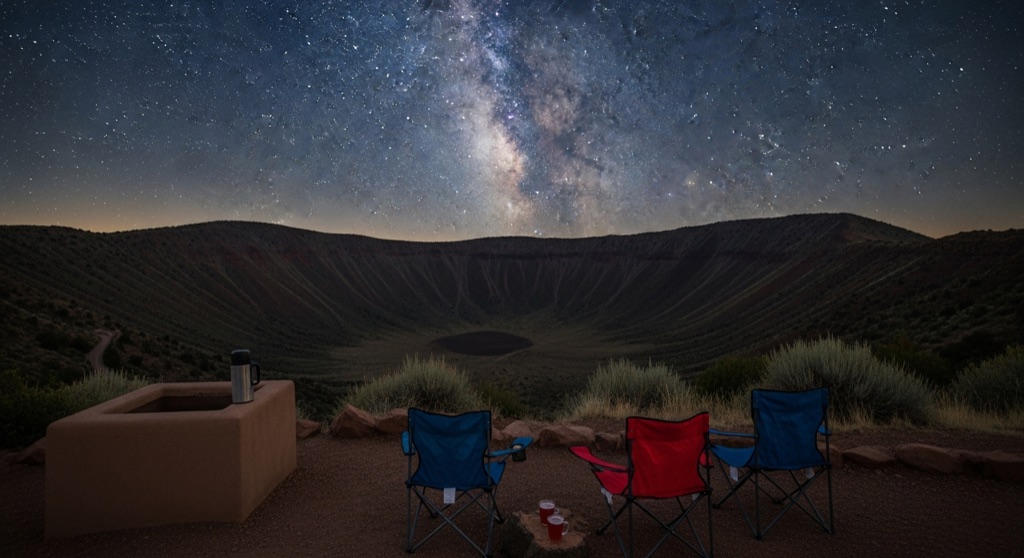
Drive up NM State Route 4 before dusk and set up along one of the six designated highway pullouts overlooking Valle Grande. The main park entrance gates close at dusk—standard daily hours end at 5:00 PM or 6:00 PM depending on the season—so unless you have booked a spot on a ranger-led full moon hike or night-sky festival, after-hours stargazing is done directly from the roadside overlooks. Sitting at over 8,000 feet of elevation, temperatures drop rapidly once the sun vanishes behind the rim. Pack heavy winter layers even in mid-summer, bring camp chairs and a thermos of warm cider, and use a red-light filter on your flashlight so you don't compromise your night vision or disturb the astrophotographers lined up along the shoulder.
The move: Drive up Highway 4 before dusk, set up camp chairs along the Valle Grande pullouts with a thermos of warm cider, and watch the central galactic core rise over the massive volcanic bowl rim.
- 📍 Jemez Mountains
- 💸 $
- ⚡ Low-key
- 🌗 Outdoors
Where: 39201 NM-4, Jemez Springs, NM 87025
Hours: Added 2026-07-21 — confirm current hours before you go.
Pair it with
- Jemez Hot Springs — Follow Highway 4 south after stargazing to soak off the high-mountain chill in natural geothermal mineral pools set against red canyon walls.
- Vernon's Speakeasy — Contrast the unlit silence of an ancient volcanic crater with a hidden 1920s supper club tucked behind an unmarked door in Los Ranchos.
- Tinkertown Museum — Balance the immense, empty scale of the 13-mile supervolcano with decades of hand-carved folk art enclosed within glass bottle walls.
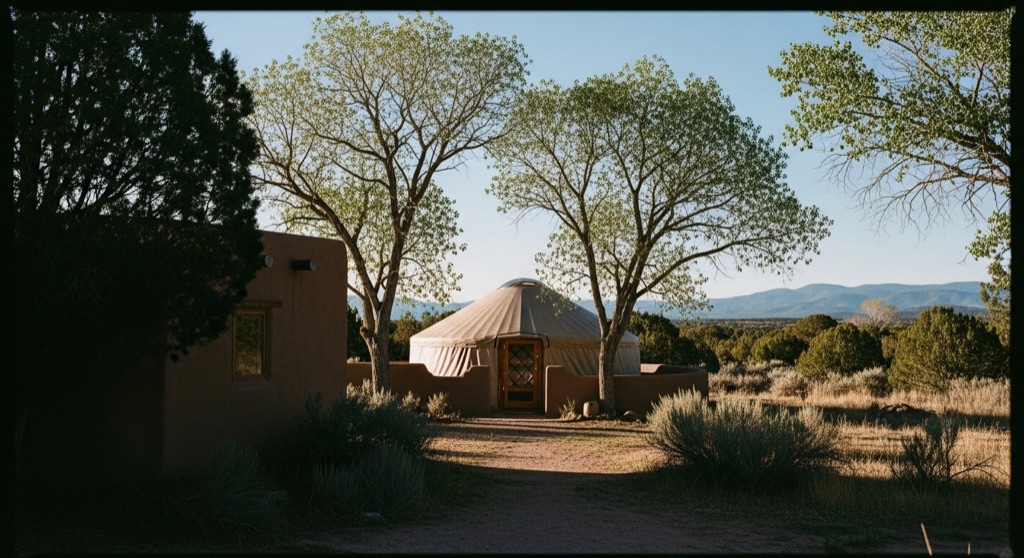
- The Wellness Yurt at Los Poblanos — Pair a night under zero-light-pollution skies with a morning sound bath guided by singing bowls inside a quiet cottonwood grove yurt.
More weird in Albuquerque
Good to know
Can I enter the preserve after the main gates close?
The main vehicle entrance gate closes at dusk (5:00 PM standard, 6:00 PM during summer hours), but stargazing is accessible 24 hours a day from six large pullouts along NM State Route 4 overlooking Valle Grande. Access inside the main gate after hours requires advance registration for official ranger-led programs like full moon hikes.
Is there an entrance fee for stargazing?
Viewing the night sky from the public pullouts along NM State Route 4 is free. If you enter the preserve during standard operating hours or attend scheduled park events, standard entrance fees apply ($25 per vehicle, valid for 7 days, or an America the Beautiful pass).
What gear should I bring for night-sky viewing?
At high mountain elevation, night temperatures plunge quickly. Bring heavy thermal clothing, reclining camp chairs, a thermos with a hot beverage, and a flashlight with a red-light filter or red cellophane cover to preserve dark-adapted vision.
How was the Valles Caldera formed?
Roughly 1.25 million years ago, a massive volcanic supereruption emptied the magma chamber beneath the area, causing the land to collapse into a 13-mile-wide bowl now surrounded by volcanic ring domes.
Plan a visit & invite your people →
Further reading: nps.gov · darksky.org · usgs.gov
last checked: 2026-07-21