Entry No. 39 — the Albuquerque file — filed under: astronomy
UNM Campus Observatory
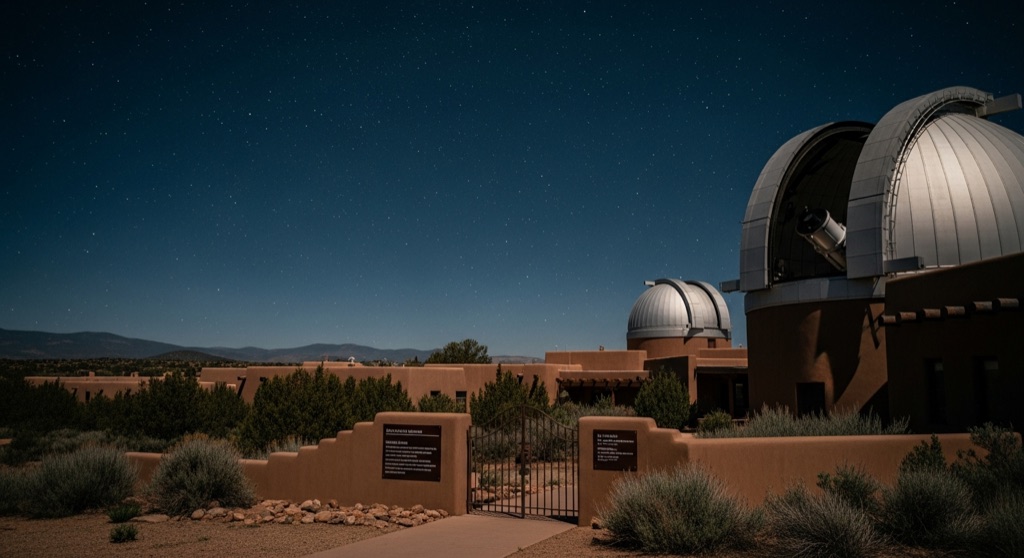
Tucked onto UNM's main campus, this university observatory opens its dome to the public on clear Friday nights during spring and fall semesters, providing free access to a 14-inch Celestron Edge HD telescope.
→ Three more after-dark & night-sky spots in Albuquerque — never the same twice
The story
Most people assume catching clear views of deep space in New Mexico requires driving an hour into the high desert, but you don't actually have to leave the university district. Tucked right on Yale Boulevard, two blocks north of Lomas, the UNM Department of Physics and Astronomy maintains a stucco building topped with a stark white dome. On clear Friday nights during the fall and spring academic semesters, student operators open up the facility, crank open the roof, and point a 14-inch Celestron Edge HD telescope into the darkness—all completely free to anyone who wanders in.
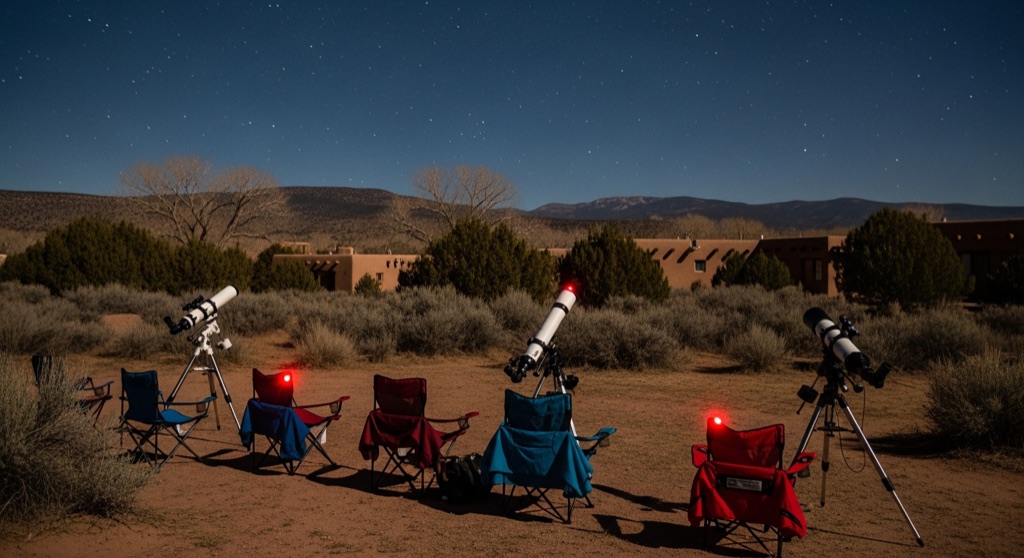
This isn't a sleek, polished tourist attraction; it's a working campus observatory where UNM physics and astrophysics students put their classroom theory into practice. On public open nights, members of the Albuquerque Astronomical Society often roll up to the surrounding lot with their own amateur rigs, multiplying your view options. Depending on what's visible in the evening sky, you'll peer through the optics at Saturn's rings, Jupiter's moons, or the Andromeda Galaxy on a Paramount tracking mount while the student crew breaks down celestial mechanics in real time.
What it's like
Expect a dark, low-key pocket of North Campus illuminated only by red guide lights, designed to protect your eyes' dark adaptation. You'll wait your turn to climb the narrow metal staircase inside the dome to look through the main 14-inch eyepiece, then linger in the courtyard to chat with student astronomers or look through portable telescopes set up on the pavement. The absolute rule here: check the observatory's website at 3 PM on Friday before heading out—if clouds or wind interfere, the department posts a clearance or cancellation update right on the spot. Bring a thick jacket in spring or winter, as the dome interior is kept unheated to match the night air.
The move: Check the observatory's webpage at 3 PM on a Friday to verify weather clearance, then head over around 8 PM to view Saturn's rings or the Andromeda Galaxy while UNM physics students answer your star questions.
- 📍 University / UNM Main Campus
- 💸 $
- ⚡ Low-key
- 🌗 Outdoors
Where: 1919 Lomas Blvd NE, Albuquerque, NM 87131
Hours: Added 2026-07-21 — confirm current hours before you go.
⚠ Seasonal or scheduled — always check before you go.
Pair it with
- UNM Meteorite Museum — Pair your evening stargazing with an afternoon visit to Northrop Hall on campus to examine real lunar samples and fallen meteorites before looking up at where they came from.
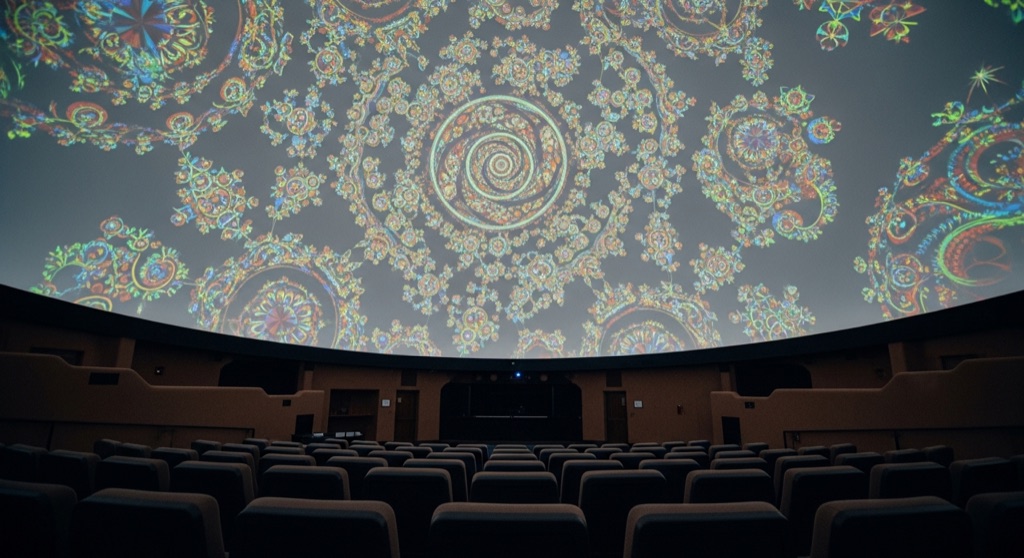
- First Friday Fractals at NMMNHS Planetarium — If your outing falls on the first Friday of the month, contrast real-time optical observation at UNM with full-dome laser fractal shows across town.
- Daydream Rum Bar — Cap off a chilly night peering into deep space with a subterranean cocktail hidden beneath Little Bear Coffee in nearby Nob Hill.
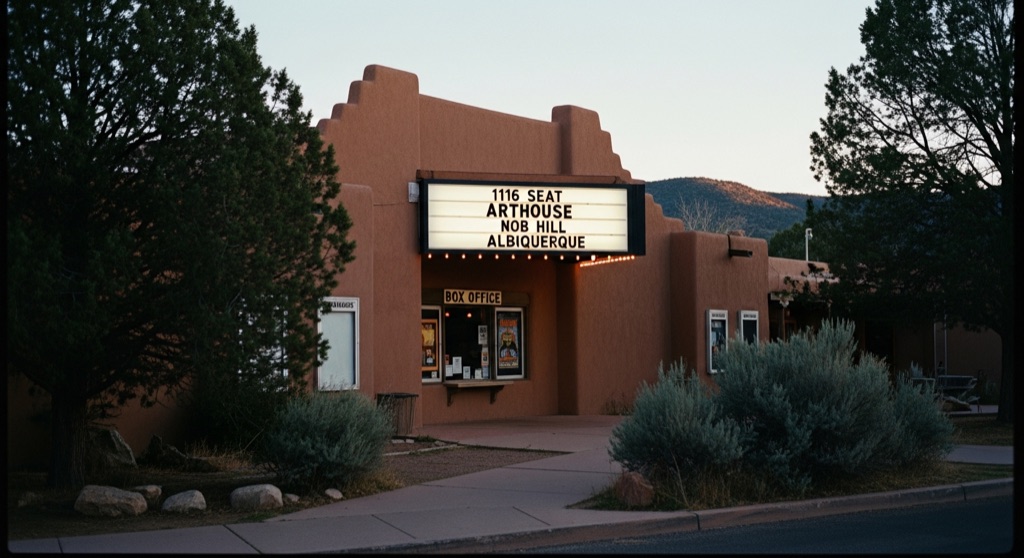
- The Guild Cinema — Follow up an early-evening telescope session with a late-night cult movie screening at Nob Hill's iconic 1966 single-screen arthouse cinema.
More weird in Albuquerque
Good to know
When are the public viewing sessions held?
Sessions run on clear Friday nights during UNM's fall and spring semesters from 7 to 9 PM during Standard Time and 8 to 10 PM during Daylight Saving Time. The observatory is closed during summer, university breaks, and inclement weather.
How do I know if the observatory is open on a given Friday?
Check the UNM Campus Observatory webpage at precisely 3 PM every Friday, where staff post an official open or closed weather update for that evening.
Is there an entry fee or reservation required?
No, viewing sessions are entirely free and open to the public on a walk-in basis, though groups of 15 or more should contact the UNM Physics and Astronomy department in advance.
Is the observatory dome wheelchair accessible?
The main 14-inch telescope inside the dome is accessed via a staircase with no elevator, though volunteer telescopes set up outside in the courtyard and parking lot are at ground level.
Are flashlights or cell phones allowed inside?
White lights, flash photography, flashlights, and bright phone screens are strictly forbidden around the telescopes because they destroy night vision. Only soft red lights are permitted.
Plan a visit & invite your people →
Further reading: Official site · newmexico.org · taas.org
last checked: 2026-07-21