Entry No. 25 — the Wichita file — filed under: WPA statue
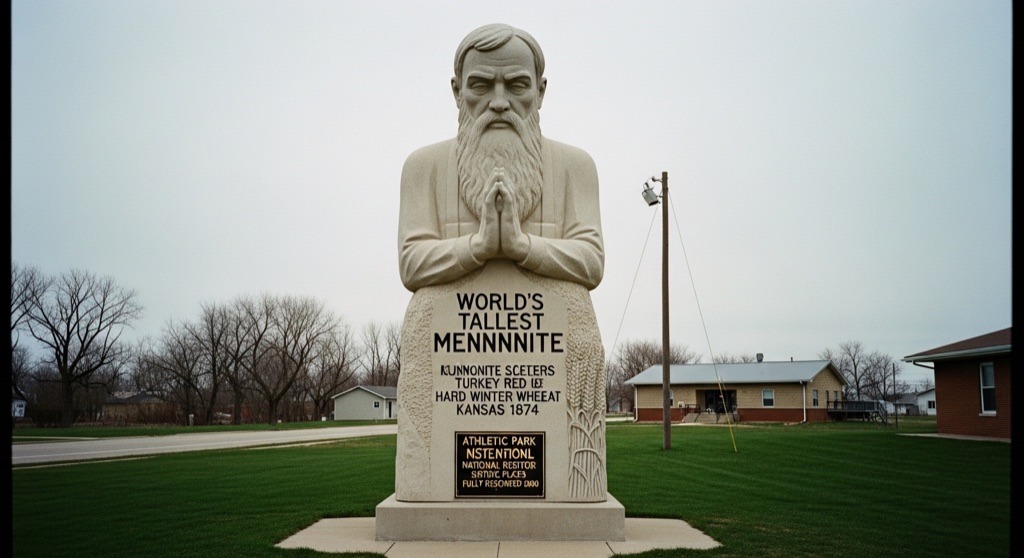
World's Tallest Mennonite (Mennonite Settler Statue)
A 17-foot native Kansas limestone WPA statue from 1942, nicknamed the "World's Tallest Mennonite" by Roadside America, it depicts a bearded farmer in a posture of prayer and honors the Mennonite settlers who brought Turkey Red hard winter wheat from Russia to Kansas in 1874. Listed on the National Register of Historic Places since 1998 and fully restored in 2000, it's one of the quirkier pieces of roadside Americana in the Wichita orbit.
→ Three more weird outdoor & roadside oddities in Wichita — never the same twice
The story
In 1942, right in the middle of World War II, a 17-foot native Kansas limestone farmer was quietly unveiled inside Newton's Athletic Park. Carved by artist Max Nixon as a Works Progress Administration project, the blocky, bearded figure stands in a posture of prayer. The monument was built to honor the Russian-German Mennonite immigrants who arrived in Kansas in 1874 carrying Turkey Red hard winter wheat—the seed stock that permanently established the state's agricultural empire. But raising a massive public monument to pacifist, German-speaking settlers during the height of anti-German wartime sentiment was politically touchy, making its placement in the park a delicate maneuver.
Roadside America later bestowed the nickname 'World's Tallest Mennonite,' a label that stuck far better than its official title, the Mennonite Settler Statue. Placed on the National Register of Historic Places in 1998 and fully restored in 2000, the monolith remains one of the stranger pieces of New Deal roadside art in Kansas: a towering, austere figure carved from local prairie stone, standing silent vigil next to high school athletic fields.
What it's like
You will find the giant stone farmer positioned along the circular drive inside Athletic Park, facing north toward the playground parking lot near Fischer Field stadium. Pull into the lot and walk right up to his boots for scale—at 17 feet tall, he easily looms over anyone at his base. The site is entirely outdoors with zero shade or shelter, so pick a day with clean light if you want decent photos. Keep in mind that ballfield tournaments and stadium games lock up the drive and parking lots; drop by on a quiet weekday morning if you want to read the on-site historical marker without navigating team buses.
The move: Drive out to Athletic Park, stand next to the towering stone farmer for obligatory scale photos, then follow up with a stop at one of Newton's Mennonite-heritage bakeries or the Kauffman Museum on the Bethel College campus nearby to put the wheat-and-settlers story into fuller context.
📍 Before you go The statue stands on the circular drive inside Newton's Athletic Park, a free public city park about a half-hour north of Wichita off I-135. Look for it near the Fischer Field football stadium; it faces north toward a small parking lot and playground, so park by the lot and walk over for your scale photos. It's fully outdoors with no shade or shelter, so pick a clear day and good light, and note that ballfield tournaments can crowd the lots. An on-site marker fills in the backstory, and Bethel College's campus sits a few minutes north in North Newton.
- 📍 Newton
- 💸 Free
- ⚡ Up for anything
- 🌗 Outdoors
Where: Athletic Park, 181 Athletic Park Dr, Newton, KS 67114
Hours: Mined 2026-06-07 — confirm current hours before you go.
Pair it with
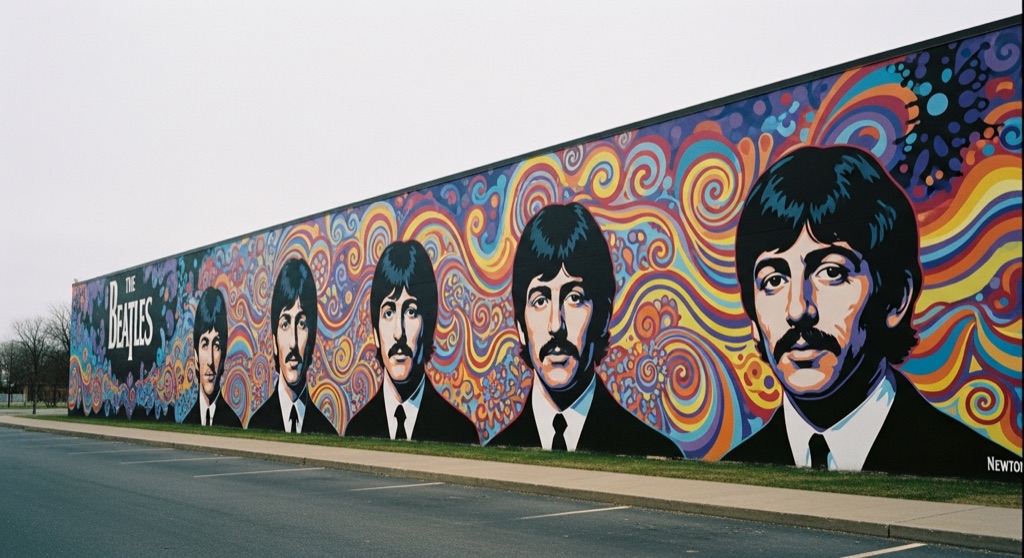
- Psychedelic Beatles Mural — Contrast Newton's solemn 1940s limestone farmer with the sprawling, colorful 1960s Fab Four mural painted on a warehouse wall less than a mile away.
- WuShock: Fighting-Mad Wheat Statue — Compare this quiet, prayerful wheat settler to Wichita State's aggressive, muscle-bound bronze wheat mascot sitting twenty miles south.
- Theorosa's Bridge (Crybaby Bridge) — Trade agricultural history for local folklore by heading south toward Sedgwick to cross this notoriously haunted rural crossing.
More weird in Wichita
Good to know
Who carved the statue and when was it erected?
Artist Max Nixon created the 17-foot native limestone sculpture as a WPA project, and it was completed in Athletic Park in 1942.
Why is the statue dedicated to Mennonite settlers?
It honors the Mennonite immigrants who moved to Kansas from Russia in 1874, bringing the Turkey Red hard winter wheat that revolutionized regional farming.
Where inside Athletic Park is the statue positioned?
It sits along the circular drive near Fischer Field football stadium, facing north toward a small parking lot and playground.
Is there an admission fee or indoor museum on site?
No, it is a free, outdoor monument located in a public city park with an on-site historical marker, but no indoor facilities.
Plan a visit & invite your people →
Further reading: Roadside America · livingnewdeal.org · Wikipedia · kclonline.com
last checked: 2026-06-07