Entry No. 48 — the Seattle file — filed under: after-dark
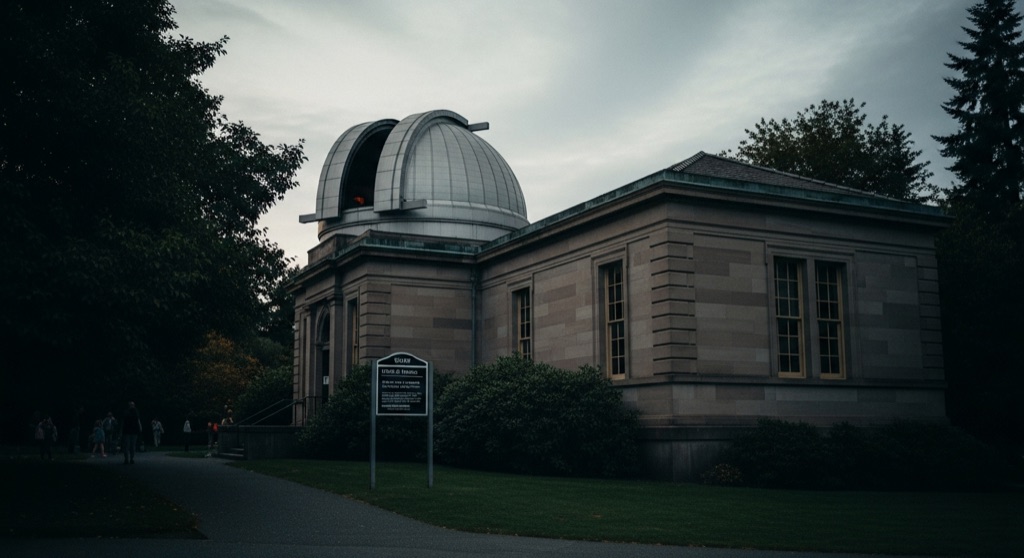
Theodor Jacobsen Observatory
Tucked about 100 yards inside UW's north campus entrance, this 1895 sandstone observatory is the second-oldest building on campus and still opens its dome to the public on first and third Tuesday evenings, April through September. The star is its original Brashear 6-inch refractor, older than the building itself, that volunteer student astronomers swing onto planets, the moon, and double stars when the famously stubborn Seattle clouds cooperate. Each free open house pairs an evening talk with hands-on telescope time and small-group tours up into the dome (capped at 12 at a time).
→ Three more after-dark & night-sky spots in Seattle — never the same twice
The story
Tucked barely a hundred yards inside the University of Washington’s north entrance sits a small 1895 sandstone structure that feels entirely detached from the modern research university surrounding it. The Theodor Jacobsen Observatory is the second-oldest building on campus, named for the astronomer who spent more than 40 years guiding the department. But the true star inside is even older than the stone walls housing it: an original 6-inch Brashear refractor telescope cast in the 1890s.
Operating a Victorian-era astronomical observatory in a city notorious for stubborn, slate-gray cloud cover is an exercise in pure optimism. There are no digital sensors or computer automated tracking mounts here—just heavy metal, hand-cranked gearwork, fine optical glass, and student astronomers who manually swing the massive tube toward double stars, moon craters, and bright planets whenever the Pacific Northwest sky decides to cooperate.
Run jointly with the Seattle Astronomical Society, the facility doesn't exist for high-level contemporary research anymore; it exists because standing under a rotating dome while student staff point 130-year-old glass at the cosmos is one of the most wonderfully preserved after-dark rituals left in the University District.
What it's like
To get inside, you have to watch Eventbrite like a hawk—tickets are free, but spots fill fast. On designated Tuesday nights, you'll walk the quiet north campus as dusk falls and gather inside the warm sanctuary of the sandstone building. The night begins with a short presentation on the sky before visitors are split into small groups of 12 to climb into the dome. There, student astronomers manually turn the roof and position the heavy refractor. If the Seattle clouds refuse to part, you won't get eyepiece time, but you still get a rare, intimate look at the mechanism and history of Victorian stargazing.
The move: Reserve a free pair of tickets for a clear-forecast Tuesday open house, walk the quiet north campus at dusk, then take turns at the eyepiece of the 1890s refractor while a grad student narrates what you're seeing.
📍 Before you go Free but ticketed on Eventbrite; runs first/third Tuesdays April-September only; dome opens weather-permitting; pay parking in adjacent UW lot N5.
- 📍 University District, Seattle
- 💸 $
- ⚡ Low-key
- 🌗 Outdoors
Where: 4324 Memorial Way NE, Seattle, WA 98195
Hours: Added 2026-06-24 — confirm current hours before you go.
⚠ Seasonal or scheduled — always check before you go.
Pair it with
- Edge of the Circle Books — Pair your evening of 1890s astronomy with a short walk down to NE 45th St to browse rare occult texts at Seattle's premier pagan bookshop.
- The Wall of Death — Before heading up into the dome, wander half a mile south under the University Bridge to check out this surreal ring of lavender steel cones.
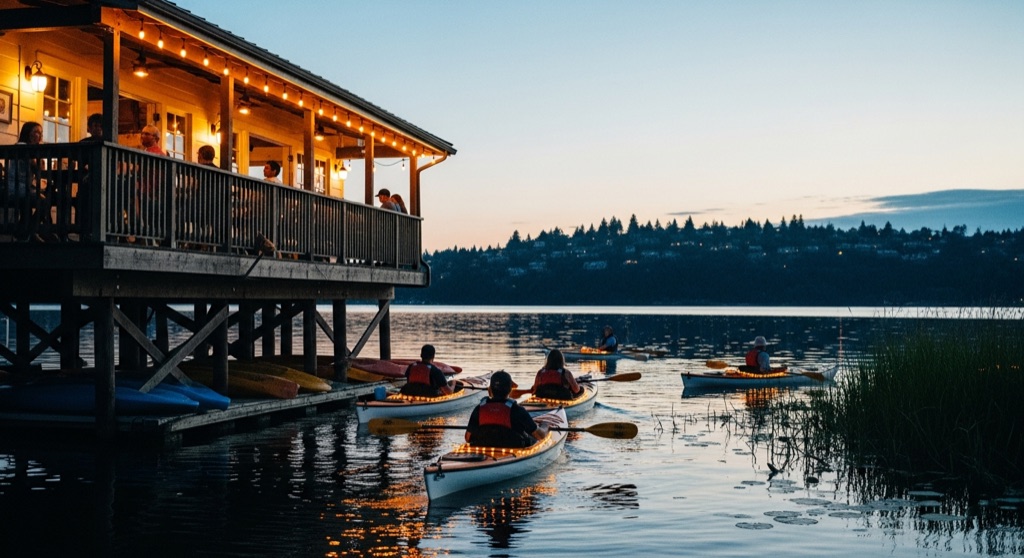
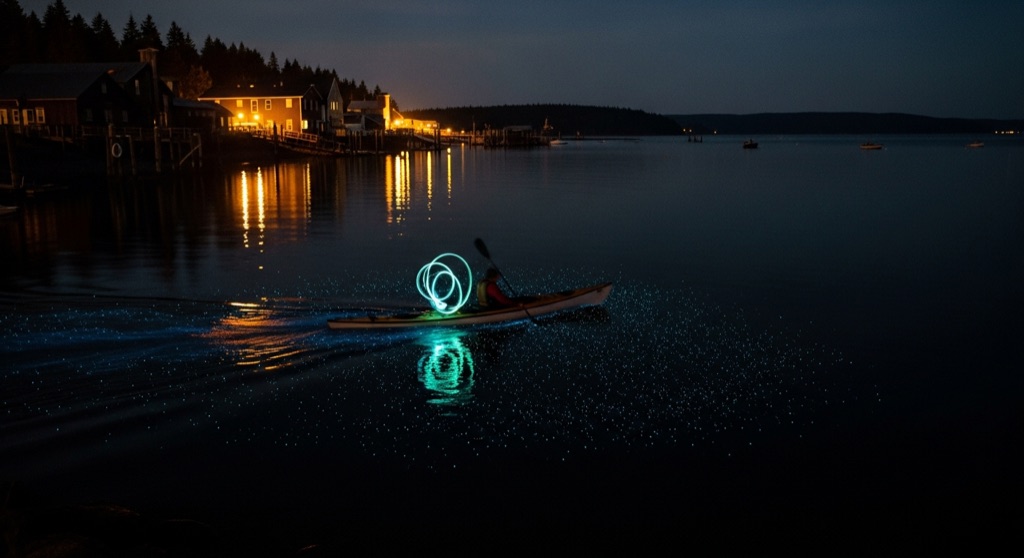
- Agua Verde Full Moon Paddle — If you want a full night on the water and under the stars, pair your celestial observation night with a night-time kayak outing on Portage Bay.
- Mudlark Oddities — Start your afternoon browsing human skeletons and historic oddities in Ravenna before spending your evening looking through Victorian optics.
More weird in Seattle
Good to know
When are open houses held?
Open houses run on the first and third Tuesday evenings of every month, strictly from April through September.
How much does it cost, and do I need a ticket?
Admission is completely free, but you must reserve a ticket online via Eventbrite beforehand because dome capacity is capped.
What happens if it's cloudy or raining?
The event, indoor talk, and building tour still go on, but the dome telescope only opens if weather and cloud conditions permit viewing.
Where should I park?
Pay parking is available immediately adjacent to the building in UW's Lot N5.
Plan a visit & invite your people →
Further reading: astro.washington.edu · Wikipedia · calendar.washington.edu · eventbrite.com
last checked: 2026-06-24