Entry No. 18 — the Savannah file — filed under: cemetery
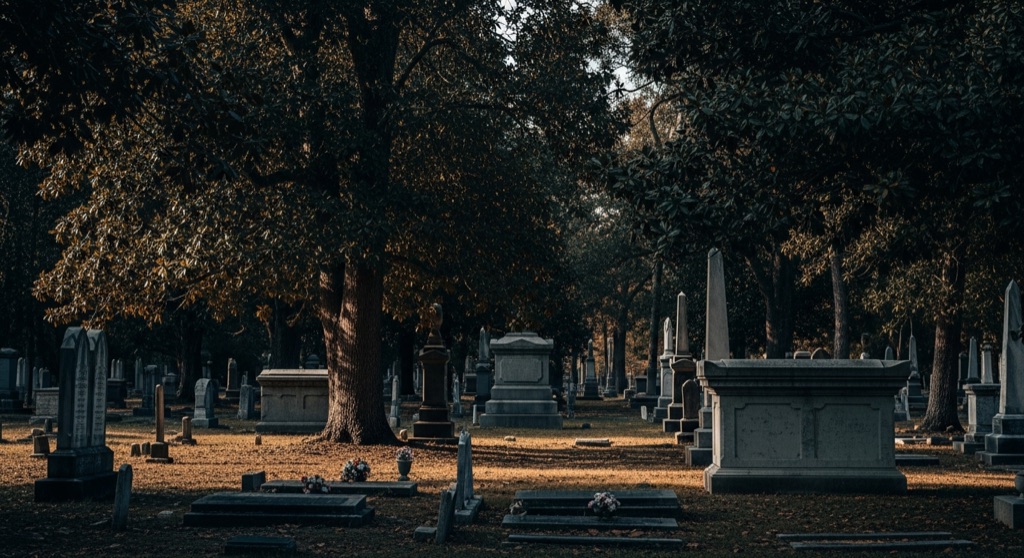
Colonial Park Cemetery
Closed to new burials since 1853, this six-acre municipal park still holds roughly 9,000 graves, including some 700 victims of the catastrophic 1820 yellow fever epidemic. When Union troops occupied Savannah in December 1864, soldiers reportedly camped among the vaults and altered dates on headstones for a joke.
→ Three more haunted places & dark-history spots in Savannah — never the same twice
The story
Established in 1750 and officially closed to new burials in 1853, this six-acre plot in Savannah's South Historic District holds roughly 9,000 bodies—despite having nowhere near that many headstones. In 1820, a catastrophic yellow fever epidemic tore through the port city, filling mass burial trenches with around 700 victims in a matter of months. What you're walking across isn't just a lawn; it's a hyper-dense layer cake of early American tragedy and municipal overcrowding.
The real absurdity began in December 1864, when General Sherman’s Union troops occupied Savannah. Soldiers stabled horses and pitched tents right among the brick vaults and grave markers. To kill time, bored infantrymen pulled out chisels and began doctoring the dates on the headstones for a joke—adding centuries to people's lifespans or tweaking birth years to create impossibly tragic or ancient ages. When Savannah transformed the decaying cemetery into a public park in 1896, those vandalized stones stayed put.
What it's like
Entering off Abercorn Street, you'll find a quiet, moss-draped park crisscrossed by paved paths, completely free to enter. Up close, look closely at the older slate headstones and the markers mounted directly to the perimeter wall—you'll spot obvious numerical vandalisms left behind by 19th-century soldiers. The city locks the gates around sunset, so aim for late afternoon to catch the dusk light through the live oaks before the sidewalk outside fills up with commercial ghost tour groups.
The move: A free, unhurried dusk walk through the grounds looking for headstones with obviously doctored dates, then talk about which occupation-era vandalism claims feel plausible versus embellished.
- 📍 South Historic District
- 💸 $$
- ⚡ Up for anything
- 🌗 Indoors
Where: 200 Abercorn St, Savannah, GA 31401
Hours: Added 2026-07-20 — confirm current hours before you go.
Pair it with
- The Marshall House — Pair the cemetery's 1820 yellow fever plot with a visit to this hotel two blocks away, which served as a yellow fever ward and a Union hospital during the exact same eras.
- 17Hundred90 Inn & Restaurant — Walk one block north to grab a drink at a historic inn that survived the same devastating 1820 fire and yellow fever summer that filled the cemetery's mass graves.
- Sorrel-Weed House — Head south to Madison Square for a tour of a historic antebellum mansion to compare official dark-history narratives against the cemetery's grounded, open-air facts.
More weird in Savannah
Good to know
Why are some headstones attached to the brick wall?
When the city turned the cemetery into a public park in 1896, broken or displaced headstones that could no longer be tied to a specific grave plot were mounted to the eastern wall for safekeeping.
Is Colonial Park Cemetery free to visit?
Yes, it is maintained as a municipal park by the City of Savannah and is completely free to walk through.
Can you go inside the cemetery at night?
No, the city closes and locks the wrought-iron gates at night, though tour groups often congregate along the outside fence after dark.
How many people are buried at Colonial Park Cemetery?
More than 9,000 people were buried here between 1750 and 1853, including roughly 700 yellow fever victims from the 1820 epidemic.
Plan a visit & invite your people →
Further reading: Wikipedia · visitsavannah.com · savannahga.gov
last checked: 2026-07-20