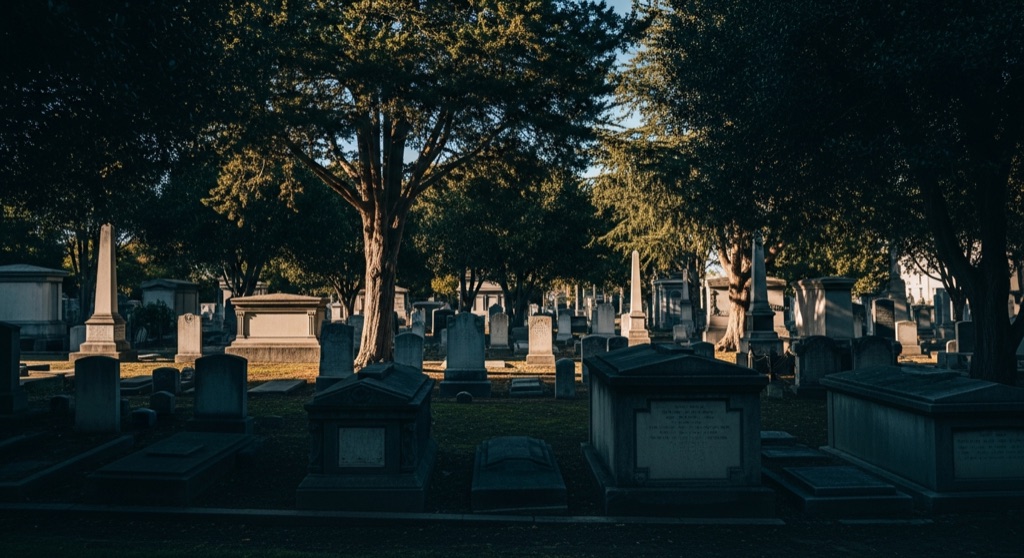
Entry No. 13 — the San Francisco file — filed under: cemetery
San Francisco Columbarium
A copper-domed 1898 neoclassical rotunda that once anchored the sprawling Odd Fellows Cemetery — until the city banned burials and cremation and shipped nearly everyone else to Colma, leaving this building as the last non-denominational resting place still inside San Francisco. It survived the 1906 earthquake and fire that leveled the neighborhood around it, and many of its niches hold hand-decorated tributes to San Franciscans who died in the 1980s AIDS epidemic.
→ Three more haunted places & dark-history spots in San Francisco — never the same twice
The story
When San Francisco decided in the early 20th century that the dead were occupying far too much prime real estate, the city banned cremations and burials outright and systematically evicted hundreds of thousands of bodies down to Colma. But this copper-domed 1898 neoclassical rotunda—originally built as the anchor for the sprawling Odd Fellows Cemetery—refused to move. It stood its ground, weathered the 1906 earthquake and fire that flattened the neighborhood around it, and remained behind as the city's sole surviving non-denominational sanctuary for human remains.
Step under the stained-glass dome and you'll find roughly 8,500 niches arranged across four stories connected by brass spiral staircases. The galleries are named after local thoroughfares like Haight, Steiner, and Eddy. Instead of sterile marble slabs, the glass-front compartments here serve as miniature, intensely personal shadow boxes. Look closely and you'll spot model trains, half-empty wine bottles, vintage baseball tickets, favorite teacups, and handwritten notes left behind for complete strangers to read.
Because it was the only place inside city limits where ashes could still be legally interred, the Columbarium took on a poignant second life in the 1980s. Dozens of niches hold hand-decorated shrines honoring San Franciscans lost during the height of the AIDS epidemic. It makes the building much more than an architectural survival story; it’s a physical, room-by-room archive of the city's private grief and quiet eccentricity.
What it's like
Hidden at the dead end of Loraine Court off Anza Street, the building looks like a stray European monument dropped unexpectedly into a quiet residential neighborhood. Admission is free, and the rotunda is generally silent and uncrowded. Take your time climbing the narrow spiral staircases to peer into the upper-level niches, but remember it remains an active funeral home and place of remembrance. Confirm open hours before walking over, as access can change.
The move: Walk the stained-glass rotunda's spiral staircases past niches street names come from (Eddy, Steiner, Haight) and read the personal shrines people have built inside the glass-front compartments — model trains, wine bottles, photographs — for strangers memorializing their dead.
- 📍 Inner Richmond, San Francisco
- 💸 $$
- ⚡ Up for anything
- 🌗 Indoors
Where: 1 Loraine Ct, San Francisco, CA 94118
Hours: Added 2026-07-20 — confirm current hours before you go.
Pair it with
- The Wave Organ — After seeing where the city's ashes were kept, head down to the shoreline to see where carved headstones and crypt fragments salvaged from demolished San Francisco cemeteries were repurposed into an acoustic ocean jetty.
- Presidio Pet Cemetery — Continue the thread of hidden local burial sites by visiting a quiet half-acre in the Presidio where military families laid hundreds of pets to rest beneath handmade headstones.
- The Sword and Rose — Balance a morning surrounded by memorial architecture with an afternoon trip through a hidden Cole Valley hallway into a secret courtyard garden stocked with incense and esoteric crafts.
- NightLife at the California Academy of Sciences — Pair a quiet walk past historic glass-fronted niches with an evening drinking cocktails beneath the living four-story rainforest dome just down the road in Golden Gate Park.
More weird in San Francisco
Good to know
Is the San Francisco Columbarium still accepting interments?
Yes. While new burials and cremations are prohibited in San Francisco, placing cremated remains inside an existing columbarium niche is still permitted, making it the city's only active resting place.
What happened to the cemetery that used to surround the building?
The surrounding Odd Fellows Cemetery was dismantled after the city ordered human remains moved to Colma in the 1900s. The land was subsequently cleared and redeveloped into the residential Inner Richmond neighborhood you see today.
Is there a fee to visit?
No, it is free and open to the public during business hours, though visitors are asked to keep voices low out of respect for grieving families.
How are the rooms inside organized?
The four floors of the rotunda are divided into distinct rooms and halls named after historic San Francisco streets, including Haight, Steiner, and Eddy.
Plan a visit & invite your people →
Further reading: Wikipedia · dignitymemorial.com · kqed.org
last checked: 2026-07-20