Entry No. 13 — the San Diego file — filed under: outdoor
Palomar Observatory
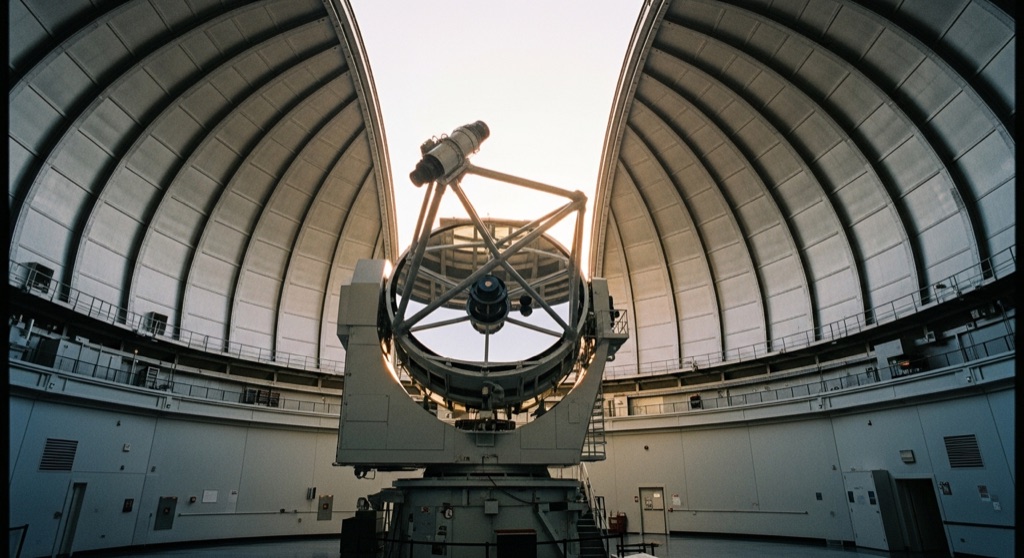
The 200-inch Hale Telescope inside this Caltech-run dome was the largest in the world from 1949 to 1975, and its robotic sibling — the Samuel Oschin Telescope — is how astronomers found the dwarf planets Eris and Sedna out past Pluto. You can walk into the public gallery beneath the great dome and look up at the same mirror on a self-guided daytime tour, offered 9am-3pm most days (the scope does its actual sky-hunting at night).
→ Three at a time, never the same twice — explore weird San Diego
The story
High up at over 5,500 feet in the Palomar Mountains, sitting in the middle of a pine forest, is a giant Art Deco dome that looks like a retro-futurist fortress. Run by Caltech, this dome houses the 200-inch Hale Telescope—an optical giant that held the title of world's largest telescope from 1949 until 1975.
The Hale got most of the glory, but its smaller robotic companion—the Samuel Oschin Telescope—is responsible for some of modern astronomy's biggest shakeups. It swept the northern sky and mapped cold objects in the Kuiper Belt, leading directly to the discovery of dwarf planets Eris and Sedna out past Pluto (and effectively causing Pluto's demotion).
The strangest detail is that this isn't a museum piece—it's still a active research engine. While night belongs to the astronomers and algorithms hunting supernovas, you can walk right inside the main dome during the day, step into the glassed-in visitor gallery, and look up into the quiet, steel superstructure housing the giant glass mirror.
What it's like
The drive up Palomar Mountain means navigating long, winding switchbacks through oak and pine forest before arriving at a strangely serene, cold mountain site. Inside the visitor gallery, it's shadowy, echoey, and smells faint of machine oil and cool mountain air. You look through glass panels straight into the dark interior where the multi-ton telescope rests. Daytime visiting hours run from 9:00 a.m. to 3:00 p.m., so don't expect to show up after dark unless you want to stare at a locked gate—the night shift is reserved exclusively for raw data collection.
The move: Hike the 2.2-mile Observatory Trail up from Palomar Mountain campground for sunset, then catch a guided dome tour (weekends, April–October) before the telescope crew opens the shutter for the night's real work.
- 📍 Palomar Mountain
- 💸 $
- ⚡ Low-key
- 🌗 Outdoors
Where: 35899 Canfield Rd, Palomar Mountain, CA 92060
Hours: Added 2026-07-19 — confirm current hours before you go.
Pair it with
- Palomar College Planetarium — Pair the real-deal research dome on the mountain with a Friday night fulldome simulation down at the community college in San Marcos.
- Deer Park Winery & Auto Museum — On your way back down the mountain into Escondido, switch from telescope optics to three barns packed with vintage American classic cars and retro dealership neon.
- Stonewall Mine — Trade deep-space observation for underground history by heading south to Cuyamaca Rancho to walk the site of San Diego's major 1870s gold strike.
More weird in San Diego

Good to know
Can you look through the big telescope at night?
No. The 200-inch Hale Telescope is strictly a working scientific instrument; public viewing at night is not offered.
When can you visit the dome?
The public visitor gallery is open for self-guided walk-ins most days from 9:00 a.m. to 3:00 p.m., though hours are subject to seasonal shifts and weather.
Is there a hiking trail to the observatory?
Yes, you can take the 2.2-mile Observatory Trail up from the Palomar Mountain State Park campground directly toward the observatory grounds.
Are guided tours available?
Caltech offers guided dome tours on weekends between April and October for visitors who want details beyond the self-guided gallery.
Plan a visit & invite your people →
Further reading: sites.astro.caltech.edu · Wikipedia
last checked: 2026-07-19