Entry No. 16 — the Raleigh file — filed under: cemeteries
Oberlin Cemetery
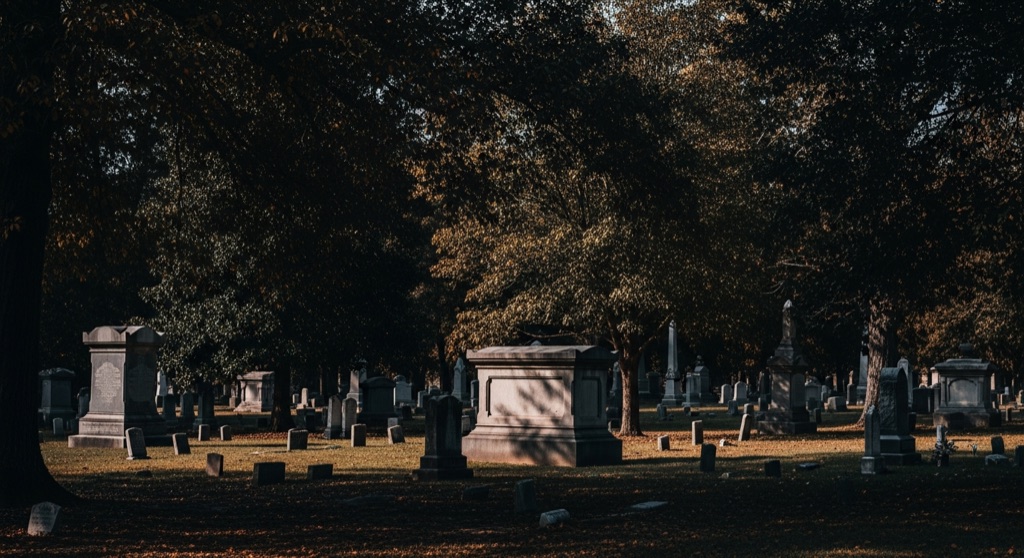
Nestled unexpectedly between modern office buildings and condominiums, this historic three-acre African American cemetery was established in 1873 and serves as a vital monument to the post-Civil War freedman's community of Oberlin Village.
→ Three more haunted places & dark-history spots in Raleigh — never the same twice
The story
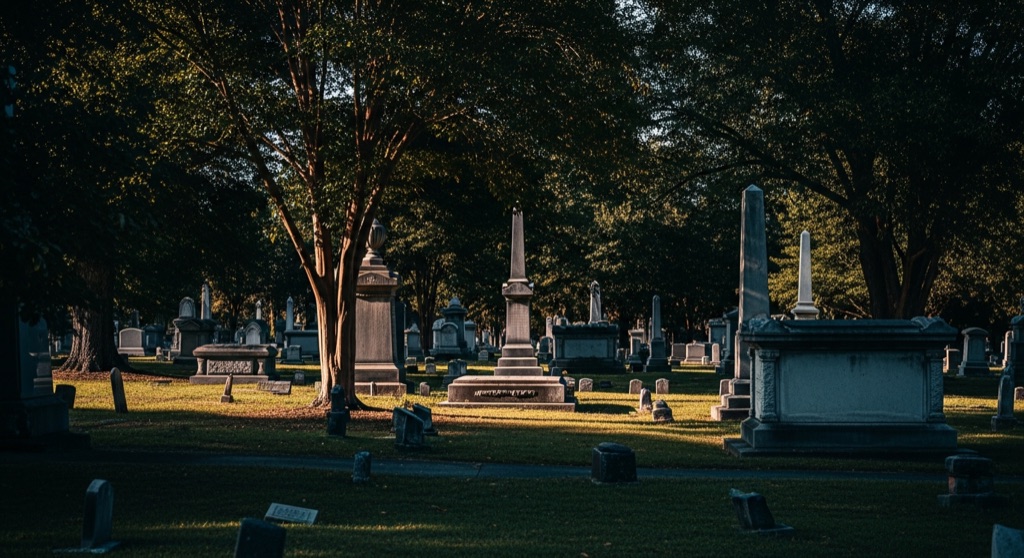
You are standing on land bought by people who were enslaved on the very plantations surrounding it just a decade earlier. Established around 1873, Oberlin Cemetery is the final resting place for roughly 600 to 700 early Black Raleigh residents—including former slaves, artisans, educators, and leaders of Oberlin Village, one of the largest post-Civil War freedman's communities in North Carolina. James E. Harris, an influential politician, and Wilson McKinley, an early Black landowner, are buried here.
What makes the site jarring isn't just its history; it's the aggressively modern context that surrounds it. The city grew right up to the tree line. Today, three acres of thick woods, sunken fieldstones, and hand-carved markers sit completely encircled by sleek glass office buildings, manicured lawns, and upscale apartment complexes. Stand in the center and you'll hear traffic humming along Oberlin Road while staring down gravestones dating back to the 19th century.
Because many graves were marked only with fieldstones, wooden crosses, or sunken depressions, a significant portion of the interments were lost to sight for decades. Local preservation efforts have mapped hundreds of grave locations using ground-penetrating radar, revealing just how dense the history beneath your feet actually is.
What it's like
Finding the entry feels like a mild trespass. Drive past the sleek commercial development on Oberlin Road, pull behind the InterAct building, and look for the tree line where the pavement abruptly gives way to unpaved dirt and woods. Walking in, the temperature drops under the dense canopy, and the noise of the city muffledly recedes. You'll navigate uneven ground, sunken earth, and unpolished fieldstones mixed with formal headstones. It's unpaved, quiet, and largely unvisited on weekdays—bring sturdy shoes and give the ground space, as many graves are unmarked depressions.
The move: Park behind the nearby InterAct building and take a quiet, respectful walk through the wooded grounds to find the hand-carved stone monuments and sunken graves that tell the story of Raleigh's early Black pioneers.
- 📍 Midtown Raleigh
- 💸 $$
- ⚡ Up for anything
- 🌗 Indoors
Where: 1014 Oberlin Rd, Raleigh, NC 27605
Hours: Added 2026-07-21 — confirm current hours before you go.
Pair it with
- The Rialto Theatre — After a quiet walk through Oberlin's historic woods, head down the street to catch an indie film inside this restored 1942 Art Deco theater in Five Points.
- Spring Hill House — Pair Oberlin with another piece of hidden 18th-century local history housing Wake County's oldest marked grave on NC State's Centennial Campus.
- Dorothea Dix Hospital Cemetery — Continue your tour of forgotten Raleigh burial grounds at this solemn three-acre plot tucked deep inside Dorothea Dix Park.
- Aunty Betty's Gin & Absinthe Bar — Balance an afternoon of quiet historical reflection with a moody, hidden cocktail behind a secret door in the Warehouse District.
More weird in Raleigh
Good to know
Where should I park when visiting?
Park in the public spaces behind the InterAct building at 1010 Oberlin Road, where an easy walking path leads directly into the cemetery grounds.
Are there official opening hours or gate fees?
It is an open public historic site with no admission fee or gate, but you should visit during daylight hours out of respect and for safely navigating the uneven ground.
How many people are buried at Oberlin Cemetery?
Preservation groups estimate between 600 and 700 people are buried across the three acres, though only a fraction have standing, readable headstones.
Plan a visit & invite your people →
Further reading: visitraleigh.com · hmdb.org · raleighhistoric.org · ncpedia.org
last checked: 2026-07-21