Entry No. 13 — the Pueblo file — filed under: outdoor-weird
Mission: Wolf
“Now you make the pilgrimage.”
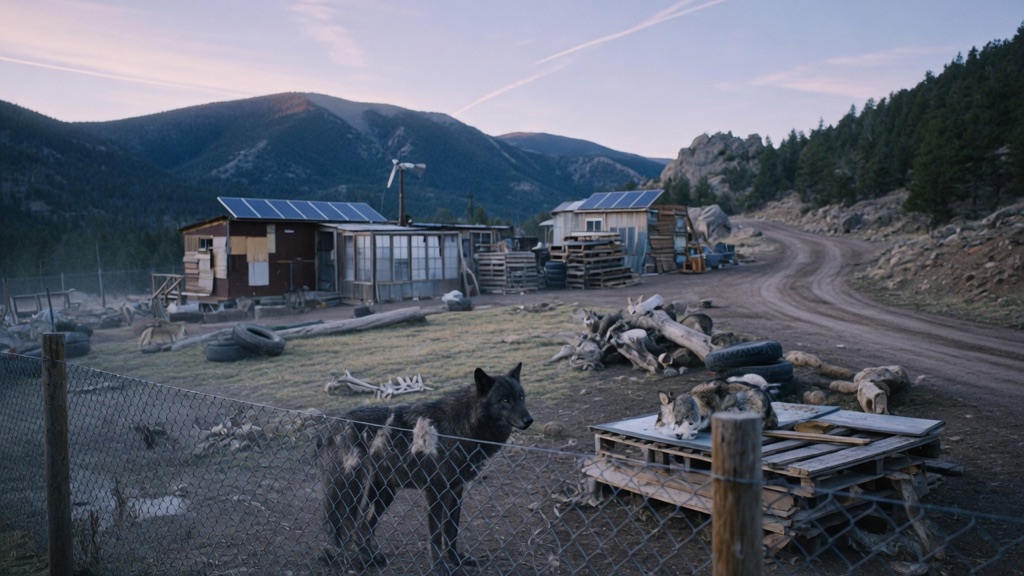
Kent Weber started rescuing captive-born wolves in 1986; around 30 wolves and wolf-dogs now live at 9,300 feet in the Wet Mountains, at the end of miles of dirt road your GPS will get wrong. The whole place runs off-grid — a solar eco-village volunteers built from recycled materials. Tours are free two days a week, and if the pack approves, a wolf greets you eye-to-eye, nose to your teeth. For two decades they bussed ambassador wolves 15,000 miles a year to meet schoolkids and politicians; now you make the pilgrimage.
→ Three more weird outdoor & roadside oddities in Pueblo — never the same twice
The story
In 1986, Kent Weber realized that when people attempt to keep captive-born wolves and wolf-dog hybrids as backyard pets, the animal always loses. Instead of letting unwanted captive wolves get euthanized, Weber started building a sanctuary at 9,300 feet up in the Wet Mountains outside Gardner. He didn't tap into the municipal grid or hire commercial contractors. Instead, volunteers constructed an entire off-grid eco-village out of recycled materials, stone, and solar panels, building sprawling mountain enclosures at the end of a county dirt road that stops just short of nowhere.
For over two decades, Mission: Wolf operated on the road. Staff loaded ambassador wolves into a custom bus and drove up to 15,000 miles a year, pulling into school parking lots and government plazas across the country so students and politicians could stand nose-to-nose with a wolf. That mobile campaign eventually wound down, shifting the burden of travel onto you: now, if you want to meet the pack, you make the mountain pilgrimage yourself.
Today, around two to three dozen rescued wolves and wolf-dogs—along with a handful of rescued horses—live out their lives in high-altitude timber enclosures. The sanctuary remains entirely off-grid, run by a dedicated crew of live-in volunteers who maintain the solar systems, handle sanctuary chores, and oversee feeding programs. It functions less like a tourist roadside stop and more like a quiet mountain homestead where the apex predators have total sanctuary.
What it's like
Your phone will drop service miles before you reach County Road 634, and if you trust Google Maps instead of printed paper directions, you will likely wind up stranded on a private ranch line. The final approach is a rough dirt grind; from November through May, pack a shovel, extra layers, and a four-wheel-drive vehicle capable of handling mud and deep snow drifts. Once inside the gate, you enter a quiet, sun-baked compound powered by solar arrays. Free guided visits run only on select booked days each week, and if you land a slot and the wolves are receptive, staff may facilitate a eye-to-eye greeting—literally nose to teeth—with a pack member that chooses whether to acknowledge you. Outside dogs are strictly banned from the premises and kids under eight are generally off the table. The sharpest move is booking a tour slot, hauling in your own food and water, and staying overnight at the free primitive campground on-site. Once night drops over the mountains, the valley goes black and the entire pack starts howling under unfiltered stars.
The move: Book a morning tour slot, pack lunch and a tent, and stay over at the free primitive campsites — the pack starts howling after dark, under some of the blackest sky in Colorado.
📍 Before you go Do not trust Google Maps — print the sanctuary's own turn-by-turn directions, because the last stretch is miles of remote dirt road with no cell service, and from November into May snow drifts and mud can demand 4WD and a shovel. Visits run on a couple of set days a week as free booked time slots through their site, so reserve before driving out. The nearest town is 45 minutes away: bring lunch, water, and layers for all four seasons; kids under 8 and dogs are largely off the table. Camping at the primitive sites (outdoor kitchen, fire ring) is the move — or pair the drive with Bishop Castle on CO-165 or a stop in dark-sky Westcliffe.
- 📍 Gardner (45 min from Westcliffe)
- 💸 Free
- ⚡ Up for anything
- 🌗 Outdoors
Where: 13388 County Road 634, Gardner, CO 81040
Hours: Added 2026-06-11 — confirm current hours before you go.
⚠ Seasonal or scheduled — always check before you go.
Pair it with
- Smokey Jack Observatory — Head down the mountain to Westcliffe after your sanctuary visit to view deep space through a 14-inch Schmidt-Cassegrain telescope inside an official dark-sky town.
- Silver Cliff Cemetery — Follow up a night of listening to wolf howls with a short drive to this old mining graveyard, known since the 1880s for mysterious blue-white lights floating over the graves.
- Westcliffe & Silver Cliff Dark Sky Community Star Parties — Combine primitive overnight camping at the wolf sanctuary with a public star party in the Wet Mountain Valley below.
More weird in Pueblo


Good to know
How do I get there without getting lost or stuck?
Print the sanctuary's written turn-by-turn directions before you leave home. GPS apps consistently misroute drivers down impassable back roads. The final miles are unpaved, cell service is non-existent, and between November and May, mud and snow drifts regularly require 4WD, high clearance, and a shovel.
Do I need a reservation, and how much does it cost?
Tours are free, but you must reserve a specific time slot online in advance through their website. Walk-ins are not accommodated, and public visiting hours are restricted to specific set days each week.
Can I bring my dog or young children?
No outside dogs are permitted anywhere on the property under any circumstances, as they agitate the sanctuary animals. Day visits are also largely off the table for children under eight years old.
What supplies do I need to bring?
Bring all of your own food, drinking water, and trash bags—the nearest town with services is 45 minutes away. Weather at 9,300 feet changes rapidly, so pack clothing for all four seasons regardless of when you visit.
Plan a visit & invite your people →
Further reading: Official site · uncovercolorado.com · cpr.org
last checked: 2026-06-11