Entry No. 67 — the Pueblo file — filed under: after-dark
Great Sand Dunes National Park Night Sky Programs
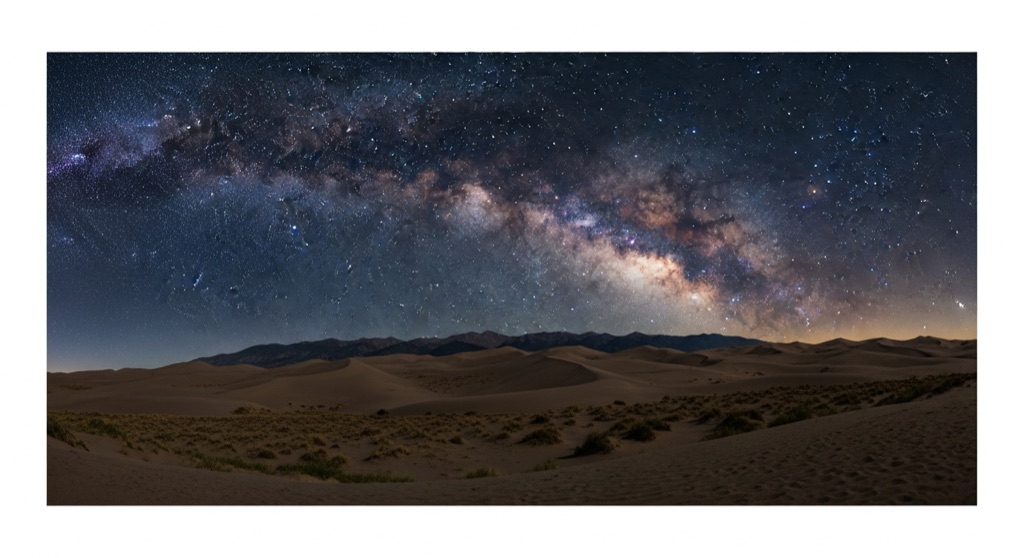
Certified an International Dark Sky Park in 2019, Great Sand Dunes combines dry air, high elevation and almost no light pollution to deliver some of the most striking night skies in southern Colorado. From late spring into early fall, rangers lead summer evening programs that mix astronomy talks, full-moon hikes and telescope viewing with stories about the park's nocturnal wildlife. Standing on North America's tallest dunes under the Milky Way is the genuinely surreal payoff, with the galactic core best from June through August.
→ Three more after-dark & night-sky spots in Pueblo — never the same twice
The story
The San Luis Valley sits as a high, cold desert trough pinned between the Sangre de Cristo and San Juan mountains at 7,500 feet above sea level. It is vast, sparsely populated, and extraordinarily dry—conditions that choke out atmospheric haze and urban glare. In 2019, Great Sand Dunes National Park & Preserve was officially designated an International Dark Sky Park, acknowledging what regional astronomers had quietly relied on for decades: the darkness here is deep enough to make you lose your balance.
From late spring into early fall, park rangers run evening programs near the park amphitheater and visitor center. Rather than dry lectures, these sessions mix deep-space astronomy with the nocturnal ecology of the dunes, followed by telescope sessions or guided full-moon walks. Standing on North America's tallest dunes—some topping 750 feet—under an unclouded canopy is surreal, particularly from June through August when the galactic core of the Milky Way arcs directly over the mountain peaks.
What it's like
Arriving after sundown means turning off State Highway 150 into near-pitch blackness, with only the silhouette of the Sangre de Cristos keeping you oriented. Bring a headlamp with a red-light filter so you don't ruin your night vision—or anger the stargazers set up near the amphitheater. The valley floor plunges in temperature the moment the sun drops, so bring heavy windproof layers even in mid-July. Walking onto the dunes at midnight feels like stepping onto a barren moon; keep your eyes on the tree line lights so you don't wander off into the dark sand waves.
The move: Time a visit to a ranger-led night program or full-moon hike, then climb a little way up the moonlit dunes together and watch the Milky Way arc over the Sangre de Cristos.
📍 Before you go Park entrance fee applies. Ranger night programs are seasonal (mainly summer weekends) and held near the visitor center/amphitheater; check the NPS calendar before going. Roughly 95-100 miles from Pueblo, so plan for a late return.
- 📍 Mosca (San Luis Valley)
- 💸 $
- ⚡ Low-key
- 🌗 Outdoors
Where: 11999 State Highway 150, Mosca, CO 81146
Hours: Added 2026-06-23 — confirm current hours before you go.
⚠ Seasonal or scheduled — always check before you go.
Pair it with
- UFO Watchtower — After chasing galactic dust on the dunes, head 20 miles northwest to Judy Messoline's steel tower to see where San Luis Valley locals hunt for strange atmospheric lights.
- The Greenhouse at Sand Dunes Recreation — Soak in 118-degree artesian water under greenhouse palms in Hooper before driving east to the freezing sand dunes for midnight stargazing.
- Colorado Gators Reptile Park — Pair an afternoon watching geothermal-farmed alligators in Mosca with an evening ranger astronomy talk just up Highway 150.
More weird in Pueblo
Good to know
When is the best time of year to view the Milky Way?
June through August offers the clearest, brightest view of the galactic core. For the darkest skies, align your trip with the new moon.
Do ranger night programs cost extra or require reservations?
No special tickets or reservations are required beyond standard national park entrance fees. Programs are seasonal—mainly summer weekends—so check the official NPS calendar before driving out.
Where do the night sky programs meet?
Most ranger talks gather near the park amphitheater or the Visitor Center, while specific full-moon hikes generally meet at the main dune parking lot.
What essential gear should I bring for stargazing on the dunes?
Pack a red-lens flashlight to preserve night vision, heavy warm clothing, closed-toe shoes to keep out cold sand, and plenty of water.
Plan a visit & invite your people →
Further reading: nps.gov · darksky.org
last checked: 2026-06-23