Entry No. 61 — the Los Angeles file — filed under: outdoor-weird
Galleta Meadows Sky Art Sculptures
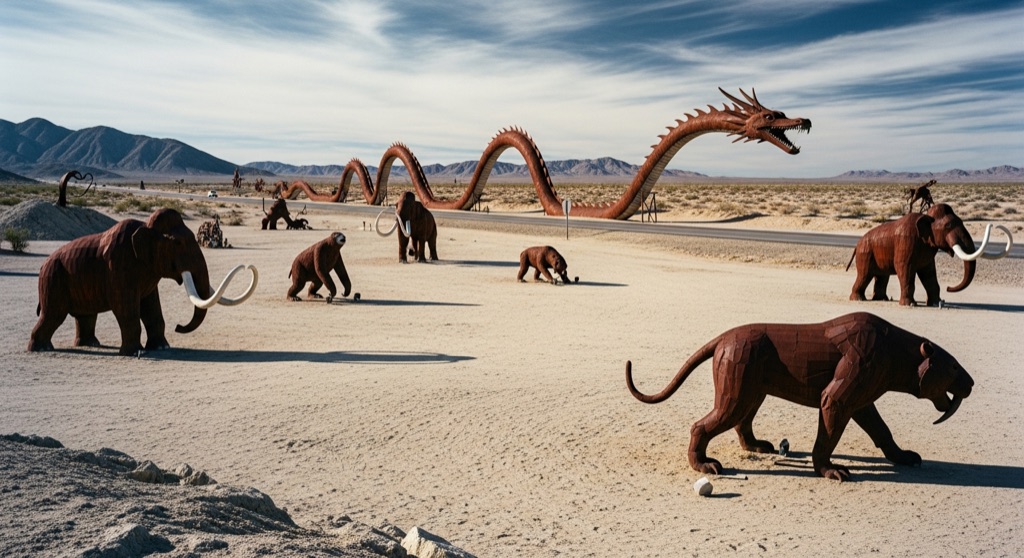
Across roughly 3,000 acres of open desert, landowner Dennis Avery commissioned artist Ricardo Breceda to plant about 130 rusted-steel sculptures with no fences, signs, or admission. Prehistoric mammoths, sloths, and a saber-tooth stand near the road, but the showstopper is a 350-foot serpent with a dragon's head that appears to dive in and out of the sand across the highway.
→ Three more weird outdoor & roadside oddities in Los Angeles — never the same twice
The story
In the late 2000s, land benefactor Dennis Avery owned roughly 3,000 acres of empty desert scattered across Borrego Springs. Rather than building a gated resort or subdividing the parcels, he hired self-taught welder Ricardo Breceda to populate the sand with life-sized steel beasts. There are no turnstiles, no ticket booths, and no security guards. Breceda planted roughly 130 rusted-steel figures directly into the dirt, leaving them unfenced and open to whoever wanders off the highway.
The collection ranges from natural history to high fantasy. Many of the sculptures—gomphotheres, giant sloths, saber-toothed cats—mirror the actual ice age megafauna that once inhabited the Anza-Borrego basin. The anchor piece, however, is pure myth: a 350-foot sea serpent with a dragon's head whose coiled body burrows under Borrego Springs Road and surfaces on both sides of the asphalt. Unprotected from the elements, the sheet metal is steadily oxidizing into the same deep orange shade as the surrounding scrubland.
What it's like
You will navigate the area by pulling off paved roads onto dirt tracks, driving directly up to clusters of iron skeletons in the desert sand. Standard sedans handle the primary pullouts just fine, but straying off the established tire ruts into uncompacted sand is a fast way to call a tow truck. Visit in the late afternoon when the fierce desert heat dips and long shadows stretch off the metal figures, then stick around after dusk—Borrego Springs is an official dark sky reserve, making the sculptures prime foreground for night photography.
The move: Drive the dirt loops hunting down the giant metal beasts, then straddle the 350-foot sea-serpent where it surfaces beside Borrego Springs Road.
📍 Before you go Free and open 24/7, unfenced; standard cars fine on the main pullouts. About 150 miles southeast of LA; brutally hot in summer, so go cool months or early morning.
- 📍 Borrego Springs
- 💸 Free
- ⚡ Up for anything
- 🌗 Outdoors
Where: Borrego Springs Rd, Borrego Springs, CA 92004
Hours: Added 2026-06-23 — confirm current hours before you go.
Pair it with
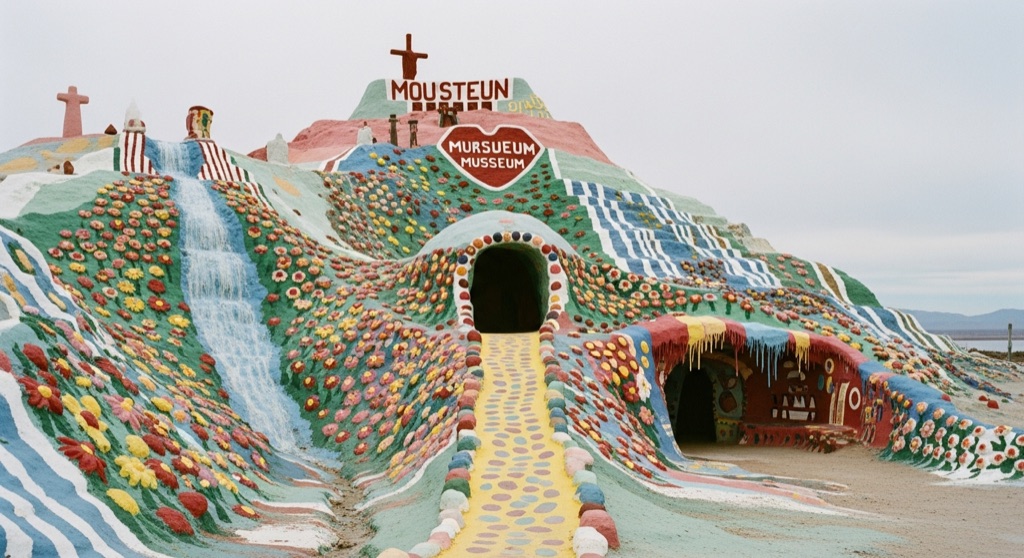
- Salvation Mountain — Head east past the Salton Sea to trade Breceda's unpainted steel beasts for Leonard Knight's 50-foot mountain of brightly painted adobe.
- Cabazon Dinosaurs — Trace Southern California's roadside sculptors by combining Breceda's unfenced desert fauna with Claude Bell's classic concrete giants along I-10.
- The Integratron — Follow up an afternoon spent hunting metal monsters in the sand with an acoustic sound bath inside George Van Tassel's parabolic dome in Landers.
More weird in Los Angeles
Good to know
How much does it cost to see the sculptures?
It is completely free. The land is unfenced private property open to the public 24 hours a day with zero admission or parking fees.
Do I need a four-wheel-drive vehicle?
No. Major sculptures like the sea serpent sit right beside paved roads or along well-packed dirt turnouts accessible to standard two-wheel-drive cars. Just avoid driving into loose, deep sand.
When is the best time of year to visit?
Plan your trip between October and April. Summer temperatures routinely exceed 100°F, turning brief walks across the exposed sand into a safety hazard.
Where is the 350-foot sea serpent located?
The serpent is located along Borrego Springs Road north of the town center, straddling both sides of the pavement.
Plan a visit & invite your people →
Further reading: Wikipedia · gotoborregosprings.com · visitcalifornia.com · Atlas Obscura
last checked: 2026-06-23