Entry No. 45 — the Las Vegas file — filed under: abandoned
Potosi Mine
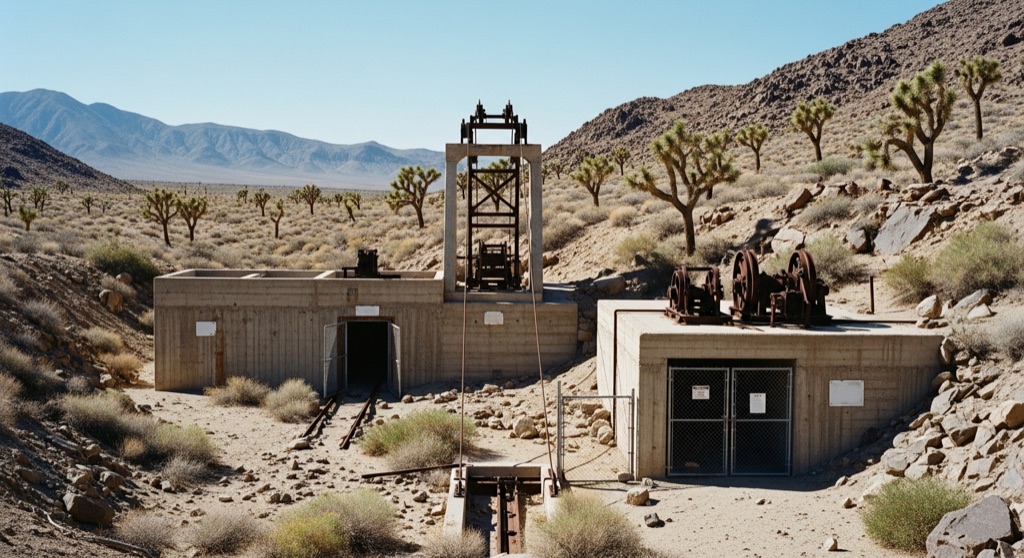
Potosi Mine is Nevada's oldest lode mine, established by Mormon settlers in 1856 to extract lead. It later became a major producer of zinc, silver, and lead, especially during World War I, before operations ceased entirely in the mid-20th century. Today, the site features concrete foundations of an old aerial tramway, rusted mining equipment, and gated mine portals set against the rugged desert mountain landscape.
→ Three more abandoned & forgotten places in Las Vegas — never the same twice
The story
Mormon settlers arrived high up on Mount Potosi in 1856 hunting for lead to cast into bullets, establishing Nevada's very first lode mine. They didn't stick around long, however: the ore contained high concentrations of zinc that rendered smelting with 1850s technology an impossible nightmare, forcing them to walk away from the operation.
Decades later, that same high zinc content—alongside deposits of silver and lead—transformed Potosi into a major industrial asset, particularly when demand surged during World War I. Operators rigged up an aerial tramway across the sheer cliffs of Mount Potosi Canyon to lower ore down the mountain. By the mid-20th century, operations had permanently ceased, leaving a sprawling collection of cold steel relics, heavy foundations, and gated tunnels rusting quiet in the desert sun.
What it's like
To reach the site, drive about 35 miles southwest of the Las Vegas Strip along Nevada State Route 160 (the Blue Diamond Road extension) toward the Potosi Springs area. The hike into Mount Potosi Canyon is rugged and unpaved, leading you past concrete tramway footings, an old stone cabin, and rusted mining machinery. Keep your eyes on property boundaries: the mine itself rests on private patented land (Potosi Mine Ranch) surrounded by the Humboldt-Toiyabe National Forest. The mine portals are securely iron-gated for safety, so you'll be viewing the historic openings and ruins strictly from public trails.
The move: Hike the rugged trails of Mount Potosi Canyon to spot the historic stone cabin, rusted mining relics, and concrete tramway foundations from a safe distance.
📍 Before you go The historic mine is located on private patented land (Potosi Mine Ranch) surrounded by the Humboldt-Toiyabe National Forest. The mine portals are gated for safety, but the ruins and surrounding area can be viewed from nearby public trails.
- 📍 Las Vegas
- 💸 Free
- ⚡ Low-key
- 🌗 Outdoors
Where: Las Vegas, NV 89161, USA
Hours: Added 2026-07-20 — confirm current access before you go.
Pair it with
- Dawn Mine — Pair two historic digs within the same mining district by taking another rugged hike to this nearby early 20th-century zinc and lead producer.
- Pioneer Saloon — Trade quiet mountain ruins for a cold drink inside a historic 1913 pressed-tin saloon complete with original bullet holes in Goodsprings.
- Azurite Mine — Continue your ghost-mining tour across the Spring Mountains to another turn-of-the-century copper and zinc mine overlooking Sandy Valley.
More weird in Las Vegas
Good to know
How far is Potosi Mine from Las Vegas?
It sits about 35 miles southwest of Las Vegas—roughly a one-hour drive via Nevada State Route 160.
Can you go inside the mine shafts?
No. The mine portals are securely iron-gated for safety, and the core site sits on private patented land. You can observe the openings and concrete tramway footings safely from adjacent public trails.
What history makes this site notable?
Established in 1856 by Mormon settlers, Potosi is recognized as Nevada's oldest lode mine.
What kind of land is the mine located on?
The historic mine rests on private patented land known as Potosi Mine Ranch, surrounded by the public acreage of the Humboldt-Toiyabe National Forest.
Plan a visit & invite your people →
Further reading: nevadaxpeditions.com · lasvegasareatrails.com · travelnevada.com · bobspirko.ca
last checked: 2026-07-20