Entry No. 89 — the Grand Junction file — filed under: after-dark
Black Canyon of the Gunnison - Night Sky Programs & AstroFest
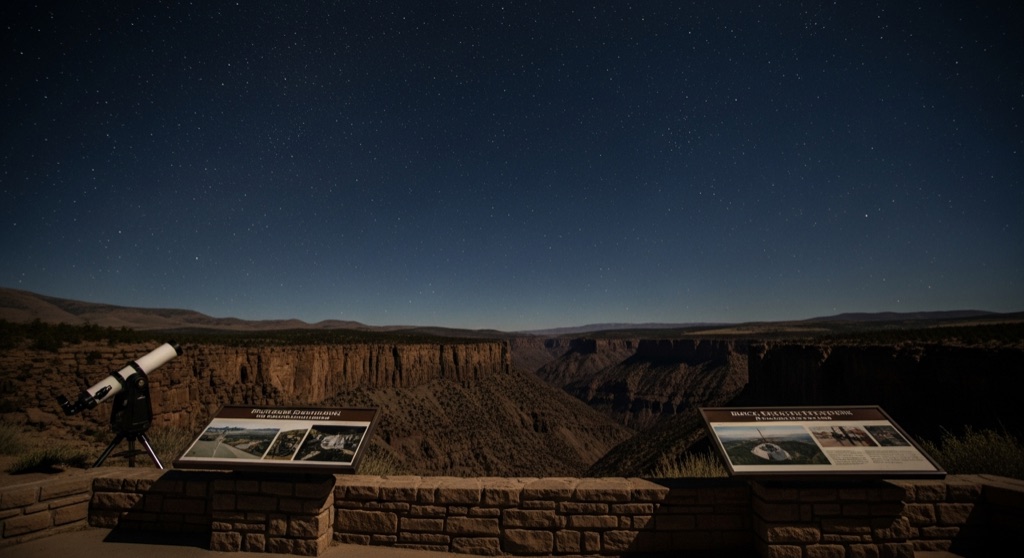
An official International Dark Sky Park about a 2-hour drive from Grand Junction, the Black Canyon offers some of the darkest skies in Colorado above one of its most vertigo-inducing gorges. Rangers, volunteers, and the Black Canyon Astronomical Society run summer astronomy programs with telescope viewing, constellation tours, and night-sky talks, all included with park entry. Each September the park and neighboring conservation areas host AstroFest, a multi-day festival of stargazing, nocturnal wildlife talks, and constellation mapping along the Gunnison River corridor.
→ Three more after-dark & night-sky spots in Grand Junction — never the same twice
The story
Two hours southeast of Grand Junction, the earth drops away into a vertical chasm so tight and steep that parts of the river bottom see less than thirty minutes of sunlight a day. But once night lands on the South Rim, your eyes aren't pulled down into the void—they're yanked upward. Black Canyon of the Gunnison is an official International Dark Sky Park, meaning light pollution from Western Slope civilization barely touches the rim.
During the summer, rangers and volunteers from the Black Canyon Astronomical Society set up high-powered glass along the edge. They run daytime solar telescope viewings to stare directly into sunspots, followed by evening astronomy talks and guided constellation tours after dark. Every September, the operation swells into AstroFest—a multi-day gathering that spreads stargazing, nocturnal wildlife tracking, and constellation mapping clear across the Gunnison River corridor.
What it's like
You'll park at the South Rim Visitor Center in near-total darkness, so pack a red-light headlamp to keep your night vision intact. Mountain weather shifts fast, and temperatures at the canyon edge plunge hard after sundown, so pack heavy layers even in mid-July. The telescopes lined up along the rim are run by volunteers who know every deep-space object by heart, but keep in mind that cloud cover will shut down telescope viewing instantly—always check the park's sky forecast before driving out.
The move: Drive out for a summer ranger night-sky program or the September AstroFest, peer through society telescopes at the canyon rim, and trace constellations together far from any city light.
📍 Before you go Astronomy programs run in summer and AstroFest is a September event; programs are included with park entry but are seasonal and weather-dependent, so check the park's current schedule before driving out.
- 📍 Montrose (Black Canyon of the Gunnison National Park)
- 💸 $
- ⚡ Low-key
- 🌗 Outdoors
Where: South Rim Visitor Center, Black Canyon of the Gunnison National Park, CO 81401
Hours: Added 2026-06-23 — confirm current hours before you go.
⚠ Seasonal or scheduled — always check before you go.
Pair it with
- Star Drive-In Theatre — Pair high-powered deep-space telescope viewing on the rim with a double feature under the open sky at Montrose's 1950s drive-in.
- Museum of the Mountain West — Spend the afternoon exploring a relocated 28-building historic town in Montrose before driving up to the canyon rim for dark-sky stargazing.
- Shavano Valley Rock Art Site — Examine centuries-old petroglyphs carved into sandstone cliffs by day, then trace those same ancient constellations from the canyon edge after dark.
More weird in Grand Junction
Good to know
Do I need reservations or extra tickets for the astronomy programs?
No separate tickets are required. Night sky talks, constellation tours, and AstroFest events are included with your standard park entrance fee.
When do night sky programs take place?
Ranger- and volunteer-led stargazing programs run throughout the summer months, while the multi-day AstroFest takes place annually in September.
Are there activities available for kids?
Yes. Children can participate in daytime solar viewing and complete activities to earn a park Night Explorer badge through the Junior Ranger program.
Where are the stargazing programs held?
Most rim astronomy talks and telescope viewings assemble outside the South Rim Visitor Center, about 15 miles northeast of Montrose.
Plan a visit & invite your people →
Further reading: nps.gov · darksky.org · uncovercolorado.com
last checked: 2026-06-23