Entry No. 55 — the Durango file — filed under: hot-springs-wellness
Rainbow Hot Springs
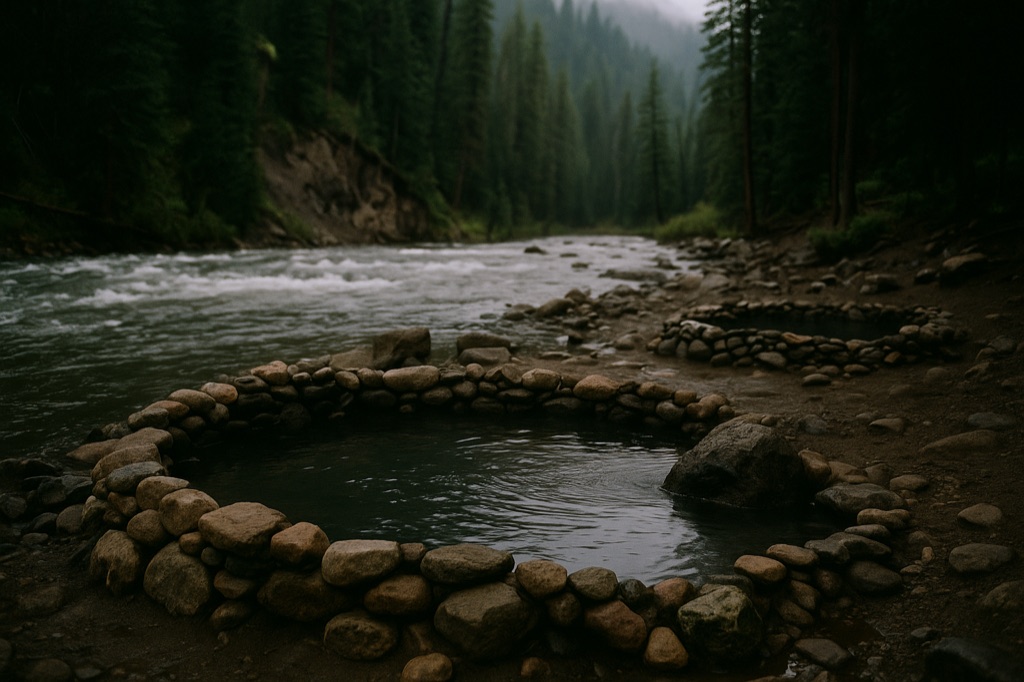
There are no fees, no attendants, and no address — just a set of rock-walled soaking pools that anonymous hikers have been rebuilding by hand each spring on the banks of the West Fork of the San Juan River since anyone can remember. The pools exist because visitors haul rocks back into place after every high-water season to keep the ~95°F mineral water corralled; if enough people stop caring, the springs go back to being just a warm seep. It takes a 10-mile round-trip hike into the Weminuche Wilderness to find out whether this year's walls held.
→ Three more sound baths, soaks & odd wellness in Durango — never the same twice
The story
Every spring, high snowmelt racing down the West Fork of the San Juan River systematically erases Rainbow Hot Springs. The torrent sweeps away hand-stacked rock retaining walls, flattens muddy soaking basins, and resets the geothermal seep back to raw riverbank. There is no maintenance crew assigned to restore it, no state park budget, and no ranger with a shovel. If everyone stopped caring, the pool would simply revert to a lukewarm trickle slipping unnoticed into cold river runoff.
Instead, an unbroken relay of anonymous backcountry hikers hauls river cobbles out of the current every summer to rebuild the tubs by hand. They stack stone walls along the bank to corral 95°F mineral water just inches from the freezing river. You trek five miles into the Weminuche Wilderness on pure faith, trusting that whoever hiked in before you left a pool worth sitting in—or prepared to start moving rocks yourself.
What it's like
Drive 14 miles east of Pagosa Springs on US-160 and turn onto the paved road toward the West Fork Trailhead. Parking is tight and fills quickly on summer weekends. The hike is roughly 5.3 miles each way into the San Juan National Forest with about 900 feet of elevation gain. You will cross the river multiple times, so pack trekking poles and expect wet boots. Through early summer, high runoff can submerge parts of the trail entirely. Once you arrive, don't look for amenities: this is a primitive, self-policed backcountry soak where you sit in hand-built stone rings smelling faintly of mineral water while the river rushes past.
The move: Pack a dry bag, drive up West Fork Road out of Pagosa Springs, hike five miles into the Weminuche Wilderness, and soak in a pool your predecessors built for you.
📍 Before you go West Fork Trailhead is off US-160 about 14 miles east of Pagosa Springs; the road to the trailhead is paved but parking is limited and fills early on weekends. The 5-mile trail gains roughly 900 feet and crosses the river multiple times — bring trekking poles and expect wet feet. High snowmelt can flood the trail through early summer; check conditions before going. No permit currently required but Weminuche Wilderness rules apply (no dogs in some zones, Leave No Trace).
- 📍 Pagosa Springs
- 💸 $$
- ⚡ Low-key
- 🌗 Indoor or outdoor
Hours: Added 2026-06-21 — confirm current hours before you go.
⚠ Seasonal or scheduled — always check before you go.
Pair it with
- Nathan's Hippy Dip Hot Spring — If you want a free, primitive riverbank soak without committing to a ten-mile wilderness hike, hit this town-side spot along the Pagosa Riverwalk.
- Piedra River Hot Springs — Another unmanaged geothermal soak where hikers stack rock walls along a riverbank, located west of Pagosa Springs with a shorter trail.
- The Mother Spring — Contrast the fragile, hand-stacked rock tubs of the backcountry with the massive, 1,002-plus-foot geothermal spring that feeds the commercial resort pools downtown.
More weird in Durango



Good to know
Is there an entry fee or permit required?
No. Access is completely free, and no backcountry permit is currently required to hike in, though standard Weminuche Wilderness rules and pack-in/pack-out ethics apply.
How long and hard is the hike?
It is a 10.6-mile round-trip hike (5.3 miles each way) along the West Fork Trail. The route gains about 900 feet of elevation and involves several wet river crossings.
How warm is the water in the hot springs?
The mineral water emerges around 95°F. Actual pool temperatures depend on how well visitors have built up the rock walls to keep out cold river water.
When is the best season to go?
Late summer through early autumn is best. Heavy snowmelt in late spring flooding the trail makes river crossings dangerous, and winter snow turns the 5-mile trail into a severe snowshoe or ski trek.
Plan a visit & invite your people →
Further reading: alltrails.com · 10adventures.com · soakcolorado.com · Official site · fs.usda.gov · Reddit
last checked: 2026-06-21