Entry No. 83 — the Durango file — filed under: after-dark
Night Sky at the Durango Nature Center (SJMA)
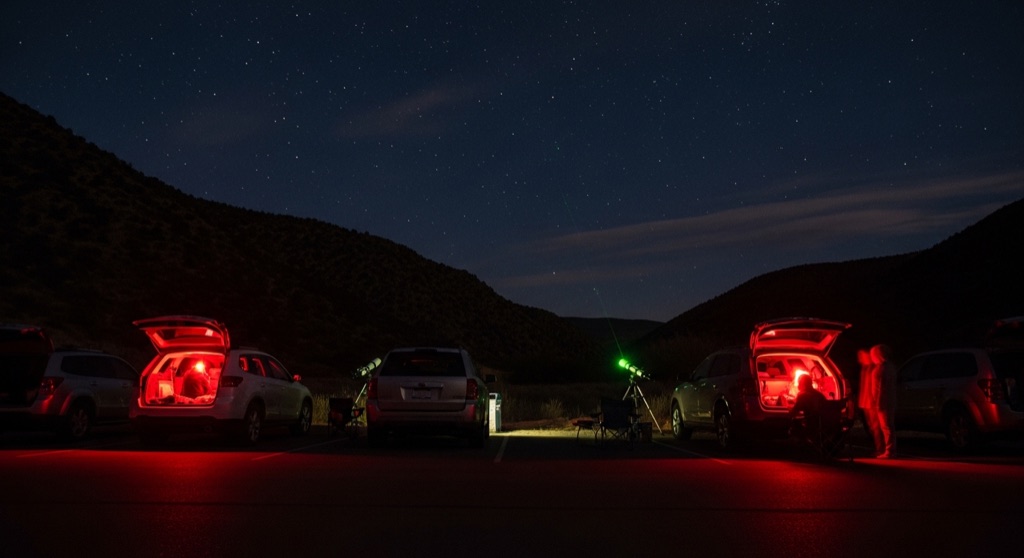
The San Juan Mountains Association hosts an intimate after-dark star party at its Durango Nature Center, capped at just 15 people and led by a local amateur astronomer (a former Mesa Verde night-sky ranger). She sets up a telescope or two and runs a green-laser tour of the constellations. You're asked to back your car into your spot and bring only a red light, so nobody's white headlamp wrecks everyone's night vision. It's a quiet, low-key, locals-run alternative to a big tourist stargazing operation. (Free, $10 donation appreciated, registration required.)
→ Three more after-dark & night-sky spots in Durango — never the same twice
The story
If you drive out to County Road 310 southeast of town, past the point where the sagebrush and pinyon-juniper swallow the Florida River valley, you’ll reach the Durango Nature Center. Most visitors know it as a daytime spot for riparian trail walks, but on select summer nights, the San Juan Mountains Association turns off the lights and hands the clearing over to a tiny group of night-sky observers.
The session is run by a former Mesa Verde night-sky ranger who sets up portable telescopes in the clearing and uses a high-powered green laser to trace constellations against the mountain atmosphere. You won't find loud speaker systems or glossy presentation decks here; it's an informal, field-level breakdown of planetary rings, nebulae, and stellar movement.
The cap of 15 attendees is enforced to keep the gathering small enough that everyone gets generous time at the eyepieces without waiting in a amusement-park line. The protocol is strict for a reason: you are required to back your vehicle into your parking spot when you arrive so that no one accidentally fires white headlights into the clearing if they leave early.
What it's like
Arrive down County Road 310 before dark, back your car into your assigned spot, and shut off all interior and exterior white lights before stepping out. You'll navigate to the gathering spot using only red light (a red headlamp or red tape over a standard lens). Even in peak summer, temperatures in the river valley drop rapidly after dark, so bring a winter jacket, warm hat, and a camp chair. The vibe is quiet, low-key, and deeply focused on the sky.
The move: Register for the tiny 15-person star party, bring a red headlamp and warm layers, and take turns at the big telescopes under a genuinely dark valley sky.
📍 Before you go Registration required and capped at 15 spots; free with a suggested $10 donation. Held on specific summer evenings (~8:30-10pm), weather-permitting. Bring red lights and warm clothes.
- 📍 Durango (Florida River valley)
- 💸 $
- ⚡ Low-key
- 🌗 Outdoors
Where: Durango Nature Center, 63 County Road 310, Durango, CO 81303
Hours: Added 2026-06-23 — confirm current hours before you go.
⚠ Seasonal or scheduled — always check before you go.
Pair it with
- Fort Lewis College Observatory — Compare the intimate, dark-field setup along the Florida River valley with the campus rooftop view and 14-inch telescope on top of Fort Lewis College.
- The Powerhouse Dark Sky Celebration — Pair your quiet field stargazing session with Durango's broader dark-sky educational programming held inside the historic 1893 power plant along the Animas River.
- Durango Park Mini Golf (at Serious Texas BBQ) — Grab smoked brisket and play a round of mini-golf on Durango's south side before taking County Road 310 out into the dark valley.
More weird in Durango
Good to know
How do I sign up and what does it cost?
You must register online in advance via the San Juan Mountains Association (SJMA) website because each event is strictly capped at 15 people. The event is free to attend, though a $10 donation per person is suggested to support SJMA's educational programs.
Why is red light mandatory?
Human eyes take up to 30 minutes to fully adapt to deep darkness. A single flash of white light resets that clock instantly for everyone in the field, while red light allows you to see the ground without ruining your low-light vision.
What happens if the weather is bad?
Stargazing requires clear skies and is strictly weather-permitting. SJMA will cancel the event if heavy cloud cover or rain moves into the Florida River valley, so monitor your registration email before driving out.
What should I bring with me?
Pack warm clothing (a heavy jacket, long pants, and closed-toe shoes), a red-lens flashlight or red headlamp, and a camp chair or blanket if you prefer sitting while waiting for your turn at the telescope.
Plan a visit & invite your people →
Further reading: Official site · ksut.org
last checked: 2026-06-23