Entry No. 73 — the Durango file — filed under: after-dark
Chimney Rock National Monument Night Sky Program
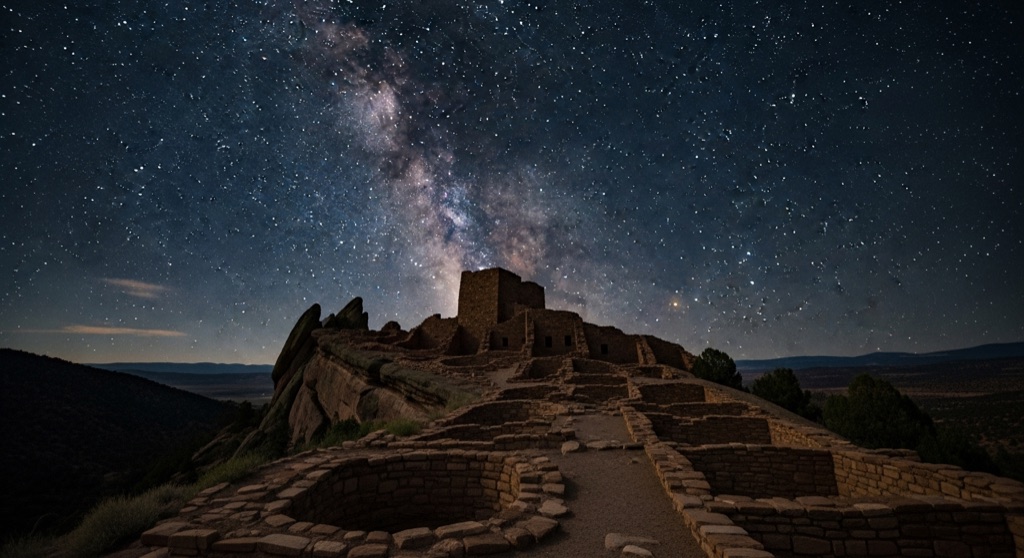
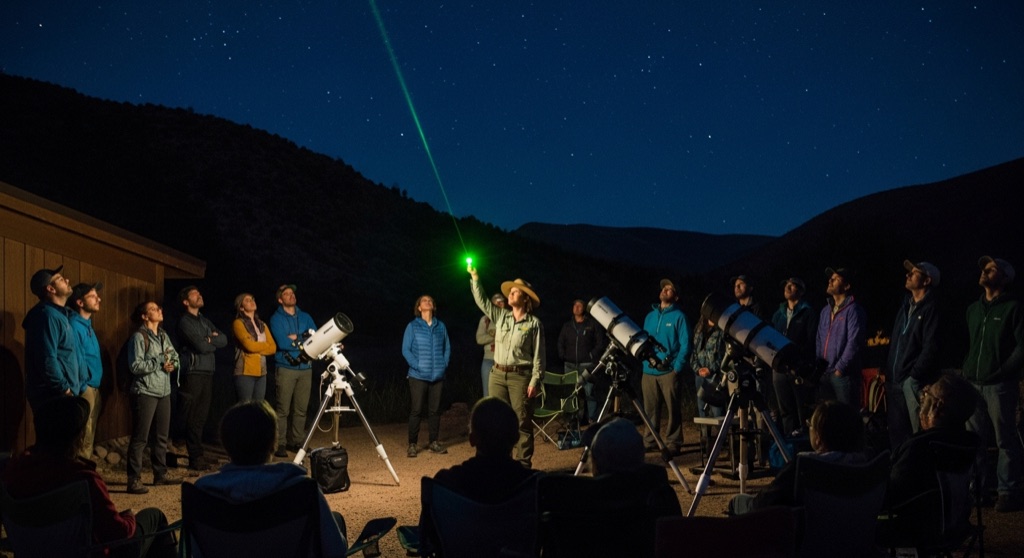
Chimney Rock is a certified International Dark Sky Park perched in a remote, undeveloped valley where Ancestral Puebloans aligned their high mesa structures to the moon's 18.6-year lunar standstill. On scheduled summer evenings, guides weave together talks about the Puebloans' connection to the sky, constellations and observable planets; bring your own binoculars for personal viewing (telescopes may or may not be available). The 2026 night-sky evenings run June 20, July 18, August 15, and September 12.
→ Three more after-dark & night-sky spots in Durango — never the same twice
The story
A thousand years ago, Ancestral Puebloans hauled building stone up a 7,600-foot ridge and constructed a high-mesa complex squeezed between two massive sandstone spires. They were framing a very specific slice of horizon: every 18.6 years, during the major lunar standstill, the moon rises precisely between those twin rock chimneys. Long before modern observatories, the Chacoan builders locked their architecture directly into the mechanics of the solar system.
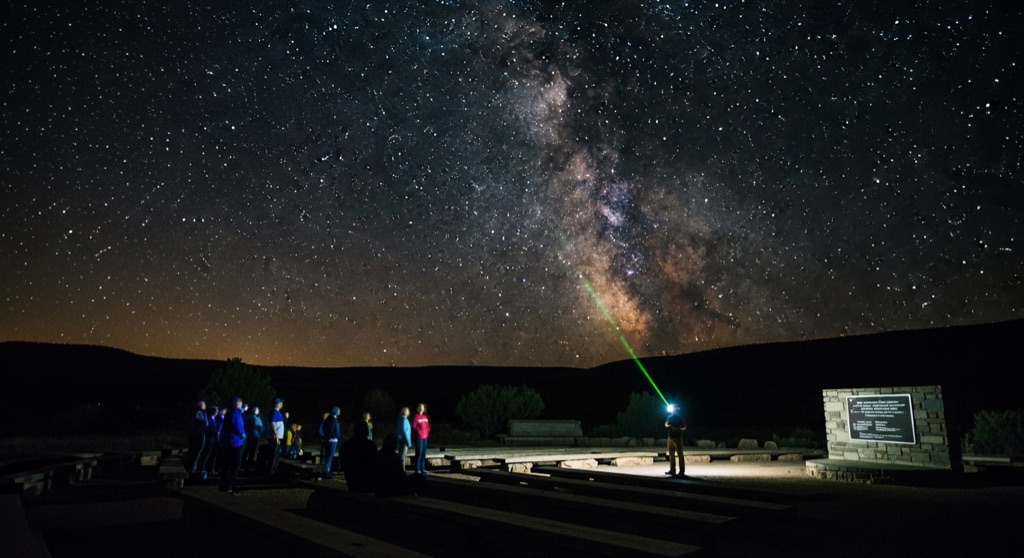
Today, the valley surrounding the monument remains raw, dark, and minimally developed—so clean of light pollution that it officially sits as Colorado's 20th International Dark Sky Park. On select summer nights, volunteers from local astronomy groups and the Chimney Rock Interpretive Association turn off the site lights, hand out green laser pointers, and bridge ancient horizon astronomy with high-altitude observing.
What it's like
You'll drive out along Highway 151 into the San Juan National Forest, about 50 miles east of Durango. Once you clear the entry gates, turn your headlights off as instructed and let your eyes adapt to total darkness. The two-hour guided session blends sky-lore walks with constellation mapping across an unpolluted Milky Way. Bring your own pair of good binoculars for deep-sky scanning; while volunteers sometimes set up telescopes, long lines or gear limits mean your own optics guarantee a view. Mountain storms roll through fast, but even when clouds hang over Durango or Pagosa Springs, this high gap often stays miraculously clear.
The move: Reserve the two-hour evening program, then watch the Milky Way rise over thousand-year-old stone ruins while a guide laser-points constellations the ancient builders once tracked.
📍 Before you go Reserve via Recreation.gov or 877-444-6777; $20 ages 13+, $10 ages 5-12; reservations cut off 12 hours prior. About 50 miles east of Durango.
- 📍 between Pagosa Springs and Durango
- 💸 $
- ⚡ Low-key
- 🌗 Outdoors
Where: 3179 CO-151, Chimney Rock, CO (San Juan National Forest)
Hours: Added 2026-06-23 — confirm current hours before you go.
⚠ Seasonal or scheduled — always check before you go.
Pair it with
- Piedra River Hot Springs — Soak in undeveloped geothermal riverbank pools nine miles down the road before heading up the mesa for stargazing.
- Sacred Space — Swap ancient celestial math for modern esoteric crystal ritual in nearby Bayfield on your drive out from Durango.
- Nathan's Hippy Dip Hot Spring — Pair high-altitude stargazing with a late-night or early-morning free soak right on the San Juan River in Pagosa.
More weird in Durango
Good to know
When do the 2026 Night Sky programs take place?
The scheduled 2026 evening programs run on four select Saturdays: June 20, July 18, August 15, and September 12.
How do I get tickets, and how far in advance must I book?
Tickets cost $20 for ages 13+ and $10 for ages 5–12. You must reserve in advance via Recreation.gov or by calling 877-444-6777; ticket sales cut off strictly 12 hours before the program starts.
What gear should I bring?
Pack warm layers for high-altitude nighttime temperature drops and bring your own binoculars. Telescopes are not guaranteed to be available for individual turn-by-turn viewing.
Where is the site located relative to Durango?
It sits roughly 50 miles east of Durango (and west of Pagosa Springs) along CO-151 inside the San Juan National Forest.
Plan a visit & invite your people →
Further reading: Official site · darksky.org · fs.usda.gov · recreation.gov · denverastro.org · rmpbs.org
last checked: 2026-06-23