Entry No. 92 — the Denver file — filed under: history
Riverside Cemetery
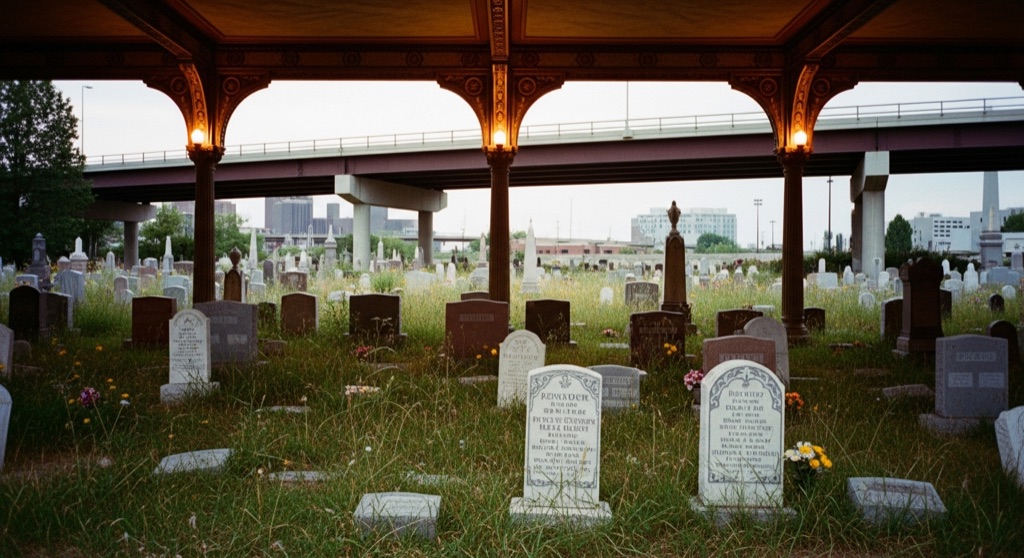
“67,000 graves now sit in waist-high weeds and wildflowers”
Denver's oldest operating cemetery (1876) got swallowed by the city it served — today it's boxed in by industrial lots, I-70 overpasses, and rail yards along Brighton Boulevard. After it lost its irrigation water rights in the early 2000s, the lawns died back to wild prairie grass, so 67,000 graves now sit in waist-high weeds and wildflowers. It made Colorado's Most Endangered Places list, yet the gates are open and you'll likely have all 77 acres to yourself. The headstones read like a directory of frontier Denver, veterans included.
→ Three more abandoned & forgotten places in Denver — never the same twice
The story
In 1876, when Denver was barely old enough to claim statehood, city founders established 77 acres along the South Platte River as a serene, park-style sanctuary for the dead. Then the city built up around it. Over the decades, heavy industry hemmed in the property until it was completely pinched between Brighton Boulevard rail corridors, warehouse lots, and the concrete overpasses of I-70. The defining shift arrived in the early 2000s when the cemetery lost its irrigation water rights. Without water, the manicured green lawns dried up, leaving 67,000 graves to be slowly reclaimed by wild prairie grass, thistles, and waist-high weeds.
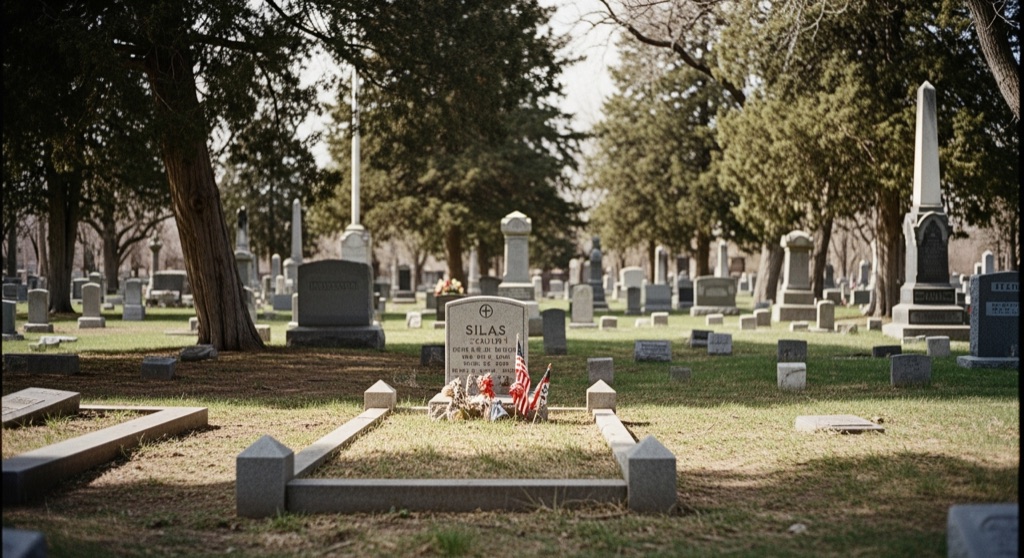
That feral state landed Riverside on Colorado's Most Endangered Places list, but the gates remain open to anyone willing to track it down. Walk the cracking gravel lanes and you'll find early Denver history rusting in the open air. Clara Brown rests here—the former slave who moved west, made a fortune in the gold rush, and funded relief for fellow freed slaves. Nearby lies Captain Silas Soule, the Union officer who refused orders to fire on peaceful Cheyenne and Arapaho families at the 1864 Sand Creek Massacre and blew the whistle on the atrocity. They share the dry soil with three Medal of Honor recipients, roughly 1,000 Civil War veterans, and a notable collection of grey cast-zinc grave markers standing among weathered marble and granite.
What it's like
You’ll drive through the industrial grid of Swansea, cross past railroad tracks off Brighton Boulevard, and pull into a 77-acre site where diesel fumes and the rumble of nearby trains compete with complete quiet. There are no tour guides, no restrooms, and no water fountains—just open gates and un-mowed tall grass stretching toward the river. Wear thick, closed-toe shoes: sunken ground, hidden gopher holes, and prickly weeds hide in the un-manicured growth. Grab a paper self-guided tour map near the office if available, and come on a weekday morning to have the overgrown rows almost entirely to yourself.
The move: Wander the overgrown rows on a weekday morning reading the oldest 1870s–1880s stones, then walk it slow with coffee — it's quiet, strange, and weirdly beautiful in the prairie-gone-feral state.
📍 Before you go It sits along Brighton Blvd in Denver's gritty Swansea/Globeville industrial belt, about a half-mile north of I-70 and a short walk from the RTD N Line. A web of curving gravel lanes runs through the grounds, so you can drive in slowly or park and wander on foot; the Friends of Historic Riverside Cemetery offer a self-guided tour brochure that maps notable residents like pioneer Clara Brown and roughly 1,000 veterans. The feral-prairie look peaks spring through fall; weekday mornings are quietest. Wear closed shoes and watch for uneven, sunken ground in the tall grass, and bring water — there are no facilities. Pair it with a coffee or brewery stop south down Brighton in RiNo. Hours shift seasonally, so check ahead.
- 📍 Swansea / Brighton Boulevard corridor, Denver
- 💸 Free
- ⚡ Low-key
- 🌗 Outdoors
Where: 5201 Brighton Blvd, Denver, CO 80216 (between Brighton Blvd and the South Platte River, near the RTD N Line)
Hours: Grounds generally open during daylight hours; it's an active cemetery, so visit respectfully. Confirm current gate hours via Friends of Historic Riverside Cemetery / cemetery office before going.
Pair it with
- Grave of Silas Soule — Located directly inside Riverside Cemetery, this headstone marks the Union officer who refused to participate in the Sand Creek Massacre.
- Riverside Cemetery Block 12 — Denver's Forgotten Potters Field — Tucked inside the same cemetery grounds, Block 12 is the unadorned potter's field section where Denver buried its indigent early residents.
- Forney Museum of Transportation — Head less than a mile and a half south down Brighton Boulevard to swap overgrown frontier graves for a massive industrial warehouse filled with historic vehicles.
- Fort Greene — Drive less than two miles into Globeville to sit with a quiet drink inside an un-signposted cocktail spot housed in an 1880s building.
More weird in Denver
Good to know
How much does it cost to visit?
Visiting is completely free. There are no entry fees or tickets required to walk or drive through the grounds.
Why is the grass dry and overgrown?
The cemetery lost its irrigation water rights in the early 2000s, causing the manicured lawns to die back and allowing native prairie grasses and wildflowers to take over the property.
Are there restrooms or drinking water available?
No. There are no public facilities, restrooms, or water sources on site, so plan accordingly and bring your own water.
What are the hours?
Grounds are generally open during daylight hours. Because it remains an active cemetery and gate hours shift seasonally, confirm current times with the cemetery office or the Friends of Historic Riverside Cemetery before head out.
Plan a visit & invite your people →
Further reading: Atlas Obscura · Wikipedia · coloradopreservation.org
last checked: 2026-06-07