Entry No. 67 — the Denver file — filed under: science
NSF Ice Core Facility
“suit up in cold-weather gear and step into a room full of frozen time”
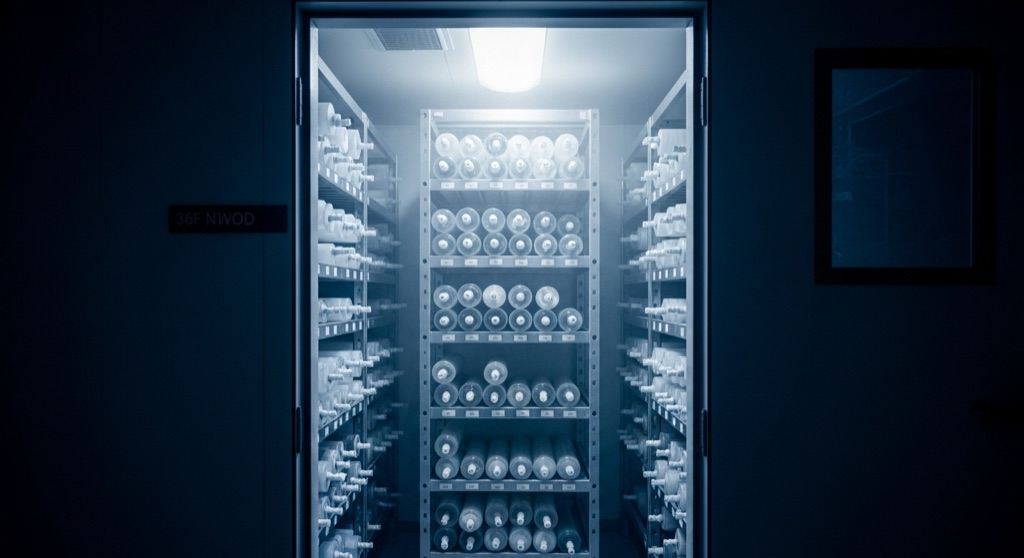
On the Denver Federal Center in Lakewood, behind unremarkable government doors, sits a walk-in freezer kept at -36C that holds more than ten miles of ice cores drilled from Antarctica and Greenland, some of it hundreds of thousands of years old. The NSF Ice Core Facility curates the physical archive of Earth's climate history, and almost nobody outside the geology community knows the public can actually tour it. You suit up in cold-weather gear and step into a room full of frozen time. Roughly 100 tours a year, free, booked months out.
→ Three more unusual museums & collections in Denver — never the same twice
The story
Behind unremarkable gray doors inside the sprawl of the Denver Federal Center in Lakewood, the U.S. government keeps the world's most delicate atmospheric archive locked at minus 36 degrees Celsius. Operated by the U.S. Geological Survey and funded by the National Science Foundation, the NSF Ice Core Facility holds more than 15 miles of ice cores drilled from deep inside the ice sheets of Antarctica and Greenland. Stored inside metallic, aluminum-lined tubes stacked on industrial shelving, these opaque cylinders preserve actual atmospheric gas bubbles, volcanic ash deposits, and dust trapped in snowfall up to 800,000 years ago.
Researchers don't cut or test ice inside the main freezer. Instead, visiting scientists transfer requested samples into an adjacent, relatively warm minus 24-degree Celsius exam room. There, they use specialized band saws to slice out precise longitudinal sections before shipping them to university laboratories across the country. Because every sample cut permanently destroys a piece of the record, the main archive room is managed with the strict protocol of a high-security vault.
While the facility primarily exists for polar scientists and federal geological research, it quietly opens its doors for roughly 100 free public tours a year. Almost nobody outside the scientific community realizes you can actually step inside. You won't find interactive glass displays, gift shops, or travel-brochure framing here—just a working federal warehouse holding hundreds of thousands of years of Earth's climate history suspended in ice.
What it's like
Getting inside starts with clearing a federal security checkpoint at Gates 1, 4, or 5 off Kipling, where guards check photo IDs before letting your vehicle onto the Federal Center campus. Build in extra time to navigate the maze of government buildings. On-site, staff hand out heavy parkas and insulated freezer boots, but you need to arrive wearing closed-toe shoes, long pants, and warm socks. Once you step into the main storage room, the minus 36-degree air immediately freezes the moisture in your nose, and the hum of industrial refrigeration units fills the space. Tour groups are small, and you'll spend roughly 30 to 45 minutes standing alongside rows of stacked ice cylinders while a curator walks you through how the samples are retrieved and archived.
The move: Request a tour well in advance, bundle up together for the freezer room, then thaw out over coffee debating how a chunk of 100,000-year-old ice ends up in a Lakewood warehouse.
📍 Before you go The catch nobody warns you about: this sits inside the Denver Federal Center, a secured government campus, so you arrive at a guarded gate (visitors use Gates 1, 4, or 5) and need a valid photo ID to get onto the grounds. Build in buffer time for that and to find the right building. RTD W Line riders can take the train straight to Federal Center station, which has a large park-n-ride if you drive. Wear closed-toe shoes and warm socks under the issued gear. Tour availability shifts and has been limited by nearby construction, so confirm well ahead. Afterward, Belmar is the closest spot to thaw out over coffee.
- 📍 Lakewood (Denver Federal Center)
- 💸 Free
- ⚡ Low-key
- 🌗 Indoors
Where: Denver Federal Center, 6th Ave & Kipling, Lakewood, CO (NSF Ice Core Facility / USGS); tours by online request form only
Hours: Free tours run roughly 8-11am and 1-4pm on scheduled days, no drop-ins, must be requested months in advance via the online form. NOTE: as of mid-2026 tours are curtailed due to adjacent construction; confirm availability on icecores.org before requesting.
Pair it with
- Rocky Mountain Punk Nature Art & Oddities — Follow up sub-zero climate history by heading less than a mile down Wadsworth to browse pinned insects, bone jewelry, and dried oddities.
- African Grill and Bar — Thaw out your core down Kipling Parkway with warm West African fufu and slow-simmered stews at a strip-mall spot most people drive right past.
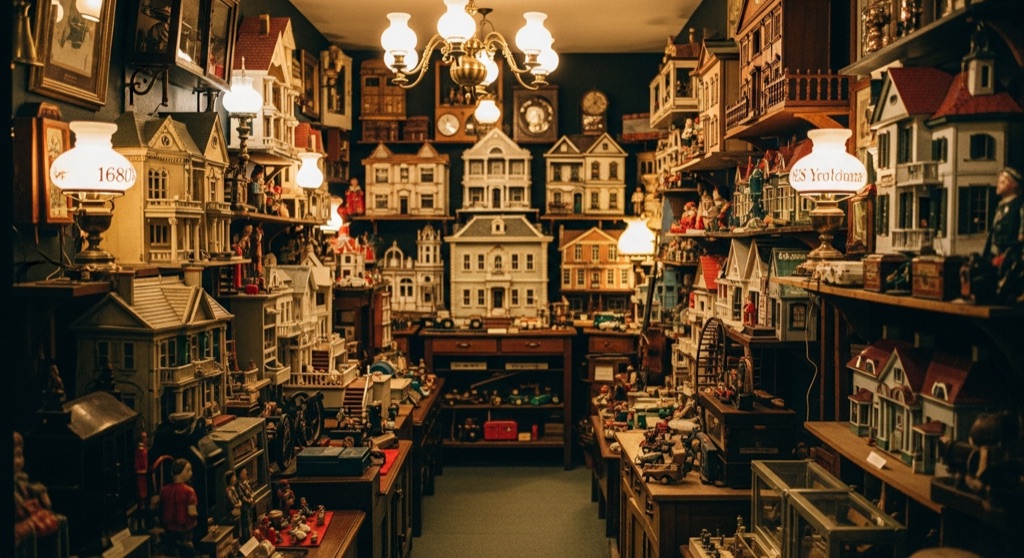
- Denver Museum of Miniatures, Dolls & Toys — Swap ten miles of ice cylinders for a nearby Lakewood building packed with over 20,000 detailed miniature artifacts dating back to the 1680s.
- Piggin' Out Smokehouse — Drive five minutes down Morrison Road to warm up inside a tiny red house serving smoked brisket.
More weird in Denver
Good to know
How do I book a tour of the Ice Core Facility?
Tours are free but must be requested months in advance using the online form at icecores.org. No drop-ins are allowed, and tour slots can be restricted or paused due to facility maintenance and nearby campus construction.
What security procedures are required to enter?
Because the facility is located on the secured Denver Federal Center campus, all adult visitors must present a valid government-issued photo ID (such as a Real ID driver's license or passport) at the security gate upon arrival.
What should I wear for the freezer tour?
Parkas and cold-weather boots are provided, but you must bring thick socks and wear full-length pants with closed-toe shoes under the issued gear.
How cold is it inside the ice archive?
The primary archive storage room is held at a constant -36°C (-33°F), while the adjacent core examination room is kept at -24°C (-11°F).
Plan a visit & invite your people →
Further reading: Atlas Obscura · icecores.org · Wikipedia
last checked: 2026-06-07