Entry No. 120 — the Denver file — filed under: history
Georgetown Energy Museum
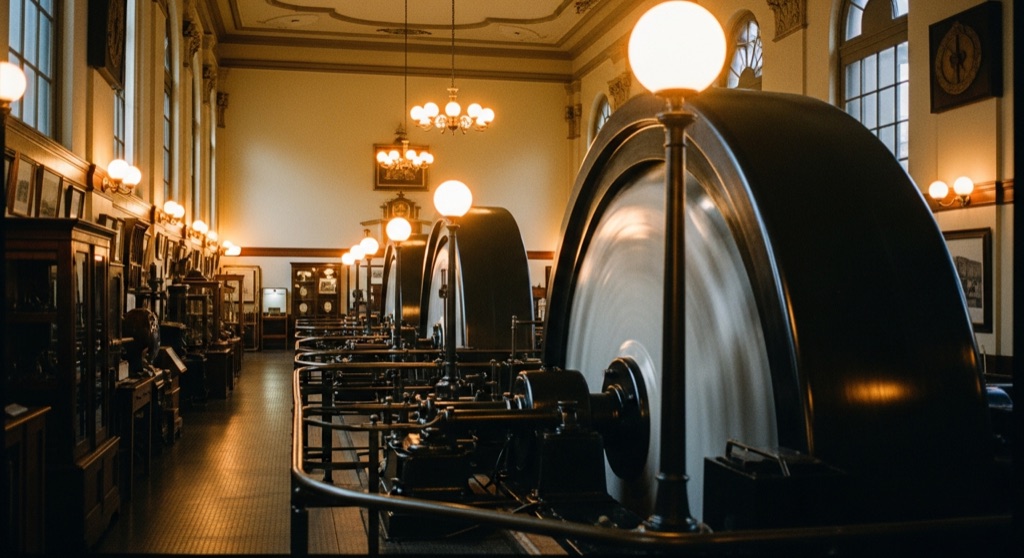
Tucked at the end of a Georgetown side street sits a hydroelectric plant that's been spinning since 1900 and still feeds power to the grid. A small nonprofit leases part of it from Xcel and runs a free museum inside, so you can stand a few feet from 125-year-old water-driven generators that are actually running, not roped-off relics. Early-electricity exhibits and antique appliances fill out the rest. It's one of the oldest continuously operating hydro plants in the country, and almost no one on I-70 detours the few blocks to find it.
→ Three more unusual museums & collections in Denver — never the same twice
The story
Most drivers on I-70 barrel straight past Exit 228 without realizing that tucked at the east end of 6th Street in Georgetown sits an active hydroelectric plant built in 1900—one of the oldest continuously operating alternating-current hydro facilities in the United States. Built at the turn of the 20th century to deliver high-voltage power to gold and silver mines across Clear Creek County (including Silver Plume, Idaho Springs, Black Hawk, and Central City), the plant revolutionized local mountain mining. Today, it remains an active utility asset owned by Xcel Energy, spinning water from South Clear Creek into enough electricity to supply roughly 700 to 1,000 homes and businesses.
The real anomaly is that Xcel Energy leases space inside this active power station to a small nonprofit, allowing you to walk directly inside a live industrial facility. There are no static plastic replicas or velvet ropes separating you from the machinery. You can stand inches from 125-year-old water-driven generators that are actively humming, vibrating the concrete floor, and feeding watts onto the regional grid in real time. Because Xcel monitors the facility remotely from its Cabin Creek plant on Guanella Pass Road, you are essentially wandering through an unmanned power plant that doubles as a free museum.
Filling out the rest of the brick-walled building is a dense collection of early-electricity relics that show what life was like when home power was a terrifying novelty. You will find early death-trap-looking electric washing machines, dangerous open-wire toasters, vintage glass insulators, antique switchboards, and line tools. It is a brief, highly specific look at how industrial high-voltage technology moved from high-alpine mine shafts directly onto American kitchen counters.
What it's like
You will park along 6th Street or grab an overflow spot near Strousse Park, then walk up to what looks like a quiet brick utility building at 600 Griffith Street. The catch is its strict seasonality: it only opens from roughly June 1 through early October (Monday through Saturday 10 a.m. to 4 p.m., Sunday noon to 4 p.m.), operating by appointment only during the cold months. Mountain mornings here are chilly, and once you step inside, the low roar and thrumming vibration of the turning generators can be surprisingly loud. It takes most people around 30 minutes to wander through unless you get talking with the volunteer docents, who will happily dive deep into high-voltage electrical history for as long as you let them.
The move: Detour off the interstate into Georgetown, wander the free plant together watching the century-old turbines spin, then stroll the historic Victorian main street for coffee or a bite.
📍 Before you go From I-70 take Exit 228 and follow signs into downtown Georgetown; the plant sits at the east end of 6th Street where it meets Griffith, an easy walk from the historic core. Parking is limited parallel spots along 6th Street, with an overflow lot near Strousse Park and Guanella Pass Brewery (a good warm-up or wind-down stop). It runs as a warm-season operation, generally late spring into early fall, with off-season visits by appointment only — dates shift year to year, so check ahead. Mountain mornings are cool and the floor can be loud with the generators turning, so dress for it.
- 📍 Georgetown
- 💸 Free
- ⚡ Low-key
- 🌗 Indoors
Where: 600 Griffith Street, Georgetown, CO 80444 (inside the operating 1900 Xcel Energy hydroelectric plant)
Hours: Open to visitors roughly June 1 through early October: Mon-Sat 10am-4pm, Sun noon-4pm. Weekdays by appointment in the off-season. Admission free (donations welcome). Confirm seasonal dates before going.
Pair it with
- Hotel de Paris Museum — Pair this 1875 French-boutique hotel with the 1900 hydro plant for a sharp contrast between mining-era luxury living and raw industrial power in historic Georgetown.
- Hamill House Museum — Stroll two blocks south to compare the opulent Victorian residence of a 19th-century silver baron with the roaring power station that kept the local silver mines running.
- Bread Bar — Drive less than two miles down the road to Silver Plume to grab a craft cocktail inside a restored 1890s bakery once your plant tour wraps up.
- Edgar Experimental Mine — Head nine miles down I-70 to Idaho Springs to tour a real working research mine that reflects the same underground mining industry this plant was built to electrify.
More weird in Denver

Good to know
Is the Georgetown Energy Museum actually inside a working power plant?
Yes, the museum operates inside an active 1900 hydroelectric generating station owned by Xcel Energy that continues to produce power for the electrical grid.
How much does it cost to visit?
Admission is free, though donations to the small nonprofit that operates the museum inside the plant are welcomed.
When is the museum open for walk-in visitors?
Walk-in visitors are welcome during its warm-season run from roughly June 1 through early October (Monday through Saturday 10 a.m. to 4 p.m., Sunday noon to 4 p.m.). Off-season visits require an appointment.
How much electricity does the 1900 plant generate?
Powered by water from South Clear Creek, the plant generates enough alternating-current electricity to supply roughly 700 to 1,000 homes and businesses.
Plan a visit & invite your people →
Further reading: Official site · city-data.com · ethw.org · hmdb.org · Reddit
last checked: 2026-06-07