Entry No. 11 — the Denver file — filed under: history
Black American West Museum & Heritage Center
“one in four cowboys of the Old West were Black”
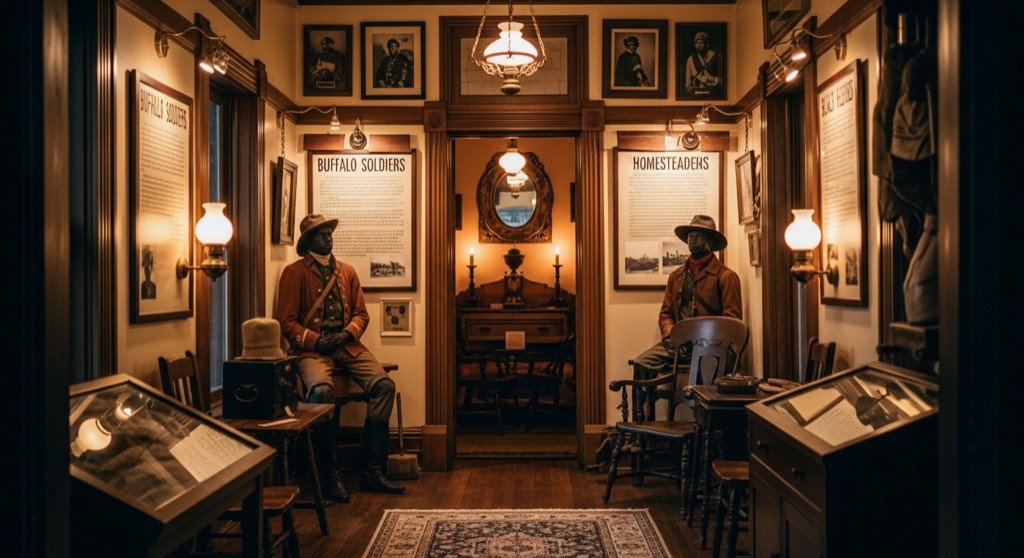
Tucked into a Victorian on California Street is the museum almost nobody tells you about: it argues that one in four cowboys of the Old West were Black, with rooms for Buffalo Soldiers, Black rodeo riders, and homesteaders. The building itself is the secret within the secret — it was the home of Dr. Justina Ford, Colorado's first licensed African-American woman physician, and was hauled 13 blocks in 1984 to escape the wrecking ball. It's small, hand-built, and run on heart, not endowment money. Most people drive past Five Points thinking jazz; this rewrites the whole frontier myth in two floors.
→ Three more unusual museums & collections in Denver — never the same twice
The story
When founder Paul Stewart was a kid playing cowboys in Iowa, his white playmates always forced him to play the Indian, insisting there was no such thing as a Black cowboy. He believed them until 1961, when he visited his cousin Earl Mann in Denver and spotted a Black rancher in full cowboy attire—boots, chaps, and spurs—walking down the street. That single encounter launched a lifelong obsession. Stewart began collecting saddles, photographs, and oral histories right out of his barbershop, eventually proving that roughly one in four Old West cowboys were Black, a fact Hollywood spent decades erasing. In 1971, he turned his personal collection into a museum that quietly tore down the white-sandwashed frontier myth.
The building holding these artifacts is its own act of historic survival. Built in 1890, the Italianate red-brick Victorian originally sat at 2335 Arapahoe Street, where it served as both home and clinic for Dr. Justina Ford—Colorado's first licensed African-American female doctor. Denied hospital privileges because of her race and gender, 'the Lady Doctor' delivered over 7,000 babies and treated patients of every background directly from her home practice. When developers scheduled the house for demolition in 1983, community leaders rallied, raised preservation funds, and physically hauled the entire two-story brick structure 13 blocks across Five Points to 3091 California Street in 1984, reopening it four years later as the museum's permanent sanctuary.
What it's like
You are looking for a standalone red-brick Victorian tucked onto a quiet residential stretch of California Street, not a sleek downtown museum complex. Inside, it feels intimate and intensely personal—two compact floors packed with Dr. Ford's original medical examining room on the main floor and rooms devoted to Black cowboys, homesteaders, and Buffalo Soldiers upstairs. Staffed by deeply knowledgeable volunteers and operating without corporate endowment money, the museum runs on heart and strict scheduling. Do not show up on a whim expecting to stroll right in; limited weekend hours and advance reservation slots mean you must book ahead online or call before arriving, or you will find yourself standing before a locked front door.
The move: Do the self-guided loop together, then argue over which displaced fact rattled you most over coffee nearby on Welton — it's a conversation-starter, not a make-out spot.
📍 Before you go Look for a freestanding Victorian house, not a storefront — it sits on a quiet residential-edge block of California St in Five Points, so park on the street and be a respectful guest of the neighborhood. The RTD light rail's 30th & Downing stop is a short walk if you'd rather not drive. It's a compact, two-floor house, so the tour itself runs short — plan it as the anchor of a longer afternoon rather than a half-day stop. Visits increasingly run on limited weekend windows and sign-up slots, so check ahead and reserve rather than risk a locked door; walk-in space isn't guaranteed. Afterward, the historic Welton Street jazz corridor — once Denver's "Harlem of the West" — is the natural place to keep the conversation going over coffee or a meal.
- 📍 Five Points
- 💸 $
- ⚡ Low-key
- 🌗 Indoors
Where: 3091 California St, Denver, CO 80205 (inside the relocated Dr. Justina Ford Victorian house)
Hours: Limited/seasonal hours historically — confirm before going; call ahead, days and times vary.
Pair it with
- Welton Street Cafe — Walk two blocks over to Five Points' historic Welton Street corridor for soul food and plate lunches to debrief over what you just learned.
- Alchemy Ritual Goods — Located four blocks away in the historic Savoy building, this BIPOC- and women-founded ritual shop carries on Five Points' traditions of community care with its hidden ancestral medicine clinic.
- Cassady's — Neal Cassady's Barbershop Site, 2558 Champa St. — Just half a mile away in Curtis Park, this tiny 400-square-foot former barbershop site offers another subtle, unvarnished glimpse into Denver's working-class street history.
More weird in Denver
Good to know
Where is the museum located and how do I get there?
It sits at 3091 California Street in Denver's Five Points neighborhood. You can park on the residential street nearby, or take the RTD light rail to the 30th & Downing stop, which drops you off just a short walk from the front steps.
Who was Dr. Justina Ford?
Dr. Justina Ford was Colorado's first licensed Black woman physician. After graduating from medical school in 1899 and moving to Denver in 1902, she spent 50 years treating marginalized communities and delivered more than 7,000 babies out of her home clinic—the very building the museum occupies today.
How long should I plan for a visit?
The self-guided loop through the house's two floors takes about 45 to 60 minutes. Because of its compact footprint, plan it as the anchor for a broader afternoon wandering Five Points rather than a standalone half-day event.
Do I need to book tickets in advance?
Yes. Operating hours are limited and vary seasonally, with timed sign-up slots required for entry. Walk-in availability is not guaranteed, so confirm open days and reserve your spot before head over.
Plan a visit & invite your people →
Further reading: cpr.org · Official site · denverarchitecture.org · history.denverlibrary.org
last checked: 2026-06-07