Entry No. 6 — the Dallas file — filed under: cemetery
Western Heights Cemetery (Clyde Barrow's grave)
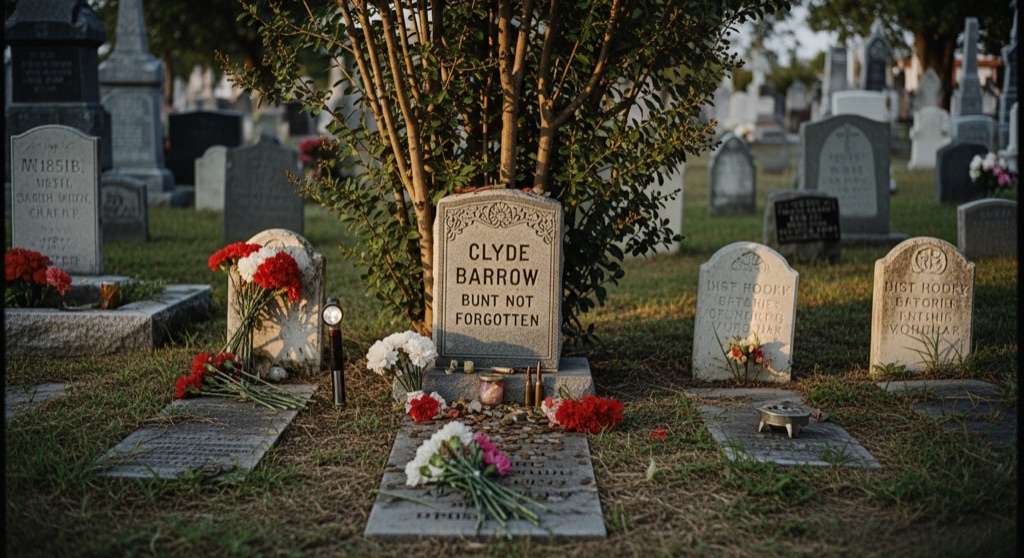
A largely abandoned 1840s-era burial ground on Fort Worth Avenue where outlaw Clyde Barrow lies beneath a stand of crape myrtles, his headstone reading 'Gone but not forgotten.' Visitors leave odd shrine offerings -- carnations, coins, even a bullet -- and many of the surrounding graves are unmarked and date to the 1850s.
→ Three at a time, never the same twice — explore weird Dallas
The story
If you expect a grandiose monument for North Texas's most infamous Depression-era outlaw, you're at the wrong address. Tucked behind an unadorned iron fence at 1617 Fort Worth Avenue sits an overgrown two-acre plot established in 1848 when West Dallas was still frontier prairie. Here, under a stand of crape myrtles along the southwestern fence line, lies Clyde Barrow. He doesn't rest next to Bonnie Parker—her mother flatly refused to let her be buried beside him, placing her across town at Crown Hill—but beside his older brother Marvin "Buck" Barrow, who died in Iowa ten months before Clyde met his own death in Louisiana.
The Barrow brothers share a single flat stone flush with the dirt, carved with their middle names ("Clyde C." and "Marvin I.") and a stark four-word epitaph: 'Gone but not forgotten.' Surrounding them in the lawn is the rest of the Barrow family—their parents Henry and Cumie, along with two siblings—surrounded by unmarked 1850s pioneer graves, 19th-century farmers, and Civil War veterans. The cemetery fell into deep neglect for decades, surviving as a forgotten patch of native Blackland Prairie until neighborhood volunteers stepped in to keep the brush from swallowing the markers entirely.
Because there is no docent or gift shop, visitors turn Clyde’s plot into a strange, improvised shrine. Look closely at the gravestone and you'll find the odd offerings left behind by true-crime pilgrims and passing strangers: spent brass bullet casings, cheap carnations, pocket change, lit cigarettes, and occasionally a splash of cheap whiskey. You didn't hear it from us, but if you step off the main path toward the older section, you are walking over pioneer graves whose wooden markers eroded into dust long before Clyde ever picked up a Browning Automatic Rifle.
What it's like
Arriving here feels less like visiting a tourist attraction and more like trespassing on a quiet piece of forgotten West Dallas history. The main drive gate on Fort Worth Avenue is usually padlocked, so slip in through the open pedestrian entryway at the corner of Neal Street, where concrete steps lead straight up through the fence with no gate to block you. Park on the wide east shoulder of Neal Street rather than chancing the traffic on Fort Worth Avenue. The grounds are volunteer-maintained and thick with prairie grass, making the flat Barrow headstone somewhat tricky to spot if you don't head straight for the southwest perimeter. Visit during golden hour when the light hits the worn stones, bring a flashlight if you want to trace the faint 1850s inscriptions, and keep your voice low—the rear edge of the cemetery backs directly onto quiet residential homes.
The move: Go at golden hour and play amateur historians: find the Barrow family plot in the southwestern section, read the epitaph aloud, and see what mementos strangers have left at the shrine. Bring a flower to add and a flashlight to read the older 1850s stones.
📍 Before you go The cemetery sits on Fort Worth Avenue in West Dallas; the easiest way in is the pedestrian entrance at the corner of Fort Worth Ave and Neal Street, where a few steps lead up with no gate (the main drive gate is often padlocked). Park on the side street rather than the busy avenue, and come in daylight, ideally golden hour, since the grounds are volunteer-maintained and partly overgrown. Clyde shares one flat headstone with his brother Buck near the southwest fence line. It backs onto a quiet residential edge, so keep voices low. Pair it with a meal along the Fort Worth Avenue corridor or nearby Bishop Arts.
- 📍 West Dallas / Kessler
- 💸 Free
- ⚡ Low-key
- 🌗 Outdoors
Where: 1617 Fort Worth Ave, Dallas, TX
Hours: Daylight hours recommended; cemetery is volunteer-maintained and partly overgrown -- the Barrow plot can be hard to find.
Pair it with
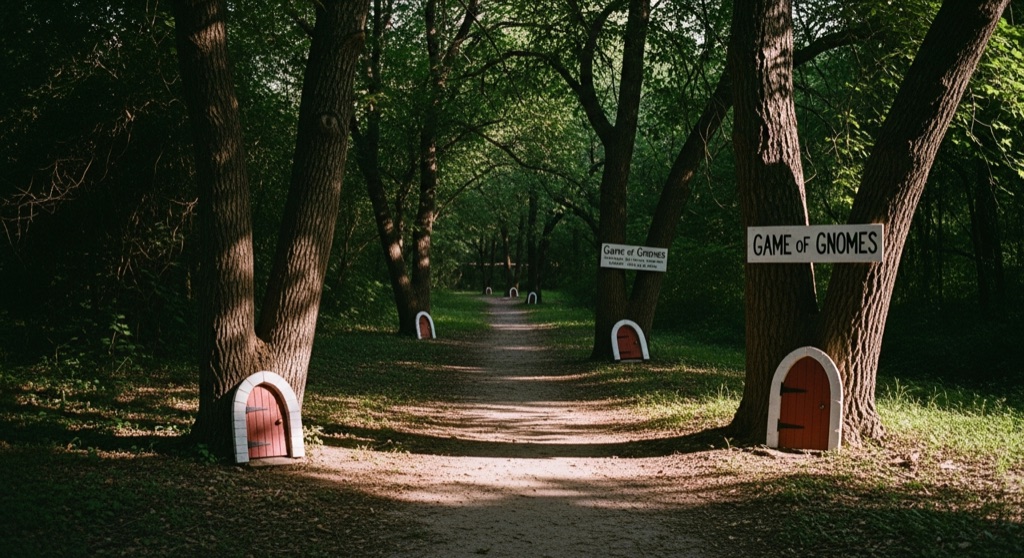
- Coombs Creek Trail Tiny Doors & Gnomes — Both locations sit on land originally surveyed by pioneer William Coombs in the 1840s, making this hidden trail walk a lighter counterpart to the cemetery's dark history.
- Jettison — Tucked behind Houndstooth Coffee down Fort Worth Avenue, this dim, intimate cocktail room offers a quiet place to sit with a drink after hunting through old headstones.
- Another Round — Located less than a mile up the road, this indoor mini-golf bar provides a neon-lit, oddball contrast to the quiet 19th-century grounds.
- Chango Botanica — Pair the coins and offerings left at Clyde's grave with a visit to this long-running Santeria botanica in Oak Cliff, filled with dressed candles, altars, and folk remedies.
More weird in Dallas
Good to know
Is Bonnie Parker buried here too?
No. Although Clyde and Bonnie wanted to be buried side-by-side, Bonnie's family refused to allow it. She is buried roughly nine miles away at Crown Hill Memorial Park in Northwest Dallas.
Where is Clyde Barrow's headstone inside the cemetery?
The Barrow family plot is located in the southwestern section of the cemetery, near the rear fence line beneath a stand of crape myrtles. Clyde shares a single flat headstone with his brother Buck.
How do I get in if the main drive gate is locked?
Use the un-gated pedestrian entrance at the corner of Fort Worth Avenue and Neal Street, where a short set of concrete steps leads through the perimeter fence.
Is there dedicated parking?
There is no formal parking lot. Park on the wide shoulder of Neal Street right next to the pedestrian entrance, which allows your car to pull completely off the roadway.
What are the hours and admission cost?
The cemetery is free to enter and accessible during daylight hours. Night visits are not recommended as the grounds lack lighting and feature uneven terrain.
Plan a visit & invite your people →
Further reading: Roadside America · oakcliff.advocatemag.com · kellykazek.com · Official site
last checked: 2026-06-06