Entry No. 40 — the Dallas file — filed under: creationism
Creation Evidence Museum
“people and T. rex neighbors walked the same mud 6,000 years ago”
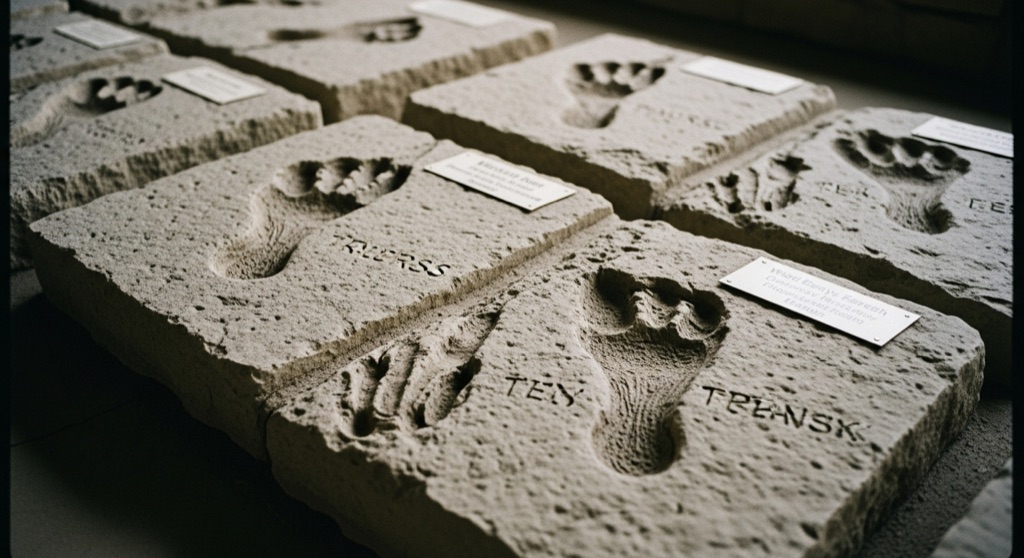
A proudly earnest young-Earth creationist museum where stone slabs displaying alleged human footprints pressed alongside genuine Cretaceous dinosaur tracks are presented as proof that people and T. rex neighbors walked the same mud 6,000 years ago. Founded in 1984 by TV preacher and paleontologist-by-self-proclamation Carl Baugh, it's one of the most sincerely weird roadside museums in Texas.
→ Three more unusual museums & collections in Dallas — never the same twice
The story
In 1984, self-proclaimed paleontologist and TV preacher Carl Baugh parked a double-wide mobile home along Farm to Market Road 205, right on the doorstep of Dinosaur Valley State Park. His thesis was simple, if completely irreconcilable with modern science: the Cretaceous limestone of the Paluxy Riverbed holds human footprints pressed side-by-side with dinosaur tracks, proving mankind and T. rex walked the same mud 6,000 years ago. Today, housed in a long stone-and-Plexiglas building, the Creation Evidence Museum stands as Texas's most stubbornly earnest shrine to young-Earth creationism.
Step inside and you will not find slick digital displays; you get a hyper-specific cabinet of curiosities. The prized artifacts include the Alvis Delk print—a slab of Glen Rose limestone displaying an alleged 11-inch human footprint intruded by an Acrocanthosaurus track—and the London Hammer, a 19th-century iron tool encased in ancient rock. Overhead on the balcony sits a 12-foot statue of legendary Dallas Cowboys coach Tom Landry. But the showstopper is Baugh's Hyperbaric Biosphere: a magenta-windowed pressure chamber designed to replicate pre-Flood atmospheric conditions, where Baugh claimed he could triple the lifespan of fruit flies and neutralize copperhead snake venom.
You didn't hear it from us, but whether you view the museum as absolute scripture or an extraordinary monument to pseudoscience, its devotion to the premise is absolute. Mainstream geologists and even prominent creationist organizations have long dismissed the "man tracks" as eroded dinosaur prints, algal patterns, or outright carvings, but the museum remains completely unbothered. Sitting barely a mile from the state park where scientists document undisputed theropod prints, it offers a gloriously surreal front-row seat to one of the state's oddest intellectual showdowns.
What it's like
You will drive roughly 90 minutes southwest of DFW down FM 205, turning into a gravel lot in front of a small, peak-roofed stone building backed by the Paluxy River. Admission is $10 per person, and the interior is quiet, air-conditioned, and staffed by earnest docents who will point you toward scheduled lab presentations or video lectures. The museum keeps tight hours—open only Wednesday through Saturday from 10:00 a.m. to 4:00 p.m.—so map your drive and verify it is open before hitting the road. Plan to spend about an hour examining the footprint slabs, the hyperbaric chamber, and the 25-foot Noah's Ark replica before crossing over to Dinosaur Valley State Park down the road to compare Baugh's claims against real, undisputed riverbed tracks.
The move: Spend a Wednesday–Saturday afternoon touring the exhibits and examining the contested "man tracks" in the Paluxy River limestone slabs — then cross over to Dinosaur Valley State Park (minutes away) to see the real, undisputed sauropod and theropod tracks in the riverbed, making for a gloriously surreal side-by-side contrast of creationist and scientific takes on the same fossil evidence.
📍 Before you go This is a true day trip from the metroplex — roughly 90 minutes southwest of DFW, out on a rural farm-to-market road, so it's a small, easy-to-miss building you'll want to map carefully before you go; parking is on-site. The museum itself is indoors and weather-proof, but it keeps limited days each week, so confirm it's actually open before committing the drive. Treat the whole of Glen Rose as the outing: the 1893 courthouse square has antique shops and cafés, Big Rocks Park sits on the Paluxy River, and the drive-through safari at Fossil Rim Wildlife Center is close by. Spring or fall dodges the brutal Texas summer heat for the outdoor stops.
- 📍 Glen Rose
- 💸 $
- ⚡ Up for anything
- 🌗 Indoors
Where: 3102 FM 205, Glen Rose, TX 76043
Hours: Mined 2026-06-07 — confirm current hours before you go.
Pair it with
- Dinosaur Valley State Park Star Party — Located barely a mile away, this state park lets you compare the museum's controversial print slabs with undisputed fossil tracks by day and deep-sky stargazing by night.
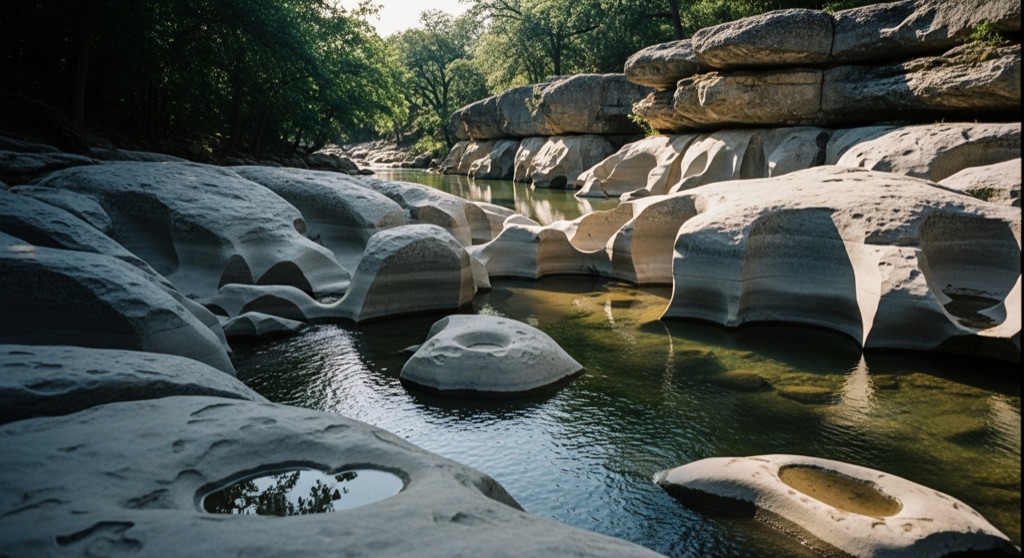
- Big Rocks Park — Drive three miles up the road to scramble across massive Paluxy River Cretaceous limestone boulders without any theological interpretations attached.
- Fossil Rim Wildlife Center — Swap the debate over pre-Flood reptiles for live giraffes and rhinos along a 7-mile drive-through safari just three miles down FM 205.
- Petrified Wood Speakeasy Ruins (Ed Young Station) — Continue your tour of strange local stone less than five miles away at the skeletal petrified-wood ruins of a Prohibition-era gas station and speakeasy.
More weird in Dallas
Good to know
How much does it cost to visit, and when is it open?
The museum is open Wednesday through Saturday from 10:00 a.m. to 4:00 p.m., and admission is $10 per person.
Are the "human footprints" alongside dinosaur tracks authentic?
Geologists, paleontologists, and even major young-Earth creationist groups have debunked the Paluxy River "man tracks," demonstrating that they are weathered dinosaur tracks, natural erosion features, or man-made carvings.
What is the Hyperbaric Biosphere?
It is a custom-built chamber with magenta-tinted windows where Carl Baugh attempted to recreate the higher atmospheric pressure, oxygen levels, and magnetic fields he claims existed prior to Noah's Flood.
How close is the museum to Dinosaur Valley State Park?
The museum is located just over one mile down FM 205 from the entrance to Dinosaur Valley State Park.
Plan a visit & invite your people →
Further reading: Yelp · Tripadvisor · Official site · Wikipedia · Atlas Obscura · ncse.ngo
last checked: 2026-06-07