Entry No. 57 — the Dallas file — filed under: offbeat-museum
Adrian E. Flatt Hand Collection
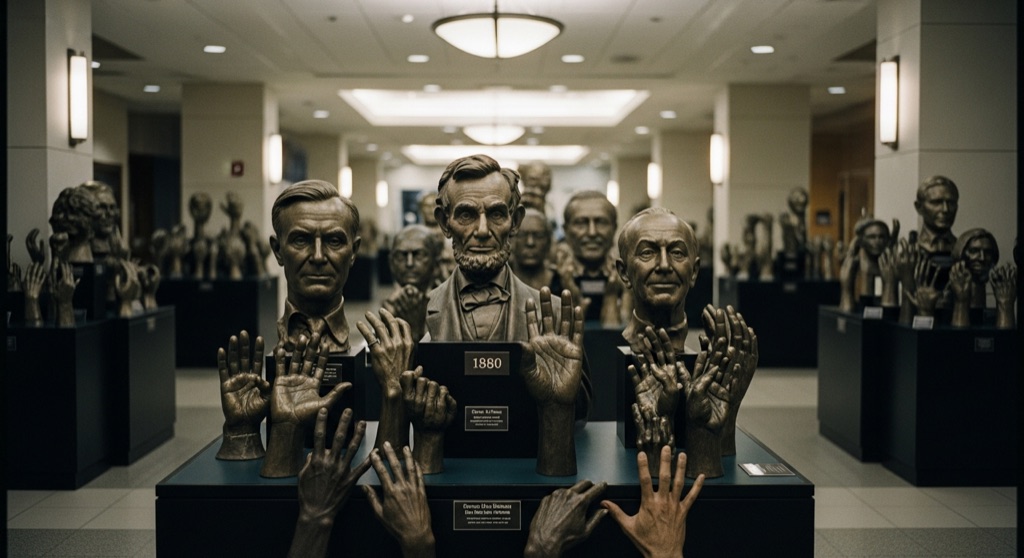
Tucked inside the lobby of Baylor University Medical Center's George W. Truett Memorial Hospital, this is 120+ bronze-cast hands assembled over decades by orthopedic surgeon Dr. Adrian Flatt — Abraham Lincoln's 1860 cast sits a few feet from André the Giant's, Walt Disney's, Mickey Mantle's, and a crew of NASA astronauts. Flatt started by molding patients' hands for surgical planning, then spent years chasing famous mitts around the world, building what the Dallas Observer once crowned (with full tongue in cheek) "Best Place to Look at a Bunch Of Hands." It's free, open around the clock, sits in a working hospital corridor, and almost never shows up on any Dallas top-ten list — you stumble past it between the gift shop and the elevator bank.
→ Three more oddity shops & curiosities in Dallas — never the same twice
The story
You don't expect to find more than 100 disembodied bronze hands mounted inside glass display cases while stepping over hospital floor wax, but that is precisely what awaits in the lobby of Baylor's Truett Hospital. The collection was born in the 1950s out of clinical utility: Dr. Adrian Flatt, an English-born orthopedic surgeon who later chaired Baylor's orthopedics department, began making dental-alginate molds of pediatric patients' hands to plan surgeries for congenital deformities. From there, he started casting the mitts of fellow surgeons to prove a medical point—that there is no single anatomical archetype for a great surgeon's hands.
Before long, Flatt's clinical exercise spiraled into an obsession with chasing notable hands around the globe. He moved on to casting U.S. presidents starting with Harry Truman and Dwight Eisenhower, legendary athletes like Mickey Mantle and Roger Staubach, and cultural icons ranging from Dr. Seuss and Walt Disney to illusionist David Copperfield and André the Giant. He even tracked down historical molds, mounting a bronze cast of Abraham Lincoln's 1860 pre-presidential hands just steps away from NASA astronauts and symphony organists.
What makes the display deeply strange isn't just the sheer variety of the subjects, but the eerie way bronze strips away personality until only pure anatomy remains. Without the faces, you're left confronting the gnarled pinkies of a hall-of-fame quarterback or the massive, shovel-like paws of a professional wrestler. It sits in plain view in a brightly lit medical hallway—completely unadvertised on city tourism boards—where shift-changing nurses and visitors with cafeteria trays breeze past one of the state's weirdest anatomical archives every single day.
What it's like
Getting in couldn't be simpler or more bizarre: pull into the hospital's paid visitor garage, walk through the main entrance of Truett Memorial Hospital, and you're right there. There is no ticket counter, no check-in desk, and no guard asking what you're doing—just horseshoe-shaped glass cases standing in the ground-floor corridor near the gift shop and elevator bank. The vibe is surreal, as you stand in quiet contemplation inspecting André the Giant's enormous bronze mitts while doctors in scrubs hurry past with lunch trays and families wait for elevators. Daytime visits feel like a quick offbeat detour, but wandering in after dark amps up the eerie hospital atmosphere significantly. Keep your voice low out of respect for patients, bring a credit card for the garage fee, and prepare to argue over whose hands look the most unsettling.
The move: Park at Baylor, wander into the Truett lobby like you own the place, and spend twenty minutes arguing about whose hands are weirder — Lincoln's pre-presidential mitts or André the Giant's absolute units — then grab coffee at whatever's open nearby and tell everyone you have a museum recommendation they've never heard of.
📍 Before you go The collection lives in the ground-floor lobby of the George W. Truett Memorial Hospital wing on the Baylor University Medical Center campus, just east of downtown near Deep Ellum and Old East Dallas. Walk in the main entrance and the glass display cases are right there in the public lobby — no ticket, no check-in. Park in the hospital's visitor garage and lots, which charge a fee, so bring a card. Remember this is a working hospital corridor: keep your voices down and stay clear of patients and staff. Daytime visits feel far less strange than wandering in after dark. Pair it with coffee or a bite in nearby Deep Ellum afterward.
- 📍 East Dallas & Lakewood
- 💸 $
- ⚡ Up for anything
- 🌗 Indoors
Where: 3501 Junius Street, Dallas, TX 75246
Hours: Added 2026-06-09 — confirm current hours before you go.
Pair it with
- Dolly Python — Swap bronze hand casts for real animal skulls and wet specimens at this vintage emporium less than a mile down the road.
- Mozzarella Company — Trade Dr. Flatt's anatomical hand molds for hands-on cheese making at this historic factory just blocks away in Deep Ellum.
- Sons of Hermann Hall — Follow up your hospital lobby detour with a drink inside Dallas's oldest freestanding wooden structure, built in 1910 as a fraternal lodge.
- The Traveling Man — Contrast the intimate scale of bronzed hands with Deep Ellum's towering stainless-steel robot sculptures right around the corner.
More weird in Dallas
Good to know
Where inside the hospital is the collection located?
It sits on the ground floor inside the public lobby of the George W. Truett Memorial Hospital building on the Baylor campus (3501 Junius St), right near the elevator banks and gift shop.
Is there an entrance fee or do I need a ticket?
No. The collection is completely free and requires no ticket or registration—you can walk straight into the public hospital lobby.
Whose hands are in the display?
The cases house over 120 bronze casts, including Abraham Lincoln (from an 1860 pre-presidential cast), André the Giant, Walt Disney, Dr. Seuss, Mickey Mantle, Roger Staubach, David Copperfield, NASA astronauts, and several U.S. presidents.
Where should I park?
Park in the hospital's visitor garages or surface lots along Junius Street. Parking garages charge a fee, so bring a credit card.
What are the hours?
The lobby is physically accessible 24/7 as part of a working hospital, though daytime visits are recommended for easier parking and navigating campus.
Plan a visit & invite your people →
Further reading: Atlas Obscura · Roadside America · Wikipedia · cbsnews.com · Reddit · ncbi.nlm.nih.gov
last checked: 2026-06-09