Entry No. 88 — the Chicago file — filed under: haunted
Rosehill Cemetery and Mausoleum
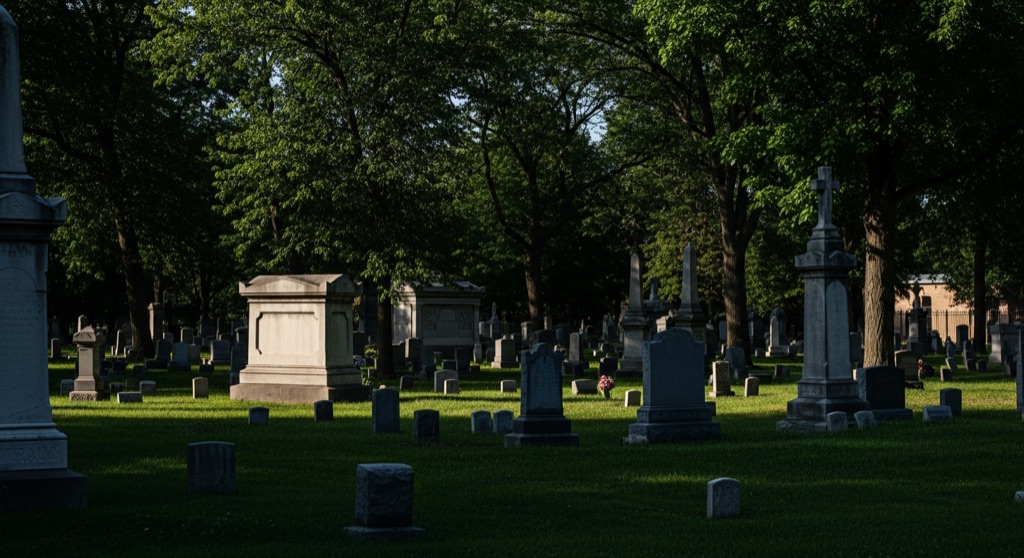
Chicago's largest cemetery hides behind a castellated limestone gatehouse by William Boyington (the same architect behind the Water Tower), and holds 16 Union Civil War generals, the industrialists who built the city (Sears, Schwinn, Montgomery Ward), and unclaimed victims of both the 1903 Iroquois Theatre fire and the 1915 Eastland disaster.
→ Three more hidden bars & speakeasies in Chicago — never the same twice
The story
If you want to know who built Chicago and who died building it, skip the museum circuit and walk through the castellated limestone gate on Ravenswood Avenue. That 1864 Gothic archway was designed by William W. Boyington—the architect behind the Chicago Water Tower—using stone quarried at Joliet Prison. The land was originally a farm belonging to Hiram Roe; local lore says he agreed to sell in 1859 only if the city named the grounds after him, but a municipal clerk botched the charter paperwork and wrote 'Rosehill.' Within these 350 acres sit 16 Union Civil War generals, 13 Chicago mayors, and the Gilded Age catalog barons who outfitted the American West—Richard Sears, Aaron Montgomery Ward, and John G. Shedd—alongside sausage mogul Oscar Mayer.
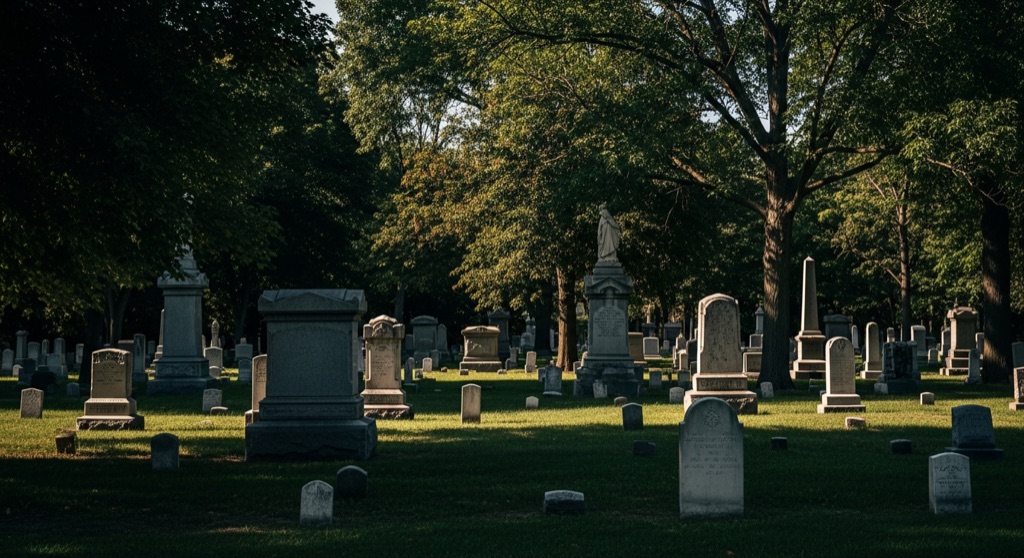
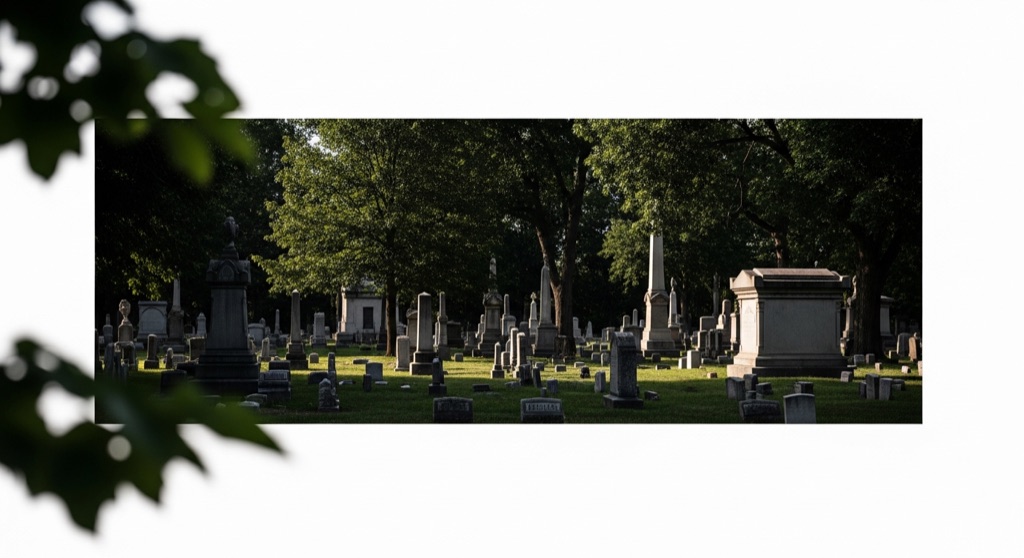
Beyond the grand family obelisks lies an institutional memory of Chicago's worst days. When catastrophic mass-casualty events hit the city—like the December 1903 Iroquois Theatre fire that killed 602 patrons, or the 1915 SS Eastland capsizing that drowned 844 people—the city morgues instantly overflowed. Wagonloads of victims were hauled north to Rosehill's receiving vault beneath the 1899 English Gothic Horatio N. May Chapel. There, caskets rested in cold subterranean storage until families could identify their dead. Dozens of those victims, both identified and unclaimed, still remain buried in plots across the western sections.
Deep inside the northern end stands the 1914 Community Mausoleum, a neoclassical stone acropolis designed by architect Sidney Lovell (who liked the building enough to secure his own crypt inside). Walk past the Greek Revival facade and you're surrounded by two levels of silent, echoing Italian Carrara marble corridors. Down the dim hallways, heavy bronze gates seal off private family rooms. Peer through the ironwork into the shadows: tucked away inside these private chapels are original opalescent stained-glass windows designed and installed by Louis Comfort Tiffany's New York studio.
What it's like
Visiting Rosehill feels less like stepping into a city park and more like entering a silent, 350-acre Victorian sanctuary hidden behind an elevated train line. Expect wide, winding paved roads flanked by artificial lakes and a resident herd of wild urban deer that graze right alongside the gravestones. The mausoleum interior is chilly, vast, and intensely marble-clad; its grand Greek Revival main doors on the east side are frequently locked, so look for open access along the southwest wing. Keep an eye on the time—staff strictly lock the exterior gatehouse at dusk, and getting trapped inside after hours is an actual local rite of passage you'll want to avoid. Confirm current public access hours for both the grounds and the mausoleum before making the trip.
The move: Walk the grounds at golden hour past the artificial lakes to the 1914 Community Mausoleum -- the largest in Chicago, with a Greek Revival entrance -- then find the old receiving vault where disaster victims once waited to be claimed.
- 📍 Ravenswood / Rosehill, North Side
- 💸 $$
- ⚡ Up for anything
- 🌗 Indoors
Where: 5800 N Ravenswood Ave, Chicago, IL
Hours: Added 2026-07-19 — confirm current hours before you go.
Pair it with
- George Bangs Tree-Trunk Grave, Rosehill Cemetery — Walk deeper into Rosehill's grounds to locate this hyper-detailed stone tree trunk tomb, complete with carved wildlife and a tiny railway mail car entering a tunnel.
- Woolly Mammoth Antiques & Oddities — Follow up a stroll among Victorian tombs with a quick trip to this Andersonville oddities cabinet packed with vintage taxidermy and medical remnants.
- Alchemy Arts — Pair the somber atmosphere of Chicago's largest cemetery with a visit to this long-running Edgewater shop stocked with occult texts, herbs, and metaphysical supplies.
- Chicago Magic Lounge — Trade the quiet mausoleum corridors for an Art Deco speakeasy hidden behind a laundromat storefront, where magicians perform intimate close-up tricks.
More weird in Chicago
Good to know
How did Rosehill Cemetery get its name?
The cemetery sits on land originally owned by farmer Hiram Roe. Legend holds Roe agreed to sell in 1859 only if the property was named 'Roe's Hill,' but a city clerk misspelled it as 'Rosehill' on the official charter.
Can you go inside the Community Mausoleum to see the Tiffany stained glass?
Yes. The mausoleum is open to visitors during regular cemetery hours. If the main Greek Revival eastern entrance is locked, use the open doors along the southwest side to reach the Carrara marble corridors and private gated chapels.
Who designed the castellated entrance gate on Ravenswood Avenue?
Architect William W. Boyington designed the Gothic limestone gatehouse in 1864 using stone from the Joliet prison quarry—five years before he designed Chicago's landmark Water Tower.
Why are victims of the Eastland disaster and Iroquois Theatre fire at Rosehill?
When both tragedies struck Chicago in 1903 and 1915, city morgues were overwhelmed. Victims were temporarily stored in the subterranean vault under Rosehill's 1899 May Chapel, and dozens were subsequently interred on the cemetery grounds.
Plan a visit & invite your people →
Further reading: Wikipedia · chicagology.com · coimetromania.substack.com · graveyards.com · Reddit
last checked: 2026-07-19