Entry No. 8 — the Charlotte file — filed under: oddities
The Schiele Museum of Natural History
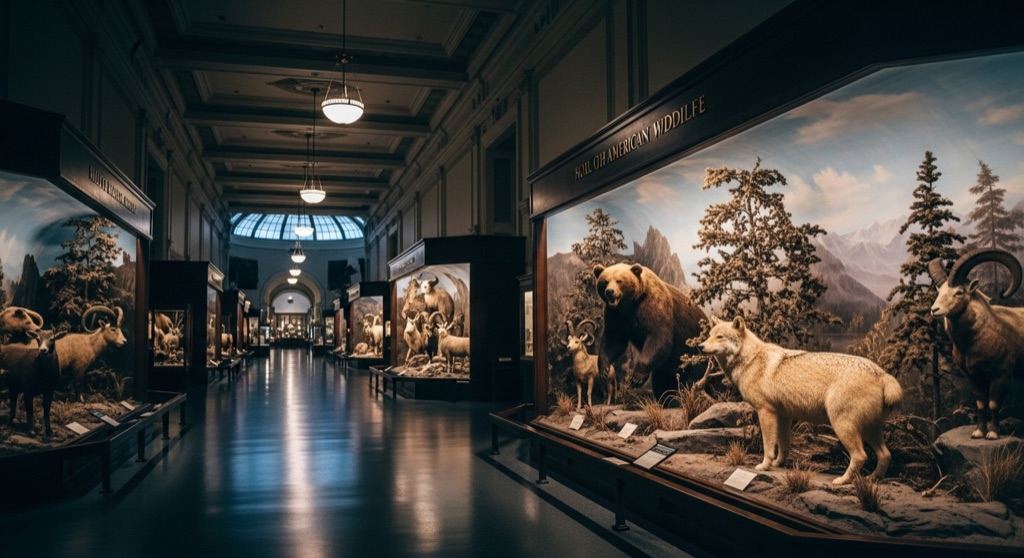
Founded in 1961 by lifelong taxidermist Rudolph 'Bud' Schiele, this museum houses an expansive cabinet of natural history curiosities boasting over 350,000 specimens. Its flagship Wildlife Hall showcases full-scale dioramas of North American fauna, from grizzly bears to timber wolves.
→ Three more oddity shops & curiosities in Charlotte — never the same twice
The story
In 1924, a WWI veteran, Boy Scout executive, and relentless taxidermist named Rudolph 'Bud' Schiele moved to Gastonia with his wife, Lily. For nearly four decades, the couple spent every spare weekend dragging home animal pelts, minerals, Catawba pottery, and pressed flora, storing the haul inside their house and local Scout offices. By 1959, Bud retired from scouting and faced a ultimatum: find a permanent home for his towering biological hoard or watch it scatter. Local former Scouts stepped up, raising funds to build a modest 1,500-square-foot facility on East Garrison Boulevard that opened its doors in July 1961.
That modest brick hall has since expanded across a 20-acre complex holding over 350,000 specimens, but it hasn't scrubbed away its cabinet-of-curiosities roots. You didn't hear it from us, but the real draw isn't the modern educational wing—it's the heavy, dimly lit atmosphere of the Wildlife Hall. Here, full-scale taxidermy mounts of grizzly bears, timber wolves, moose, and bison stand frozen inside detailed, retro dioramas. If you look closely through the glass in the North Carolina habitat galleries, you might even spot live screech owls roosting beside the preserved mounts, drinking from small water bowls hidden in the artificial leaf litter.
What makes the Schiele genuinely compelling is how a small-town Gaston County facility quietly built the largest collection of North American land mammal specimens in the Southeast. Long before modern museums swapped physical artifacts for interactive screens, Bud Schiele crafted an empire out of plaster mannequins, glass eyes, and preserved hides. Walking through these corridors feels less like visiting a slick municipal center and more like trespassing through the private, lifelong stash of a man who refused to let any piece of nature pass by unpreserved.
What it's like
Arriving at the Gastonia complex on a weekday afternoon lets you dodge the morning school field trip crowds and have the shadowy galleries mostly to yourself. The air inside the main exhibit hall is cool and quiet, putting you inches away from towering taxidermy mounts and detailed dioramas. Avoid the pre-noon rush if you want to inspect the specimens without noise, and be sure to check the dome schedule at the front desk when you arrive so you can pair your stroll through the taxidermy halls with a planetarium show.
The move: Walk through the dim Hall of North American Wildlife to inspect the vintage taxidermy mounts up close before catching a planetarium show under the dome.
- 📍 Gastonia
- 💸 $$
- ⚡ Up for anything
- 🌗 Indoors
Where: 1500 E Garrison Blvd, Gastonia, NC 28054
Hours: Added 2026-07-21 — confirm current hours before you go.
Pair it with
- James H. Lynn Planetarium — Located directly on-site inside the museum, this planetarium lets you step straight from the dark taxidermy halls into a astronomy show under one of the region's largest domes.
- The Jailhouse Whiskey & Cigar Bar — Situated less than seven miles away in Belmont, this speakeasy set inside a 1960s police station jail cell offers a sturdy concrete backdrop for a drink after taking in vintage taxidermy.
- Spot the Disco Dog — Located eight miles east in Belmont, this eight-foot mirrored watchdog sculpture delivers a flash of roadside absurdism after an afternoon of preserved wild animals.
- Pete the Troll — Hidden roughly ten miles away near the Catawba River, this giant recycled-timber troll sculpture offers another dose of eccentric, hand-crafted folk art tucked into the local landscape.
More weird in Charlotte
Good to know
Who founded the Schiele Museum and when did it open?
The museum was founded by taxidermist and Boy Scout executive Rudolph 'Bud' Schiele and his wife Lily. It officially opened to the public on East Garrison Boulevard on July 24, 1961.
What are the key exhibits to see inside?
The museum's main highlight is the Hall of North American Wildlife, which features full-scale dioramas of grizzlies, wolves, and bison, alongside dedicated halls for North Carolina natural history, fossils, minerals, and Catawba Indian pottery.
How many specimens are in the collection?
The museum houses more than 350,000 specimens, giving it the largest land mammal collection in the Southeast.
Are there free admission days?
The museum offers a Free Tuesday admission program on the second Tuesday of each month after 4:00 p.m., though you should confirm current hours and schedule before traveling.
Plan a visit & invite your people →
Further reading: Official site · cityofgastonia.news
last checked: 2026-07-21